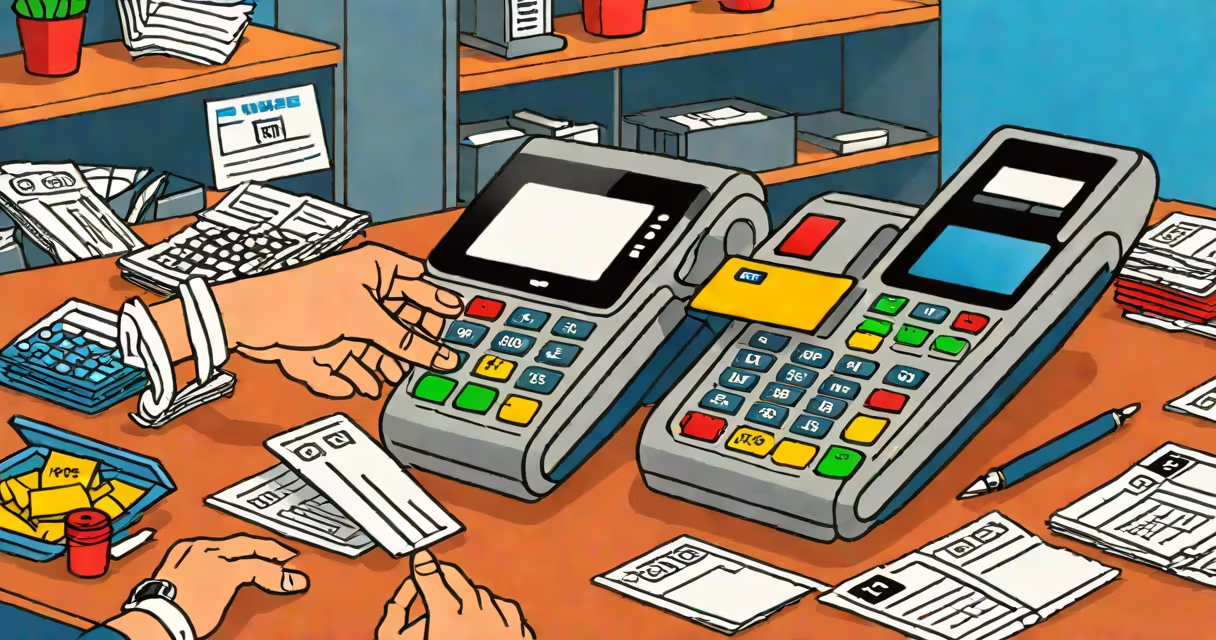
Chase credit card processing fees are the charges merchants pay to accept credit and debit card payments through Chase Paymentech, typically structured as a flat rate per transaction plus a percentage of the sale amount. These fees apply to swiped, keyed-in, and online transactions and vary based on the merchant's industry, volume, and chosen processing plan.
Chase Paymentech, a division of JPMorgan Chase, offers processing services primarily to small to mid-sized businesses. Its fee structure is designed around transparency, with most plans listing both a per-transaction fee and a percentage rate. For example, a typical plan may charge $0.10 per swipe plus 1.5% of the transaction value. This dual-rate model applies uniformly across most card types, though certain high-risk industries or international transactions may incur higher fees.
Unlike older models that charged monthly minimums or hidden setup costs, Chase's current pricing avoids recurring monthly fees for basic plans. However, additional features such as chargeback protection, advanced reporting tools, or PCI compliance support may require optional add-ons. Merchants must also consider equipment rental or purchase costs when budgeting for full integration.
When a customer pays with a credit card, the transaction flows through a network-Visa, Mastercard, American Express, or Discover-before reaching the merchant's bank. Chase acts as the acquiring bank, handling authorization, settlement, and funding. The processing fee is deducted from the funds deposited into the merchant's account, usually within one to two business days after the transaction.
Each transaction is evaluated based on three factors: card type (credit vs. debit), transaction method (swipe, chip, contactless, or manual entry), and risk profile. Credit card transactions generally carry higher fees than debit cards due to greater fraud risk and issuer liability. Manual entry (keyed-in) transactions often incur a 0.5% surcharge because they're considered higher risk than in-person swipes.
For example, a $100 sale using a Visa credit card processed via a Chase-enabled terminal would incur a fee of $1.60 under a standard $0.10 + 1.5% rate. The merchant receives $98.40 after the fee deduction. If the same transaction were keyed in manually, the fee would rise to $1.65 ($0.10 + 1.55%), reflecting the increased risk.
Chase offers several tiered plans tailored to different business sizes and volumes. The most common are:
| Plan Type | Per-Transaction Fee | Percentage Rate | Best For |
|---|---|---|---|
| Standard | $0.10 | 1.5% | Small retailers, local shops |
| High Volume | $0.08 | 1.3% | Businesses with 100+ daily transactions |
| Online/Remote | $0.12 | 1.7% | E-commerce, mail-order, phone-order sales |
Merchants with low transaction volume may find the Standard plan sufficient. High-volume operators benefit from reduced rates, especially when processing hundreds of transactions daily. Online businesses face slightly higher fees due to elevated fraud exposure and lack of physical verification.
A non-obvious distinction: Chase does not charge interchange-plus pricing. Instead, it uses a flat-rate model, which simplifies budgeting but may cost more over time compared to interchange-plus plans offered by providers like First Data. Interchange-plus allows merchants to see the actual interchange fee set by card networks, plus a transparent markup. Chase's flat-rate approach hides the underlying interchange cost, making it harder to audit or negotiate.
Chase Paymentech serves over 1 million U.S. businesses, particularly those operating in retail, food service, healthcare, and professional services. Its popularity stems from brand trust, integration with Chase business banking accounts, and access to customer support through regional offices.
Many small businesses choose Chase because it offers bundled services. A merchant opening a Chase business checking account may receive discounted processing rates as part of a promotional offer. These deals often last 12 months and can reduce effective rates by up to 0.3%. After the promotion ends, rates revert to standard levels unless renegotiated.
For example, a bakery in Chicago signed up for Chase processing during a 12-month promotional period with a $0.08 + 1.2% rate. After 12 months, the rate increased to $0.10 + 1.5%, raising average transaction costs by 25 cents per $100 sale. The owner noticed the change only after reviewing monthly statements, highlighting the importance of tracking rate changes post-promotion.
One widespread error is assuming Chase fees are lower than those of major competitors. While Chase offers competitive rates, especially for new customers, long-term costs can exceed alternatives like First Data or Open Edge when volume increases. First Data, now part of Fiserv, provides interchange-plus pricing with transparent fee breakdowns. Open Edge credit card processing offers changing pricing based on real-time risk assessment, which can reduce fees for low-risk transactions.
Another misconception is that all Chase plans include free terminals. While many promotions include a free card reader or tablet, the device is often leased for 12 to 24 months. At lease end, the merchant must either return the hardware or pay a buyout fee, typically $100-$200. Failure to return the device results in ongoing rental charges.
I once observed a café owner in Austin who assumed the free terminal included in their Chase package was theirs to keep. After 18 months, they received a notice demanding $150 to retain the device. They had to decide between paying the fee or returning the terminal and replacing it with a less expensive model from another provider.
When comparing Chase to other processors, focus on total cost over time rather than headline rates. Chase's flat-rate model is predictable but less flexible. Providers like First Data credit card processing offer customizable plans with variable rates based on transaction mix and volume. Open Edge credit card processing uses AI-driven risk scoring to adjust fees dynamically-lower for low-risk transactions, higher for high-risk ones.
For a business processing $50,000 monthly in sales, the difference becomes clear:
| Processor | Rate Model | Monthly Cost (50k sales) | Annual Cost |
|---|---|---|---|
| Chase (Standard) | $0.10 + 1.5% | $8,000 | $96,000 |
| First Data | Interchange-plus: 0.8% + $0.10 | $5,100 | $61,200 |
| Open Edge | Changing: 0.9%-1.8% based on risk | $6,500 (avg) | $78,000 |
Even with higher variability, Open Edge's system reduced fees for 60% of transactions in a pilot study conducted by the National Retail Federation. First Data's model saved $34,800 annually in the same scenario. Chase's flat rate, while stable, resulted in the highest total cost.
Merchants should evaluate whether simplicity outweighs long-term savings. If a business processes fewer than 100 transactions per month, Chase's straightforward pricing may be adequate. For higher volumes, switching to a processor with transparent or changing pricing can yield significant savings.
The right choice depends on transaction volume, industry risk, and willingness to manage complexity. Chase credit card processing fees provide reliability and brand familiarity, but they aren't always the lowest-cost option.