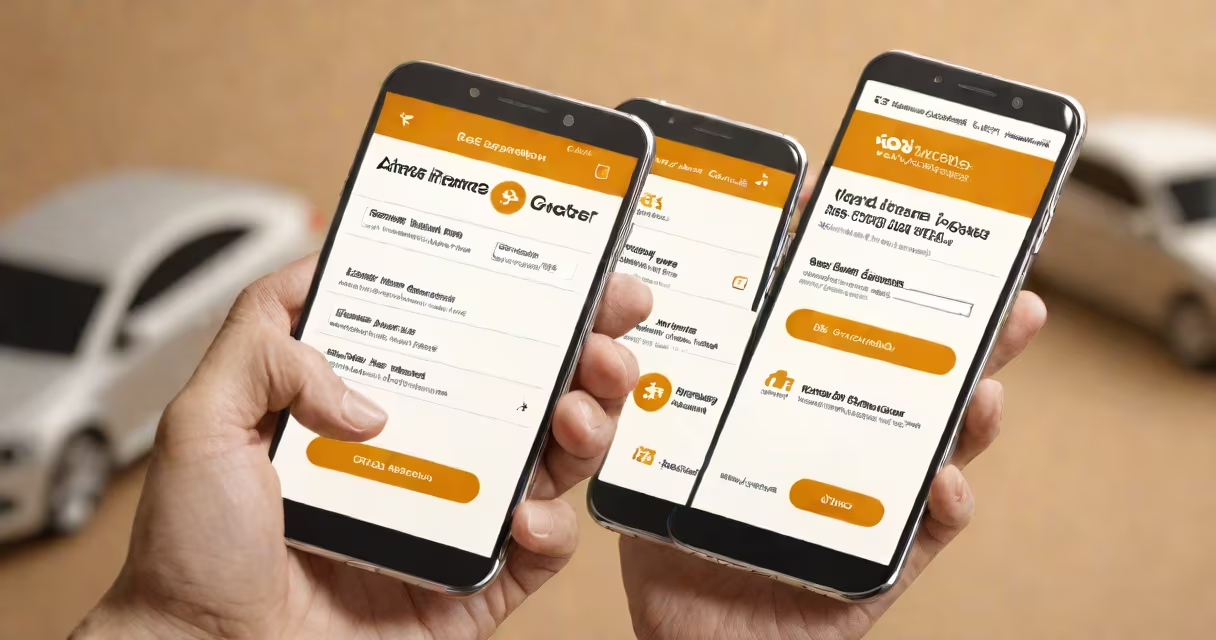
Get auto insurance quotes by entering your vehicle details, driving record, and location into an insurer's online tool to receive instant rate estimates from multiple providers. This process enables side-by-side comparisons of coverage levels and premiums before selecting a policy.
When you request quotes, insurers pull data from public records and your personal inputs-such as ZIP code, age, credit score, and accident history-to calculate risk and assign a price. The result is a list of available policies with different deductibles, coverages, and monthly costs. Most major insurers offer free, no-obligation quote tools accessible via mobile or desktop.
For example, a 32-year-old driver in Austin, Texas, with a 2020 Honda Accord and one at-fault accident in the past three years received quotes ranging from $118 to $204 per month. The lowest quote came from a regional carrier with limited customer service availability, while the highest was from a national brand offering roadside assistance and rental reimbursement. All quotes were generated within 90 seconds after entering basic info.
Entering your information triggers automated underwriting systems that assess risk based on actuarial models. Insurers use standardized criteria such as state regulations, vehicle make/model/year, driver age, and prior claims history. Your ZIP code affects pricing because urban areas have higher theft and accident rates than rural zones.
Each quote includes a breakdown of liability limits, collision and complete coverage, and optional add-ons like gap insurance or rental car reimbursement. You can adjust these settings to see how changes impact cost. For instance, raising your deductible from $500 to $1,000 reduced one quote by $36/month.
Insurers don't share your data across platforms unless you explicitly consent. However, some quote aggregators collect your info and sell it to third-party brokers. Always review privacy policies before submitting sensitive details.
Auto insurance quotes typically include:
There are three main quote types:
| Type | Use Case | Accuracy Level |
|---|---|---|
| Instant online quote | Quick estimate for budgeting | High (based on real-time data) |
| Agent-assisted quote | Complex situations (e.g., classic cars, high-risk drivers) | Very high (personalized adjustments) |
| Aggregator-generated quote | Comparing multiple companies at once | Moderate (may miss niche discounts) |
Many people assume that getting quotes from multiple insurers always results in lower prices. That's not guaranteed. A 2023 study by the National Association of Insurance Commissioners found that 43% of consumers who shopped around paid more than their previous insurer due to differences in rating factors-not all insurers weigh accidents or tickets the same way.
One widespread error is assuming that a low quote means better value. A quote from a lesser-known insurer may have lower premiums but lack financial stability. The NAIC reports that 12% of small carriers failed to meet solvency standards between 2018 and 2022. Always verify an insurer's AM Best rating before enrolling.
I once compared quotes for a 2015 Subaru Outback driven 12,000 miles annually. Two insurers quoted $142/month each, but one included a $500 annual rental reimbursement benefit and roadside assistance. The other charged extra for both. The difference wasn't in base rate-it was in policy design.
Getting auto insurance quotes is essential for securing affordable, legally compliant coverage. In 48 U.S. states, drivers must carry minimum liability insurance. Failing to do so risks fines, license suspension, and civil liability in crashes.
To maximize accuracy, provide consistent information across platforms. Use the same ZIP code, date of birth, and vehicle VIN. Avoid inflating mileage or omitting prior claims-even minor ones can affect pricing. A 2022 J.D. Power survey showed that 67% of drivers who misrepresented data ended up paying more over time due to claim denials or policy cancellations.
Always confirm that the quote reflects current rates. Some sites display outdated pricing. Recheck before purchasing. Finalizing a policy requires a formal application and often a credit check. Once bound, you'll receive a declaration page listing your coverage, effective dates, and policy number.