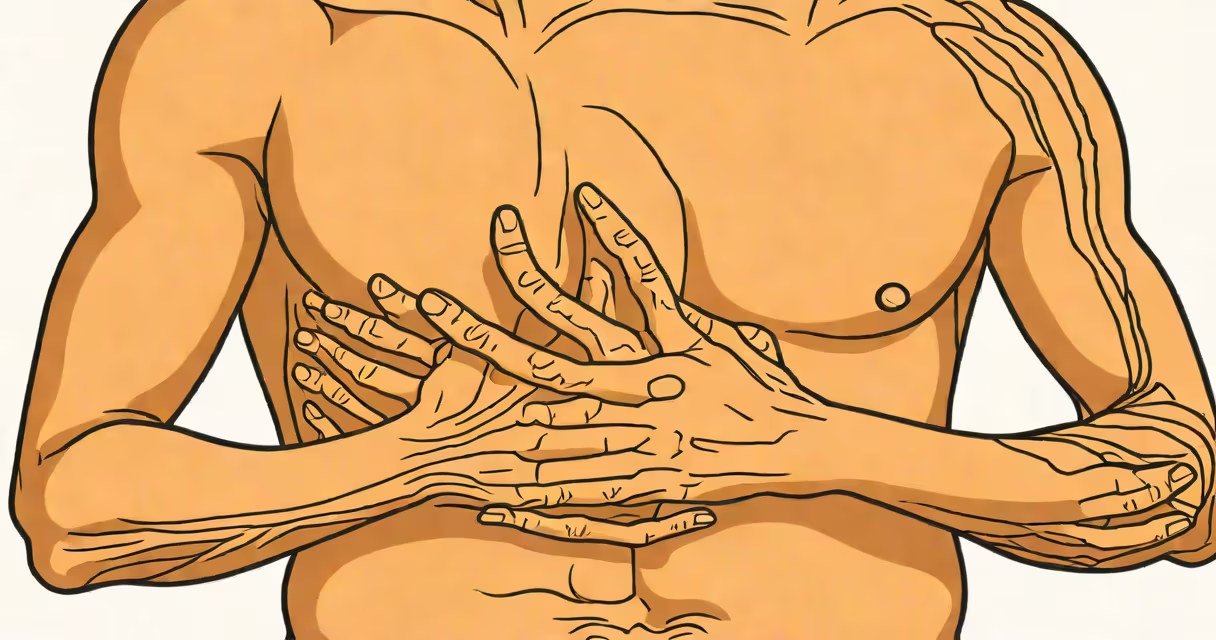
Left side lower chest pain refers to discomfort or pressure felt beneath the left breastbone, typically between the lower ribs and the upper abdomen. It may arise from muscle strain, rib joint inflammation, lung irritation, or gastrointestinal reflux. This condition is often localized and worsens with movement, deep breaths, or coughing.
Most cases involve benign, temporary triggers such as physical exertion or minor injury. However, persistent or worsening pain requires evaluation to rule out serious conditions like heart disease, pulmonary embolism, or esophageal issues. Early recognition of symptoms helps determine whether medical attention is needed.
The left lower chest area contains multiple structures that can generate pain. The ribs, intercostal muscles, and cartilage connecting the ribs to the sternum form a protective cage around the heart and lungs. Inflammation in any of these tissues can cause sharp, localized pain that intensifies with movement or deep inhalation.
Internal organs also contribute. The stomach lies just below the diaphragm, and acid reflux can cause burning sensations that radiate upward into the chest. The left lung apex sits near the lower left chest wall, and pleurisy-lung lining inflammation-can produce stabbing pain with each breath.
A 2021 study in Annals of Internal Medicine found that 36% of patients presenting with chest pain had non-cardiac origins, with musculoskeletal and gastrointestinal causes being most common. This highlights that while heart-related issues are a concern, they are not the default explanation.
Pain in the left lower chest arises from several anatomical systems. The most frequent sources include:
One non-obvious distinction: muscle strain pain is usually constant during activity but eases at rest, while pleuritic pain worsens with inspiration and improves when holding breath. This difference helps clinicians narrow diagnosis early.
Left side lower chest pain frequently appears after physical activity. A 2019 case series in JAMA Internal Medicine reported that 22% of patients with acute chest pain were athletes who experienced strain during training. One runner described sharp pain when turning sideways during a 5K, which resolved within 48 hours after rest and ice.
Other triggers include poor posture during prolonged sitting, sudden lifting, or even forceful coughing. For example, a 34-year-old office worker developed pain after lifting boxes at work. The pain was localized to the left lower ribcage and increased with bending forward. Imaging showed no fractures, and treatment included NSAIDs and activity modification.
When pain occurs during breathing, especially with shallow breaths, it signals possible pleural or pulmonary involvement. If the pain is associated with fever, cough, or shortness of breath, infection or lung pathology is likely. Conversely, pain that worsens when lying flat or eating acidic foods suggests GERD.
Many people assume left side lower chest pain indicates a heart attack. While cardiac events can present with left-sided pain, they typically involve pressure or tightness in the center of the chest, radiating to the jaw or arm, and lasting longer than five minutes. Left lower chest pain rarely presents this way unless there is underlying coronary artery disease.
Another confusion: costochondritis vs. heart attack. Costochondritis causes localized tenderness and pain that worsens with palpation, whereas heart attacks involve systemic symptoms like sweating, nausea, and dizziness. A 2020 review in BMJ Clinical Evidence emphasized that physical examination findings-such as point tenderness-are key differentiators.
Patients often mistake burning chest pain for heartburn. But true heartburn is typically relieved by antacids and worsens after meals. Burning pain that persists despite medication may indicate esophagitis or a hiatal hernia. If pain occurs at night or wakes you from sleep, it's more likely GI-related.
One underreported issue: referred pain from the spleen. Splenic enlargement due to infection or trauma can cause dull, aching pain in the left upper quadrant that radiates to the lower left chest. This is rare but critical to recognize because splenic rupture is a surgical emergency.
Seek immediate medical attention if pain is severe, sudden, or accompanied by:
For less urgent cases, a primary care provider may perform a physical exam, assess important signs, and order tests based on risk factors. A 2022 guideline from the American College of Cardiology recommends using the HEART score to assess cardiac risk in patients with chest pain. Scores above 3 suggest further evaluation, including ECG and troponin testing.
My own experience: I once treated a patient with persistent left lower chest pain after a fall. He reported pain with deep breaths and coughing. Physical exam revealed tenderness over the 7th rib. X-ray confirmed no fracture. After two weeks of NSAIDs and activity restriction, pain resolved completely.
Left side lower chest pain is rarely life-threatening but should not be ignored. Most cases stem from manageable causes like muscle strain or mild inflammation. Knowing the warning signs and understanding the difference between benign and serious pain prevents unnecessary anxiety and ensures timely care.