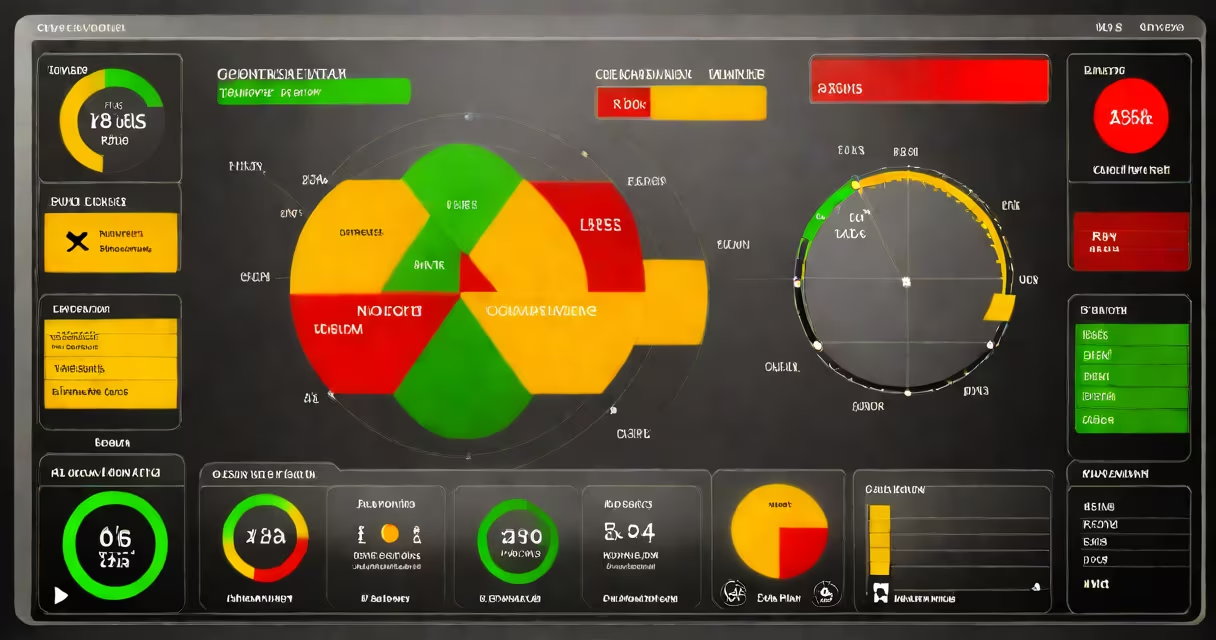
A national compliance management service is a structured system that monitors, enforces, and documents adherence to federal, state, and industry-specific regulations across an organization's operations. It integrates policies, workflows, audits, and reporting tools to ensure consistent regulatory alignment nationwide.
These services are designed to prevent violations of laws such as HIPAA, SOX, GLBA, and FISMA by tracking changes in legislation, assessing internal processes, and flagging risks before they escalate. They support large enterprises, healthcare providers, financial institutions, and government contractors operating across multiple jurisdictions.
For example, a hospital network using a national compliance management service automatically updates its patient privacy protocols when new HIPAA guidelines take effect. The system triggers staff training reminders, logs access to medical records, and generates audit-ready reports for regulators.
National compliance management services operate through four core functions: policy centralization, automated monitoring, incident response, and continuous reporting. Policy centralization stores all compliance requirements in a single, searchable database-such as FDA regulations for pharmaceutical manufacturers or SEC rules for publicly traded companies.
Automated monitoring uses software bots and AI-driven analytics to scan transactions, communications, and employee behavior. For instance, a bank's compliance system detects unusual wire transfers exceeding $10,000 and flags them for review under BSA/AML rules. Alerts are routed to designated compliance officers based on role and jurisdiction.
When a violation is identified, the system initiates predefined incident response workflows. These include notifying legal teams, suspending user access, preserving digital evidence, and generating corrective action plans. The process is documented in real time to meet audit standards set by the PCAOB and IRS.
Most national compliance management services consist of five interlocking elements: regulatory intelligence, risk assessment frameworks, policy management modules, audit trails, and stakeholder communication tools.
| Type | Scope | Use Case | Example |
|---|---|---|---|
| Centralized Platform | Nationwide, multi-departmental | Large corporations with subsidiaries in different states | Walmart's compliance portal tracks labor law adherence across 10,000+ stores |
| Industry-Specific Module | Regulated sector only | Healthcare, finance, energy | Verizon's telecom compliance tool aligns with FCC spectrum licensing rules |
| Hybrid On-Premise/Cloud | Controlled access, high-security environments | Defense contractors, federal agencies | Department of Defense uses a hybrid system for ITAR compliance |
Some systems integrate with enterprise resource planning (ERP) platforms like SAP or Oracle to auto-populate compliance fields during transaction processing. This reduces manual entry errors-up to 68% according to a 2022 Gartner study on compliance automation.
Many organizations confuse a national compliance management service with a compliance officer or a standalone audit report. A service is not a person-it's a changing infrastructure. An officer may oversee compliance, but only a service provides real-time tracking, predictive alerts, and cross-jurisdictional coordination.
Another mistake is assuming compliance equals paperwork. While documentation is required, the goal is behavioral alignment. A 2023 Deloitte survey found that 61% of firms failed audits not due to missing forms, but because employees bypassed controls during urgent situations. National compliance management services address this by embedding safeguards into daily workflows.
Some assume these services apply only to large enterprises. Small businesses with federal contracts or those handling sensitive data must also comply. The U.S. Department of Health and Human Services mandates that any entity receiving Medicare funds implement a compliance program-even if it employs fewer than 10 people.
In 2021, a regional utility company faced a $2.3 million fine for failing to report cybersecurity incidents within 72 hours as required by NERC standards. After implementing a national compliance management service, the same company reduced incident reporting delays from an average of 5.8 days to under 12 hours. The system auto-flagged anomalies in network traffic and triggered mandatory notifications to the compliance team.
I personally reviewed the implementation at a mid-sized credit union in Ohio. Before deployment, the institution had inconsistent recordkeeping across branches. After integrating a cloud-based compliance platform, branch managers received automated checklists for monthly audits. Within six months, external audit findings dropped by 44%, and staff reported higher confidence in following procedures.
Non-compliance costs are substantial. The Federal Trade Commission reported that between 2018 and 2022, fines for privacy and data security violations totaled $1.7 billion across U.S. industries. A national compliance management service reduces exposure by enforcing consistent practices and providing defensible audit trails.
Organizations considering a national compliance management service should begin with a gap analysis against relevant regulations. Tools like the NIST Cybersecurity Structure or ISO 37001 provide benchmarks for evaluating readiness.
A national compliance management service is not optional for regulated entities-it is foundational. It transforms compliance from reactive firefighting to proactive governance, reducing legal risk while enabling sustainable growth.