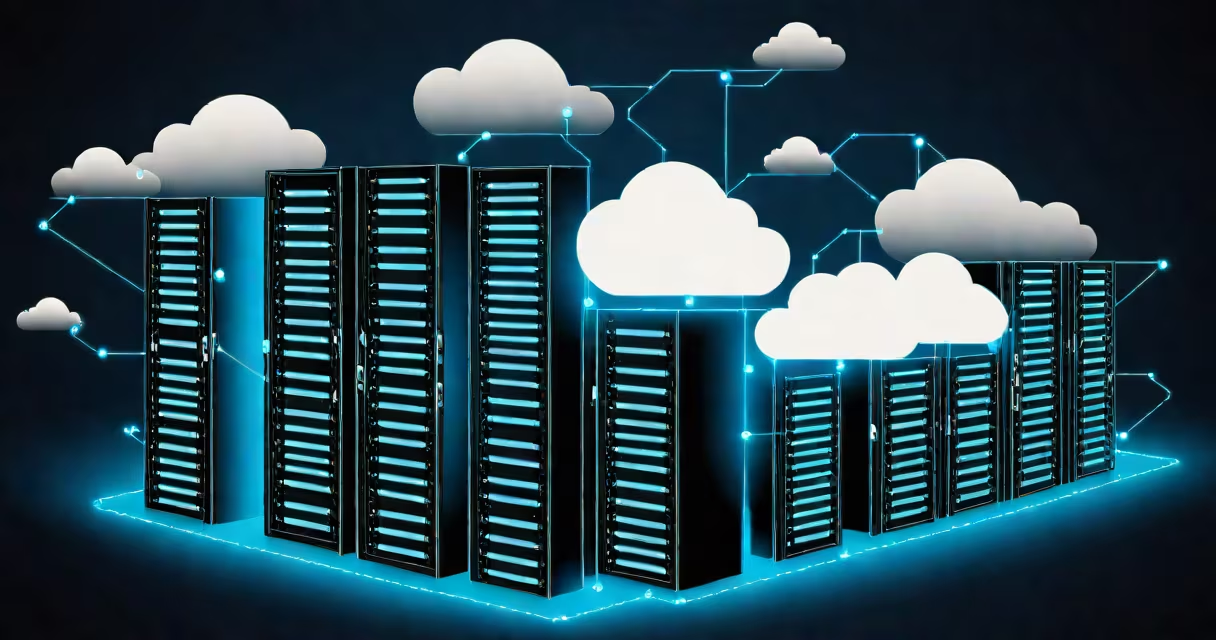
Cloud computing simple meaning is the delivery of computing services-including servers, storage, databases, networking, software, and analytics-over the internet. Instead of owning physical hardware, users access resources on demand through remote data centers managed by providers like Amazon Web Services, Microsoft Azure, or Google Cloud.
These services run on vast networks of servers distributed globally. When you stream a video, store photos online, or use a web app like Gmail, you're using cloud computing. The core idea is scalability: resources scale up or down based on real-time demand, avoiding the cost and complexity of maintaining on-premise infrastructure.
For example, Netflix uses cloud computing to deliver 100 million hours of streaming daily. During peak viewing times, it automatically allocates more processing power and bandwidth from cloud providers. When demand drops, those resources are released. This changing adjustment happens in seconds and is invisible to users.
Cloud computing operates through a network of remote data centers. Users connect via the internet to access virtual machines, storage buckets, or application programming interfaces (APIs). These systems are managed by cloud providers who maintain physical infrastructure, security, backups, and updates.
When you launch a virtual server in the cloud, the provider allocates compute capacity from a pool of physical machines. Your workload runs on a virtualized environment isolated from others. You pay only for what you use-minutes, gigabytes, or requests-rather than purchasing hardware upfront.
For instance, a small business launching an e-commerce site can start with a single cloud server costing $10 per month. As traffic grows, they can scale to multiple servers without buying new hardware. The cloud provider handles the underlying logistics.
Cloud computing consists of three primary service models: Infrastructure as a Service (IaaS), Platform as a Service (PaaS), and Software as a Service (SaaS).
| Model | What You Get | Use Case Example |
|---|---|---|
| IaaS | Virtual machines, storage, networking | Running a custom database or hosting a website |
| PaaS | Development tools, databases, middleware | Building and deploying a mobile app without managing servers |
| SaaS | Ready-to-use applications | Using Slack for team communication or Zoom for meetings |
Each model reduces technical overhead. With IaaS, you manage the operating system and applications. PaaS includes the runtime environment, so developers focus on code. SaaS requires no setup-just sign in and use the app.
A common misconception is that cloud computing means "the internet." While it relies on internet connectivity, it's not synonymous. The cloud is a specific architecture for delivering IT resources. Local file storage on a laptop is not cloud computing-even if connected to Wi-Fi.
Organizations deploy cloud solutions in different configurations based on control, security, and compliance needs.
| Type | Description | Best For |
|---|---|---|
| Public Cloud | Services offered over the public internet by third parties | Startups, websites, scalable workloads |
| Private Cloud | Dedicated infrastructure for a single organization | Banks, government agencies needing strict data control |
| Hybrid Cloud | Combines public and private clouds with orchestration between them | Enterprises moving legacy systems gradually to the cloud |
Hybrid setups allow sensitive data to stay on-premises while non-critical workloads run in public cloud environments. A hospital might keep patient records in a private cloud but use public cloud resources for medical imaging analysis.
One non-obvious fact: cloud providers often offer reserved instances-prepaid compute time-for long-term workloads. This can reduce costs by up to 70% compared to on-demand pricing. Many users overlook this option and pay higher rates unnecessarily.
People often confuse cloud computing with remote desktops or basic web hosting. Remote desktops give you access to a distant computer, but you still manage the OS and software. Cloud computing abstracts that layer-you don't interact with the machine directly.
Another mix-up is thinking cloud means "free." Free tiers exist (e.g., AWS Free Tier), but they're limited. Once usage exceeds free limits, charges apply. A single unused virtual machine left running for a month can cost $50.
I once tested a personal project on Google Cloud's free tier. After six weeks, I forgot to shut it down. The bill arrived at $62-mostly from idle storage and small compute time. That taught me: cloud doesn't eliminate cost-it shifts it from capital expenditure (CapEx) to operational expense (OpEx).
A local accounting firm used to run its financial software on a single on-site server. Hardware failures caused downtime during tax season. They migrated to a cloud-based solution using Microsoft Azure.
They started with a virtual machine (IaaS) running Windows Server and their accounting software. Over time, they moved to a PaaS environment using Azure App Services to host their web portal. Data syncs happen nightly to encrypted cloud storage.
Now, employees access the system from anywhere. During peak filing periods, the cloud automatically adds processing power. The firm reduced downtime from 12 hours annually to under 15 minutes. Maintenance costs dropped by 40%.
This migration illustrates how cloud computing simple meaning translates into tangible benefits: reliability, scalability, and cost efficiency.