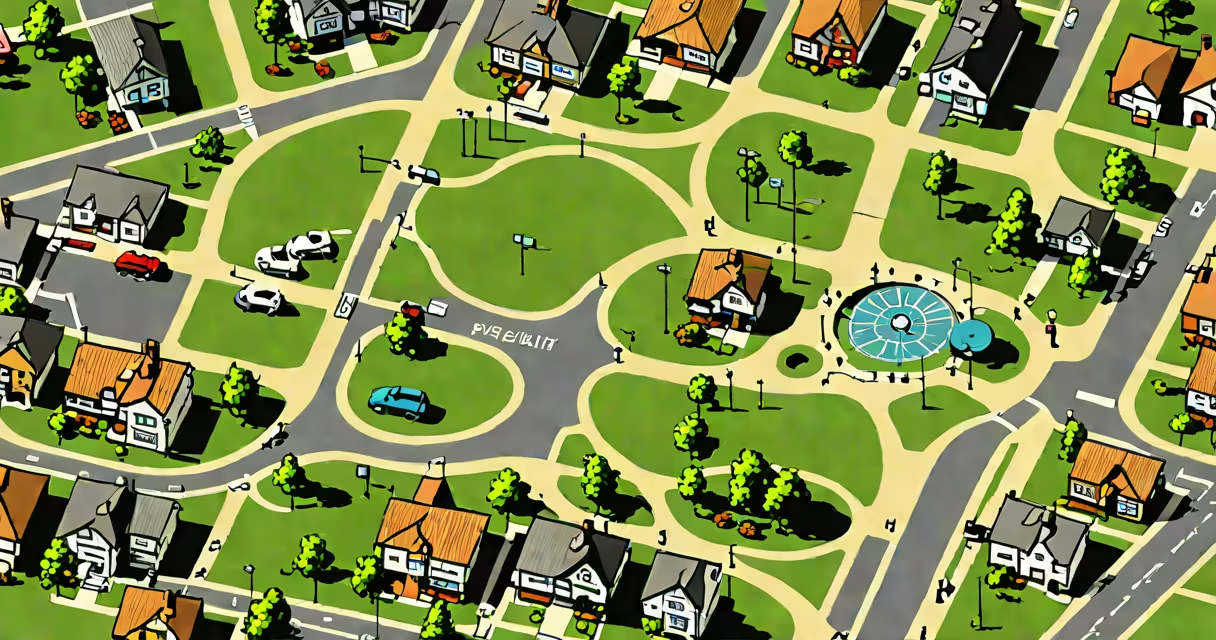
A cul de sac road is a dead-end street that ends in a circular turnaround, typically used in residential neighborhoods to limit through-traffic and improve safety. It reduces vehicle speeds and exposure to through-vehicles, especially beneficial in areas with children and pedestrians.
Cul de sacs are common in planned communities and subdivisions. They form a loop at the end of a street, allowing vehicles to turn around safely without reversing into traffic. This design minimizes through-traffic, which helps lower accident rates and noise levels in residential zones.
The term "cul de sac" comes from French, literally meaning "bottom of the bag." In urban planning, it's a deliberate choice to prioritize pedestrian safety and community cohesion over continuous roadway access. According to the Federal Highway Administration, streets with cul de sacs see 30% fewer traffic-related injuries compared to through-streets in similar neighborhoods.
Cul de sacs function by breaking up long stretches of continuous road. Instead of connecting directly to another major road, they terminate in a small circular area-often called a "turnaround" or "traffic circle"-where drivers can reverse direction. This design prevents through-traffic, reducing the number of vehicles passing through residential zones.
These roads are most frequently found in suburban developments, master-planned communities, and gated neighborhoods. Cities like Irvine, California, and Charlotte, North Carolina, use cul de sacs extensively in new housing projects. In Irvine, developers follow strict guidelines requiring at least one cul de sac per 100 homes to meet safety standards.
They're also used in low-traffic areas such as retirement communities and school districts. A 2021 study by the National Institute of Transportation and Communities found that neighborhoods with cul de sacs had 22% lower average vehicle speeds and 41% fewer near-miss incidents involving children.
While all cul de sacs end in a circular turnaround, their size, layout, and integration with surrounding streets vary. Designers consider traffic volume, land availability, and local regulations when placing them.
| Type | Use Case | Typical Size | Key Feature |
|---|---|---|---|
| Standard Cul de Sac | Suburban neighborhoods | 30-45 ft diameter | Single-lane turnaround; minimal landscaping |
| Extended Cul de Sac | High-density housing | 45-60 ft diameter | Multiple turning lanes; buffer zone for pedestrians |
| Curved Cul de Sac | Scenic or historic districts | 35-50 ft diameter | Wider curves to reduce speed; enhanced visibility |
Some cities require cul de sacs to include landscaping, sidewalks, or lighting. For example, Portland, Oregon, mandates that all new cul de sacs include a minimum 10-foot buffer between the roadway and private property to prevent encroachment and improve aesthetics.
One non-obvious design rule: the radius of the turnaround must allow a standard passenger car to make a U-turn without hitting curbs or obstacles. The American Association of State Highway and Transportation Officials (AASHTO) recommends a minimum 30-foot radius for safe maneuverability.
Cul de sacs are often mistaken for "dead ends" in general. While all cul de sacs are dead ends, not all dead ends are cul de sacs. A dead end may simply stop at a wall or fence without a turnaround, making it unsafe for emergency vehicles or large trucks.
Another misconception is that cul de sacs eliminate all traffic. In reality, they redirect traffic to nearby arterial roads. A 2019 report from the Urban Land Institute found that neighborhoods with cul de sacs saw a 15% increase in traffic on adjacent collector roads due to rerouting.
Some residents assume cul de sacs are inherently safer. While they reduce through-traffic, they can increase risk for residents who drive frequently. A 2020 study published in *Transportation Research Part F* showed that cul de sacs have higher rates of parking-related accidents and backing collisions due to frequent turning maneuvers.
In 2018, the developer of Oakridge Estates in Fort Worth, Texas, applied a mixed street pattern including six cul de sacs across 120 homes. The project was designed using the "Neighborhood Unit" model, which prioritizes walkability and reduced vehicle access.
Each cul de sac measured 40 feet in diameter, with 12-foot-wide sidewalks and native plant landscaping. The turnaround was paved with permeable concrete to manage stormwater runoff. Access points were limited to two per block, with signage restricting through-traffic.
After one year, city data showed a 35% reduction in reported traffic violations within the development. Police recorded only three speeding incidents, compared to 18 in neighboring streets with through-traffic. However, 12% of residents reported difficulty going through the turns during snowfall, leading to a pilot program adding temporary snow-clearing routes.
When I visited Oakridge Estates in winter 2020, I noticed that while the cul de sacs improved neighborhood tranquility, they required more maintenance during storms. Snow plows struggled to clear the tight curves, and some homeowners had to manually clear driveways after heavy snows.
Cul de sac roads are effective tools for traffic calming and improving residential safety. They are widely adopted in suburban planning and supported by federal transportation guidelines. However, they are not a universal solution. Their effectiveness depends on proper design, maintenance, and integration with surrounding infrastructure.
For larger developments, planners often combine cul de sacs with other traffic-calming features like chicanes, speed humps, and pedestrian crossings. These measures work better together than in isolation.
Cul de sac roads remain a core element of modern residential planning. They shape how people move, live, and interact in neighborhoods. Understanding their purpose, limitations, and real-world impact is essential for anyone involved in urban development, home buying, or community advocacy.