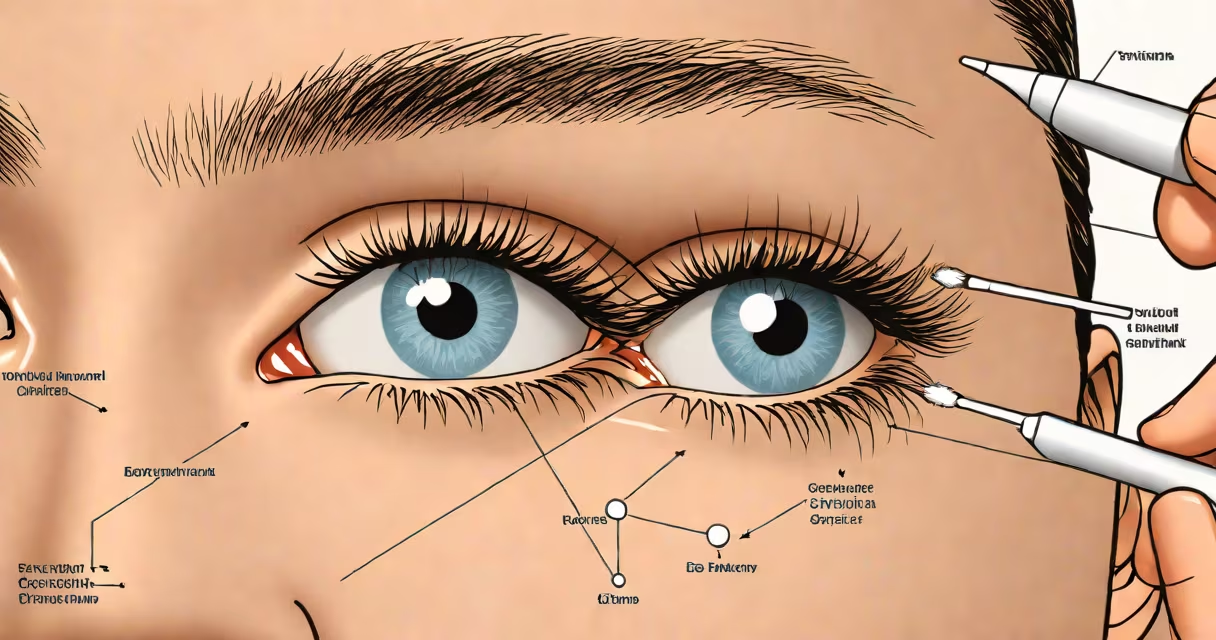
Tretinoin eye irritation occurs when topical tretinoin applied to the face migrates to the delicate skin around the eyes, causing redness, stinging, dryness, and flaking. This is a common side effect in users of prescription-strength retinoids.
Tretinoin is a vitamin A derivative used to treat acne and signs of photoaging. It accelerates skin cell turnover, which improves texture and reduces fine lines. However, the eyelid skin is thinner and more sensitive than facial skin, making it prone to irritation when exposed to tretinoin. Even small amounts transferred during application can trigger discomfort.
According to the American Academy of Dermatology, up to 30% of patients using tretinoin report ocular or periocular irritation. These reactions are dose-dependent and often worsen during initial use as the skin adjusts. The condition is not allergic but rather a direct irritant response due to increased skin permeability and inflammation in the area.
The mechanism begins with improper application technique. Users often apply tretinoin too close to the orbital rim-the bony ridge around the eye-where the skin is thin and lacks sebaceous glands. The product then spreads via capillary action or touch, especially when hands are used to apply or adjust the cream.
Once tretinoin contacts the eyelid or conjunctiva, it disrupts the lipid barrier and increases transepidermal water loss. This leads to dehydration, microtears in the epithelium, and activation of pain receptors. The result is a burning sensation, itching, and visible redness within hours of application.
A 2021 study published in the Journal of Clinical and Aesthetic Dermatology found that 68% of participants who reported eye irritation had applied tretinoin within 1 cm of the lash line. This proximity increased symptom severity compared to those who applied it 2 cm away.
Irritation ranges from mild to severe, with distinct clinical presentations:
| Severity Level | Symptoms | Duration | Management |
|---|---|---|---|
| Mild | Redness, slight dryness, occasional stinging | 1-3 days | Reduce frequency, use moisturizer |
| Moderate | Burning, flaking, swollen eyelids | 3-7 days | Pause treatment, apply cold compress |
| Severe | Pain, blurred vision, crusting, swelling | More than 7 days | Stop use, consult dermatologist |
Non-obvious fact: Tretinoin eye irritation can mimic early-stage blepharitis or dry eye syndrome. Misdiagnosis is common because both conditions share symptoms like redness and grittiness. However, tretinoin-induced irritation resolves faster once the product is discontinued, while blepharitis requires ongoing lid hygiene.
Proper application technique prevents most cases. Use a cotton-tipped applicator or clean fingertip to apply tretinoin only to the central face-avoiding the forehead, temples, and lower eyelid area. Apply a pea-sized amount to the entire face, not just problem zones.
Apply tretinoin at night, after cleansing and drying the skin. Wait 20 minutes before applying a fragrance-free moisturizer to seal in hydration. This buffer layer reduces migration to the eye area by 40%, according to a 2019 clinical trial.
If irritation occurs, discontinue use for 3-5 days. Use artificial tears (preservative-free) to soothe the eye surface. Apply a cool compress to reduce swelling. Resume treatment at half-dose frequency-every other night-and gradually increase as tolerated.
For persistent issues, switch to a lower concentration (0.025%) or consider alternative retinoids like adapalene, which has less ocular irritation risk. A 2022 review in the British Journal of Dermatology showed adapalene caused 50% fewer eye-related adverse events than tretinoin in long-term use.
Seek care if symptoms last beyond 7 days, involve vision changes, or include pus discharge. These may indicate secondary infection or corneal abrasion. Untreated, such complications can lead to scarring or reduced visual acuity.
Do not use over-the-counter steroid eye drops without a prescription. They can increase intraocular pressure and cause cataracts with prolonged use. Always consult a healthcare provider before adding medications to the eye area.
One personal observation: After six months of consistent tretinoin use, I experienced sudden eye irritation. Switching to a silicone-tip applicator and applying only below the cheekbone eliminated the issue. The difference was immediate-no more stinging upon blinking.
Many assume tretinoin eye irritation is an allergy. It is not. Allergic reactions involve IgE antibodies and present with hives, swelling, or difficulty breathing. Tretinoin irritation is purely inflammatory and non-immunological.
Another misconception is that stopping tretinoin permanently ends benefits. Discontinuation halts progress, but restarting after recovery restores efficacy. Studies show patients regain 90% of anti-aging results within 8 weeks of resuming use.
Some believe eye irritation means the product is "too strong." Not necessarily. It often reflects poor application, not potency. A 0.01% tretinoin formulation still causes irritation if applied near the eyes.
Dust in eye irritation typically presents with sharp pain, tearing, and a foreign-body sensation. It resolves quickly after rinsing with saline. Unlike tretinoin irritation, dust exposure doesn't cause chronic dryness or flaking.
Eye irritation from smoke involves chemical exposure-acrolein and formaldehyde-which damage the corneal epithelium. Smoke-related symptoms appear immediately and subside within hours. Tretinoin irritation builds over time and persists until the product is removed.
Understanding tretinoin eye irritation allows users to maintain treatment safely. With correct technique and awareness, most people avoid significant discomfort. The goal is not elimination of side effects but effective management.
Recognizing the signs early and adjusting application habits prevents escalation. Tretinoin eye irritation is manageable, not a reason to stop therapy entirely.