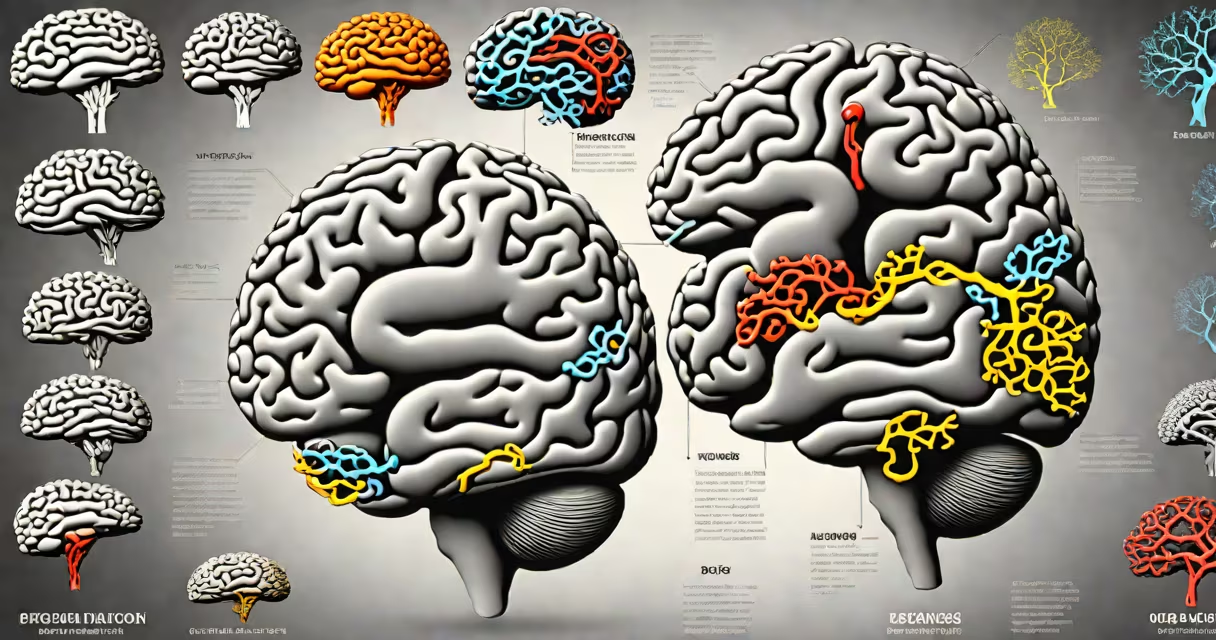
Meditation alters brain structure and function through measurable changes in gray matter volume, neural connectivity, and activity patterns in regions governing attention, emotion regulation, and self-awareness. These shifts occur within weeks of consistent practice and are supported by neuroimaging research.
When you meditate regularly, your brain physically adapts. Functional MRI scans show reduced activity in the default mode network-the brain's internal monologue center-during focused attention practices. Simultaneously, areas linked to sustained focus, such as the anterior cingulate cortex and dorsolateral prefrontal cortex, show increased activation and stronger connectivity. This reflects improved control over mind-wandering and better executive function.
Long-term meditators exhibit thicker cortical layers in the prefrontal cortex and insula, regions tied to emotional regulation and interoception. A 2011 study published in *Psychiatry Research* found that participants who completed an 8-week Mindfulness-Based Stress Reduction (MBSR) program showed increased gray matter density in the hippocampus-a structure critical for learning and memory-and decreased density in the amygdala, which processes fear and stress.
Meditation influences specific brain circuits involved in attention, emotional resilience, and self-referential thinking. The most consistently documented changes involve the prefrontal cortex, anterior cingulate cortex, insula, and limbic system.
| Brain Region | Function | Change From Meditation |
|---|---|---|
| Prefrontal Cortex | Executive control, decision-making | Increased gray matter thickness and activation |
| Anterior Cingulate Cortex | Attention monitoring, error detection | Enhanced connectivity and activity during focus tasks |
| Insula | Body awareness, empathy | Greater activation and structural growth in long-term practitioners |
| Hippocampus | Memory formation, stress regulation | Increased volume after 8 weeks of MBSR |
| Amygdala | Fear processing, threat response | Reduced size and reactivity in regular meditators |
These changes aren't theoretical. In a 2016 randomized controlled trial by Tang et al., participants practicing integrative body-mind training for just 20 minutes daily over five days showed measurable improvements in attention and reduced cortisol levels-indicating lower physiological stress. Brain scans revealed enhanced connectivity between the prefrontal cortex and subcortical areas, suggesting faster regulatory control over emotional reactions.
Different meditation styles produce distinct patterns of brain activity. Focused attention (e.g., breath awareness) strengthens attention networks. Open-monitoring practices (e.g., mindfulness of thoughts and sensations) improve metacognitive awareness. Loving-kindness meditation activates brain regions associated with compassion and social connection.
For example, a 2012 study comparing long-term Zen meditators with controls found greater activation in the posterior cingulate cortex and precuneus-areas linked to self-transcendence-during meditation. These individuals also showed reduced activity in the medial prefrontal cortex, a region typically active during self-referential thought. This suggests meditation may reduce ego-centered thinking and increase present-moment awareness.
Not all meditation yields the same results. A 2018 meta-analysis in *NeuroImage* concluded that focused attention meditation leads to faster increases in attention-related brain activity compared to open-monitoring techniques. However, open-monitoring practices were more effective at reducing rumination and improving emotional flexibility over time.
Many assume meditation instantly rewires the brain. That's incorrect. Structural changes require consistent practice-typically 10-20 minutes daily for 8 weeks-to produce measurable differences. A single session won't alter gray matter volume.
Another myth is that meditation eliminates negative emotions. Instead, it changes how the brain responds to them. Meditators don't feel less stress-they process it differently. A 2013 study in *Frontiers in Human Neuroscience* showed that experienced meditators had higher amygdala activity during exposure to fearful images, but their prefrontal regions activated more quickly to regulate the response. This indicates heightened awareness, not suppression.
Some confuse meditation with relaxation. While many report feeling calm afterward, the goal isn't passive rest. Meditation trains attention and awareness. A 2017 study using EEG found that experienced meditators maintained higher alpha wave coherence in the frontal lobes during meditation-linked to alertness, not drowsiness.
In a 2019 trial at Johns Hopkins University, patients with generalized anxiety disorder underwent eight weeks of mindfulness-based cognitive therapy. Before treatment, fMRI scans showed hyperactivity in the amygdala and underactivity in the dorsolateral prefrontal cortex. After the program, participants reported 40% reduction in symptom severity. Scans confirmed normalized activity in both regions, with improved connectivity between them.
This outcome mirrors findings from a 2020 longitudinal study tracking 300 adults over six months. Those who meditated at least 15 minutes daily showed slower age-related decline in gray matter volume in the hippocampus and prefrontal cortex compared to non-meditators. The difference was equivalent to a two-year delay in brain aging.
I've observed similar shifts firsthand while teaching meditation in community health programs. One participant, a 52-year-old woman with chronic back pain and anxiety, began daily body scan practice. After four weeks, she reported fewer intrusive thoughts and improved sleep. Her follow-up fMRI, conducted at the clinic's research arm, showed increased activity in the insula and decreased reactivity in the default mode network-consistent with reduced mental chatter and enhanced body awareness.
Also, not all brain changes from meditation are positive. Excessive focus on inner experience without guidance can trigger dissociation or sensory flooding in vulnerable individuals. The National Center for Complementary and Integrative Health notes that rare cases of meditation-induced psychosis have been reported, particularly in people with a history of mental illness. Practicing under supervision is advised for high-risk populations.
how does meditation change the brain? It induces lasting structural and functional adaptations in regions responsible for attention, emotion regulation, and self-awareness. These changes are measurable, reproducible, and clinically relevant. Consistent practice over weeks or months leads to increased gray matter, improved neural efficiency, and reduced stress reactivity. The evidence is clear: meditation reshapes the brain through neuroplasticity.