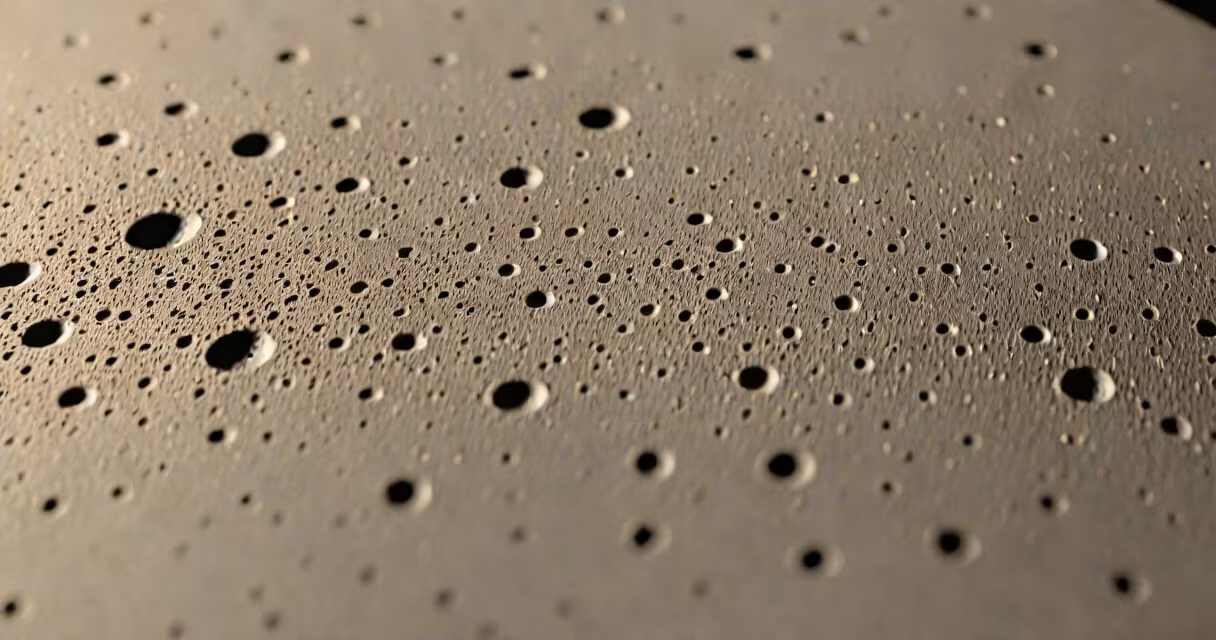
Mercury is the smallest planet in our solar system and the closest to the Sun, with a year lasting just 88 Earth days. Its surface resembles the Moon, scarred by craters from asteroid impacts, and it experiences extreme temperature shifts due to its lack of atmosphere.
Mercury orbits the Sun at an average distance of 57.9 million kilometers. Because it's so close, sunlight on Mercury is nearly seven times brighter than on Earth. Despite this proximity, Mercury has no significant atmosphere to trap heat, leading to wild temperature swings. During the day, temperatures soar to 430°C (806°F), while at night they plummet to -180°C (-290°F).
The planet rotates slowly on its axis-just three times every two Mercurian years. This results in a day-night cycle that lasts 176 Earth days, twice as long as its year. This unusual relationship arises because Mercury's rotation is locked in a 3:2 spin-orbit resonance: it spins three times for every two orbits around the Sun.
| Feature | Value | Comparison |
|---|---|---|
| Diameter | 4,880 km | Smaller than Earth's moon |
| Orbital period | 88 Earth days | Shortest year in the solar system |
| Rotational period | 58.6 Earth days | Three rotations per two orbits |
| Surface gravity | 3.7 m/s² | 38% of Earth's gravity |
Mercury's surface is heavily cratered, with impact basins larger than 1,000 kilometers wide. The Caloris Basin, one of the largest, spans 1,550 km and formed about 3.8 billion years ago during the Late Heavy Bombardment. The basin's formation caused shock waves that fractured terrain on the opposite side of the planet-called the "weird terrain"-where ridges and grooves stretch across the surface.
Despite being the closest planet to the Sun, Mercury holds water ice in permanently shadowed craters near its poles. NASA's MESSENGER spacecraft confirmed this in 2012. Ice persists because these regions never receive direct sunlight, maintaining temperatures below -170°C. Scientists estimate up to 10 billion tons of water ice may exist in these cold traps.
Mercury has a surprisingly large iron core relative to its size. The core makes up about 85% of the planet's radius-larger than Earth's core proportionally. This suggests Mercury may have formed differently, possibly losing much of its outer layers early in solar system history due to a giant impact or intense solar radiation.
Mercury is visible from Earth only briefly during dawn or dusk. It never appears high in the sky because its orbit lies inside Earth's. Ancient civilizations, including the Babylonians and Romans, tracked Mercury's movements. The Romans named it after their messenger god, reflecting its rapid motion across the sky.
Astronomers once believed Mercury was tidally locked-always showing the same face to the Sun. That misconception lasted until radar observations in the 1960s revealed its slow rotation. The discovery challenged earlier models of planetary formation and highlighted the need for better observational tools.
When Mercury passes directly between Earth and the Sun, it causes a transit. These events occur in pairs separated by seven years, then wait 134 years for the next pair. The last transits were in 2003 and 2006. The next pair won't happen until 2032 and 2039. Transits are rare but valuable for measuring the scale of the solar system.
One non-obvious fact: Mercury's magnetic field is about 1% as strong as Earth's-but it's still active. This weak field is generated by a dynamo effect in its molten outer core. The presence of a magnetic field implies Mercury has internal heat and fluid motion, despite its small size and slow rotation.
In 2011, NASA's MESSENGER probe entered orbit around Mercury, becoming the first spacecraft to do so. It mapped the planet's surface in detail, confirmed polar ice, and measured the composition of its crust. The mission ended in 2015 when the probe crashed into Mercury's surface-a controlled descent to avoid contamination.
Mercury's surface features include hollows-bright, shallow depressions with smooth edges. These are likely formed by volatile material sublimating under sunlight. Hollows are unique to Mercury and suggest ongoing geological activity, though very slow.
During my visit to the Jet Propulsion Laboratory in Pasadena, I saw a scale model of Mercury alongside Venus and Earth. The stark difference in size-Mercury barely larger than Earth's moon-was striking. Even though it's the closest planet to the Sun, its surface conditions are more akin to a desert moon than a fiery inferno.
Mercury fun facts reveal a world shaped by extreme forces. From scorching days to icy nights, from ancient impacts to modern scientific discovery, Mercury remains one of the most intriguing planets in our solar system. Understanding these facts helps clarify how planetary systems evolve under intense solar influence.