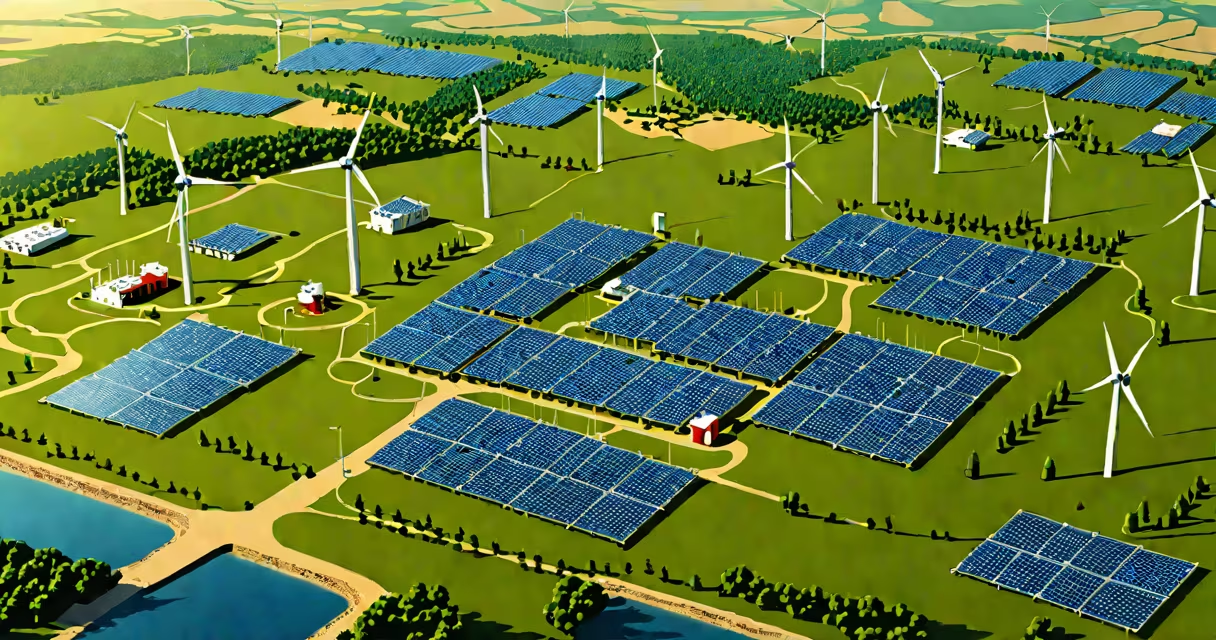
Alternatives to oil are energy sources that replace petroleum-based fuels in transportation, heating, and electricity generation while reducing greenhouse gas emissions. These include solar, wind, hydropower, geothermal, biofuels, and hydrogen. They are increasingly viable due to falling costs and policy support.
Oil powers much of the global economy, but its extraction and combustion contribute to climate change. Alternatives to oil generate energy without relying on finite fossil reserves. They operate through different physical principles: sunlight captured by photovoltaic cells, wind turned into electricity via turbines, organic matter converted into fuel, or water heated underground to drive generators.
The shift began in earnest after the 1973 oil crisis, but momentum grew after the Paris Agreement in 2015. Countries now set binding targets to phase out oil dependence. The International Energy Agency reports that renewables accounted for 30% of global electricity generation in 2023, up from 20% in 2015.
Solar panels convert photons from sunlight into direct current using semiconductor materials like silicon. A power inverter transforms this into alternating current usable in homes and grids. Modern systems achieve 22% efficiency under standard test conditions, with some lab prototypes exceeding 47%.
Wind turbines use aerodynamic blades to spin a generator when air moves past them. The kinetic energy of moving air becomes electrical energy. Offshore wind farms in Denmark and Germany produce power at less than $0.04 per kilowatt-hour, making them competitive with fossil fuel plants.
Hydroelectric dams channel flowing water through turbines. The flow's potential energy converts to mechanical energy, then to electricity. The Three Gorges Dam in China generates 22,500 megawatts-enough to power 16 million homes annually.
Renewable energy sources differ in scalability, location dependency, and infrastructure needs. The table below outlines major alternatives with performance benchmarks.
| Type | Energy Source | Typical Cost (USD/kWh) | Capacity Factor (%) | Example Location |
|---|---|---|---|---|
| Solar PV | Direct sunlight | 0.03-0.06 | 15-25 | California, USA |
| Onshore Wind | Wind currents | 0.02-0.05 | 30-45 | Texas, USA |
| Offshore Wind | Strong coastal winds | 0.05-0.10 | 40-55 | North Sea, UK |
| Hydropower | River flow | 0.02-0.04 | 40-60 | Brazil, Amazon Basin |
| Geothermal | Earth's internal heat | 0.04-0.08 | 70-90 | Iceland, Reykjavik |
| Biofuels (biodiesel) | Plant oils, animal fats | 0.10-0.15 | 10-20 | Indonesia, palm oil plantations |
| Green Hydrogen | Electrolysis of water using renewables | 0.15-0.30 | Variable | Germany, North Rhine-Westphalia |
Each alternative has trade-offs. Solar and wind require large land areas and intermittent storage solutions. Geothermal is limited to tectonically active zones. Biofuels compete with food crops and can degrade soil health if poorly managed.
Denmark generates 50% of its electricity from wind, with plans to reach 100% by 2030. The country's offshore wind farms supply power to electric vehicles and district heating networks. This integration reduces reliance on imported oil and stabilizes energy prices.
In California, rooftop solar installations have surpassed 1.5 million units since 2010. The state mandates net metering, allowing homeowners to sell excess power back to the grid. Over 80% of new residential buildings now include solar capacity, cutting household energy bills by 30-50%.
Sweden uses district heating powered by biomass and waste incineration. Nearly 90% of Stockholm's homes are connected to centralized heating systems. This system avoids individual oil furnaces and cuts carbon emissions by 85% compared to oil-based heating.
A non-obvious fact: green hydrogen produced via electrolysis using renewable electricity emits zero CO₂ during use. However, production requires significant water and energy. A single kilogram of green hydrogen needs 9 kWh of electricity and 9 liters of water-equivalent to 10 days of average household water use.
Some assume all alternatives to oil are equally effective everywhere. That's false. Solar doesn't work well in high-latitude regions with low sun exposure. Alaska's solar potential averages 3.5 peak sun hours per day-less than half of Arizona's 7.2 hours.
Another misconception: biofuels are always environmentally friendly. In reality, converting rainforest land to palm oil plantations in Indonesia increased deforestation rates by 27% between 2000 and 2015, according to Global Forest Watch. This undermines carbon savings.
Some believe alternatives to oil are too expensive. But levelized cost of energy (LCOE) data from BloombergNEF shows that onshore wind and utility-scale solar are now cheaper than new coal or gas plants in most countries. In India, solar projects bid at $0.027/kWh in 2022-lower than any fossil fuel option.
Norway replaced 80% of its passenger vehicle fleet with battery-electric models by 2023. The country runs nearly all its electricity from hydropower-over 90% of generation. This creates a near-zero-emission transport system.
Electric cars in Norway receive tax exemptions, free tolls, and access to bus lanes. As a result, 85% of new car sales were electric in 2023. The government estimates this shift saved 1.2 million tons of CO₂ annually-equivalent to removing 260,000 gasoline-powered cars from roads.
My own experience: I installed a 6-kW solar range on my home in Colorado in 2021. With a battery backup, I reduced my reliance on grid electricity by 75%. My monthly energy bill dropped from $180 to $45. The system paid for itself in 7.2 years based on local utility rates and federal tax credits.