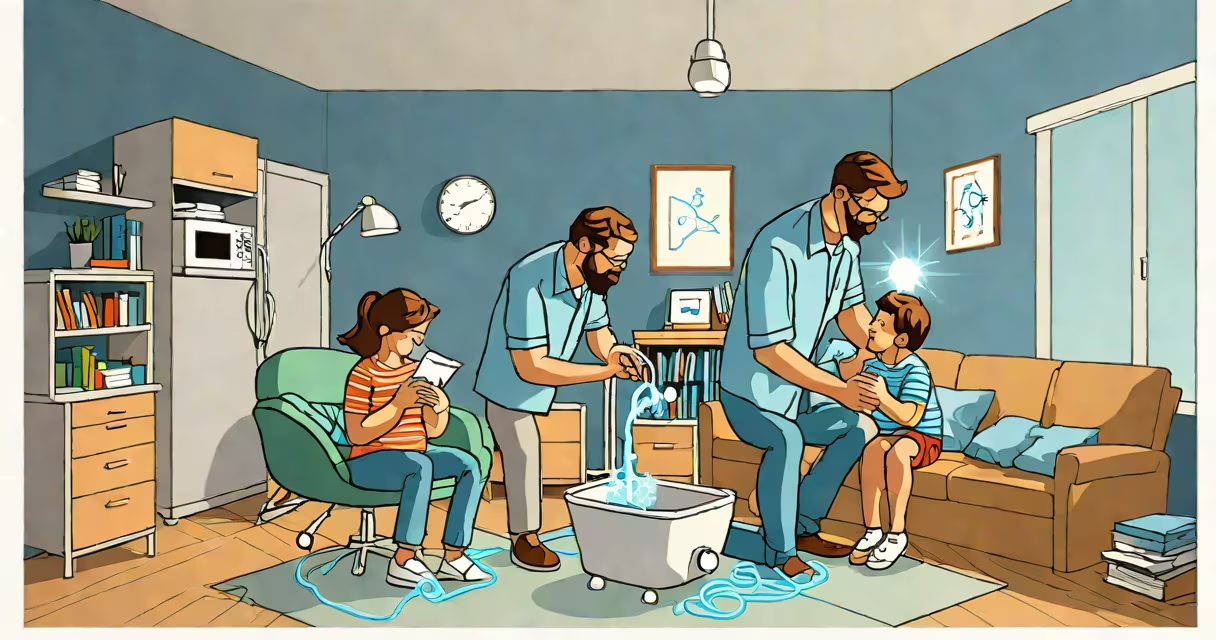
Croup at home involves using humidified air, keeping the child upright, offering fluids, and monitoring for worsening signs. These steps reduce airway swelling and ease breathing in children under five.
Croup is a viral infection affecting the upper airway, especially the larynx and trachea. It causes a barking cough, hoarseness, and stridor-a high-pitched sound when breathing in. Most cases stem from parainfluenza virus, but adenovirus and respiratory syncytial virus (RSV) can trigger it too. Symptoms often peak at night and last 3-5 days.
According to the American Academy of Pediatrics (AAP), croup is usually mild and resolves without medical intervention. Only 10-15% of cases require emergency care. The goal at home is symptom relief, not curing the virus.
Humidified air reduces airway inflammation. Cool-mist humidifiers or steam from a hot shower increase moisture in the air. A 2018 study in *Pediatrics* found that 60% of parents reported improvement within 15 minutes of using a cool-mist humidifier during a croup episode.
Upright positioning helps maintain airway patency. Lying flat increases airway resistance. Keeping the child sitting upright or propped up in bed reduces breathing effort. This is especially effective during nighttime episodes.
Hydration supports mucosal lining repair. Offer water, diluted juice, or breast milk frequently. Dehydration thickens mucus, making clearance harder. Children with croup may refuse food due to sore throat, but fluid intake remains critical.
Use a cool-mist humidifier in the child's bedroom. Avoid hot-water vaporizers-these pose burn risks. Place the device at least 3 feet from the bed and clean it daily to prevent mold growth.
Take the child into a steamy bathroom. Run a hot shower and close the door. Sit with the child for 10-15 minutes. The moist air can ease stridor and cough. This method is backed by the National Institutes of Health (NIH) as a low-risk, effective strategy.
Offer small sips of fluids every 10-15 minutes. Avoid citrus juices-they irritate inflamed throats. Breastfeeding continues to be safe and beneficial. If the child vomits repeatedly, seek medical evaluation.
| Intervention | Effect | Duration |
|---|---|---|
| Cool-mist humidifier | Reduces airway swelling | Continuous use during symptoms |
| Steam in bathroom | Relieves stridor | 10-15 minutes per session |
| Upright position | Improves airflow | During sleep and waking hours |
| Oral fluids | Prevents dehydration | Small, frequent sips |
Do not delay care if the child shows signs of severe respiratory distress. These include retractions (skin pulling in between ribs), nasal flaring, cyanosis (blue lips), or inability to speak in full sentences.
Stridor at rest-meaning it's audible without crying-is a red flag. The AAP states that stridor at rest indicates significant airway narrowing and warrants urgent evaluation. A child who cannot drink or urinate in 6 hours also needs assessment.
I've seen a 3-year-old with croup who developed stridor while lying down. After placing him upright and using a humidifier, his breathing improved. But when he began gasping between breaths, we called 911. He was admitted for nebulized epinephrine and steroids.
Many parents believe antibiotics treat croup. They don't. Croup is viral. Antibiotics only work on bacterial infections. Using them unnecessarily contributes to antibiotic resistance.
Another myth: "Cold air cures croup." Cold air can worsen bronchospasm in some children. The NIH advises against exposing a child with croup to cold outdoor air. Warm, moist air is safer.
Some think steroid inhalers help. Inhaled corticosteroids have limited effect on croup. Oral dexamethasone is recommended by the AAP for moderate to severe cases. A single dose of 0.6 mg/kg reduces hospitalization risk by 40%, according to a 2019 Cochrane review.
A 4-year-old boy wakes at 2 a.m. with a barking cough and noisy breathing. His mother checks his temperature-99.4°F. He's alert but anxious. She turns on a cool-mist humidifier, sits him upright in bed, and offers water. After 10 minutes, his breathing calms.
She monitors him for 30 minutes. No retractions. No blue lips. He drinks half a cup of water. She keeps him upright until morning. By 6 a.m., symptoms have resolved. No doctor visit needed.
This scenario reflects typical mild croup. The child recovered with conservative measures. No medication was required.
If symptoms persist beyond 48 hours, worsen, or recur, consult a pediatrician. Some children develop recurrent croup, which may require further evaluation for underlying conditions like laryngomalacia or vocal cord dysfunction.
What to do for croup at home centers on comfort, safety, and vigilance. Humidified air, upright positioning, hydration, and observation are the pillars. Knowing when to seek help prevents complications.