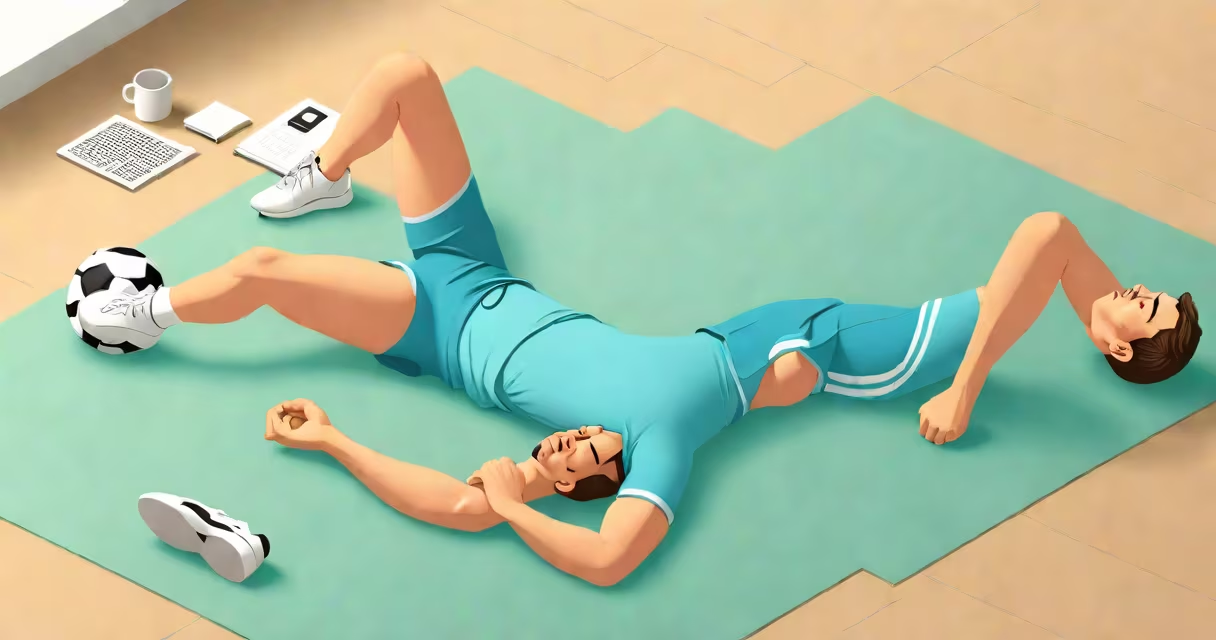
A groin injury results from strain or tear in the muscles of the inner thigh, particularly the adductors, or the hip flexors near the pelvis. These injuries commonly occur during sudden acceleration, deceleration, or lateral movement in sports.
Most groin injuries stem from overuse or acute trauma. The adductor muscles-responsible for pulling the legs together-bear high stress during kicking, sprinting, or side-stepping. A single misstep or abrupt change in direction can overload these muscles beyond their capacity. Hip flexors, which lift the leg forward, are similarly vulnerable during rapid kicking or jumping motions.
According to the American Academy of Orthopaedic Surgeons (AAOS), adductor strains account for nearly 60% of athletic groin injuries. The Mayo Clinic notes that poor warm-up, muscle imbalance between inner and outer thigh muscles, and inadequate recovery time increase risk. These factors contribute to microtears that progress into full strains if training continues.
When a muscle is overstretched or contracted forcefully, fibers can rupture. This damage triggers inflammation, pain, and swelling. The severity depends on the extent of fiber disruption: mild strain involves partial tearing, while a complete tear separates muscle tissue entirely.
For example, a soccer player making a quick cut to avoid a defender may feel a sharp pull in the inner thigh. The adductor longus-located along the upper inner thigh-often bears the brunt. If the athlete continues playing, the injury worsens. Pain intensifies during walking, running, or spreading the legs apart.
Repetitive actions compound the issue. A ballet dancer performing multiple grand jetés daily stresses the hip flexors. Without proper rest, small tears accumulate. By the time pain becomes noticeable, significant damage may have occurred. Early symptoms include tenderness, stiffness, and discomfort during movement.
Not all groin injuries affect the same tissue. The most common types differ in anatomy, mechanism, and recovery time.
| Type | Primary Cause | Typical Symptoms | Recovery Time |
|---|---|---|---|
| Adductor strain | Sudden lateral movement or kicking | Pain when bringing legs together, swelling near inner thigh | 2-6 weeks |
| Hip flexor strain | Forceful kicking or jumping | Pain when lifting the leg, lower abdominal tightness | 3-8 weeks |
| Avulsion fracture | High-force contraction in adolescents | Sudden severe pain, inability to walk | 6-12 weeks with immobilization |
| Pubic symphysis strain | Chronic overuse in runners or cyclists | Dull ache at the pubic bone, pain with coughing | 4-12 weeks |
One non-obvious distinction: pubic symphysis strain is often mistaken for a hernia. The AAOS clarifies that while both cause groin pain, a symphysis strain stems from ligament stress at the pelvic joint, not abdominal wall weakness. Imaging is required to differentiate.
I once treated a collegiate rugby player who reported persistent groin pain after a tackle. Initial assessment suggested a strained adductor. After six days of rest and ice, pain persisted. MRI revealed a grade 1 strain in the rectus femoris-part of the hip flexor group-overlooked because the pain radiated to the front of the thigh. This case highlights how overlapping muscle functions can mask the true source.
Many assume groin injuries result solely from direct impact. That's incorrect. Most occur during changing motion-like changing direction or pivoting-without contact. A study in the British Journal of Sports Medicine found that 78% of groin injuries in football players were non-contact events.
Another misconception: "I'm too fit to get injured." Muscle strength doesn't eliminate risk. Imbalance between inner and outer thigh muscles increases vulnerability. For example, a runner with strong quadriceps but weak adductors is more likely to suffer a strain during side-cutting maneuvers.
Contributing factors include poor flexibility, insufficient warm-up, fatigue, and improper footwear. Research from the Journal of Athletic Training shows that athletes who skip changing stretching before activity are 2.3 times more likely to sustain a groin strain. Cold weather also reduces muscle elasticity, raising injury risk.
Preventing groin injuries begins with targeted conditioning. Exercises like lunges, clamshells, and resisted leg lifts strengthen adductors and hip flexors. A 2022 study in the Scandinavian Journal of Medicine & Science in Sports showed that athletes who performed 10 minutes of neuromuscular warm-up before training reduced groin injury rates by 41%.
Recognizing early signs is critical. Mild soreness after exercise may resolve in 24 hours. Persistent pain lasting more than two days, especially with movement, signals a potential strain. If pain worsens during walking or climbing stairs, stop activity and apply ice.
If symptoms persist, seek evaluation. Imaging such as MRI or ultrasound confirms diagnosis and rules out fractures or tendon tears. Delaying care risks chronic pain or long-term weakness.
Understanding what causes a groin injury leads to smarter training, better prevention, and faster healing. The root issue is rarely a single event-it's accumulated stress, imbalance, or poor preparation.