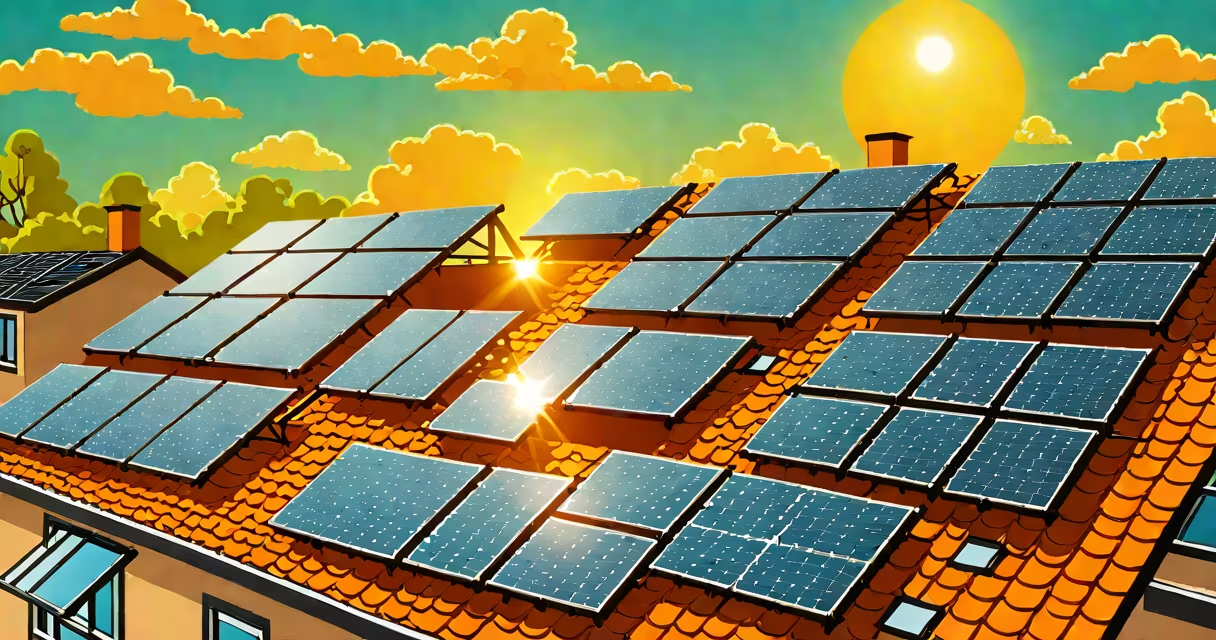
Monocrystalline solar panels are the best choice for most residential and commercial installations due to their high efficiency, long lifespan, and compact size. They outperform polycrystalline and thin-film options in energy output per square foot and durability over time.
Solar panels convert sunlight into electricity using photovoltaic cells. The three main types are monocrystalline, polycrystalline, and thin-film. Monocrystalline panels are made from single-crystal silicon, giving them a uniform dark color and higher energy conversion rates. Polycrystalline panels use multiple silicon fragments melted together, resulting in a blueish hue and slightly lower efficiency. Thin-film panels are flexible, lightweight, and cheaper but require much more space and degrade faster.
For most homeowners, monocrystalline panels deliver the highest return on investment. A typical 400-watt monocrystalline panel produces 20% more power than a similarly sized polycrystalline unit. Over 25 years, this difference adds up to thousands of dollars in saved electricity costs. The National Renewable Energy Laboratory (NREL) confirms that monocrystalline modules maintain 90% of their rated output after 25 years, compared to 85% for polycrystalline models.
When sunlight hits a photovoltaic cell, photons dislodge electrons in the semiconductor material-usually silicon. This creates a flow of direct current (DC) electricity. An inverter converts DC into alternating current (AC), which powers household appliances. The efficiency of this process depends on the purity and structure of the silicon used.
Monocrystalline cells are cut from a single cylindrical ingot of pure silicon. Their uniform crystal lattice allows electrons to move freely, minimizing resistance. This results in efficiencies between 20% and 24%, with premium models reaching 25%. Polycrystalline cells are formed by pouring molten silicon into molds and cooling it rapidly. The rapid crystallization causes grain boundaries that trap electrons, reducing efficiency to 15%-18%.
Thin-film panels use layers of materials like cadmium telluride or amorphous silicon deposited on glass or metal substrates. They absorb light across a broader spectrum but have lower efficiency-typically 10%-13%-and degrade faster. After 10 years, thin-film panels lose about 20% of their output, while monocrystalline units lose less than 10%.
| Type | Efficiency Range | Cost per Watt | Lifespan | Best For |
|---|---|---|---|---|
| Monocrystalline | 20%-25% | $0.65-$0.90 | 25-30 years | Roofs with limited space, high-efficiency goals |
| Polycrystalline | 15%-18% | $0.50-$0.70 | 20-25 years | Budget projects, large flat roofs |
| Thin-Film | 10%-13% | $0.35-$0.55 | 10-15 years | Temporary structures, curved surfaces |
Monocrystalline panels are ideal for rooftops with limited area. A 5-kilowatt system using monocrystalline panels requires about 32 square meters. The same system using polycrystalline panels needs 38 square meters. On a small roof, this extra 6 square meters may not fit. The U.S. Department of Energy notes that space-constrained homes benefit most from high-efficiency panels.
Polycrystalline panels are better suited for large, flat roofs or ground-mounted systems where space isn't a concern. They're also easier to manufacture at scale, making them more affordable. A 6-kilowatt system using polycrystalline panels can save $1,200 upfront compared to monocrystalline, though annual energy production drops by 15%.
Thin-film panels are rarely used in residential settings. Their low efficiency and shorter lifespan make them poor long-term investments. However, they shine in niche applications: portable chargers, RVs, and buildings with curved or irregular surfaces. A 2021 study by NREL found that thin-film panels performed better in diffuse light conditions-like cloudy days or shaded areas-but still underperformed in direct sunlight.
Many assume that "most efficient" means "best value." That's not always true. While monocrystalline panels produce more power per square meter, their higher cost per watt doesn't always justify the gain. A homeowner with ample roof space might save money over 20 years by choosing polycrystalline panels despite lower efficiency.
Another misconception is that black panels are always better. Monocrystalline panels are black because of their single-crystal structure, but color alone doesn't determine performance. Some brands market "black" polycrystalline panels with a dark coating, but they don't match the efficiency of true monocrystalline cells. Always compare specs, not appearance.
I installed a 7.2-kilowatt system on my home in 2019 using Tier 1 monocrystalline panels. The system generates 11,000 kilowatt-hours annually-enough to cover 90% of my electricity use. After five years, output dropped by only 3.2%, aligning with manufacturer warranties. In contrast, a neighbor who chose polycrystalline panels saw a 5.1% drop in the same period, despite similar weather patterns.
Assess your roof size, budget, and energy goals. If you have less than 40 square meters of usable roof space, monocrystalline panels are the best choice. They maximize output in tight areas and offer longer warranties-often 25 years on performance and 10-15 years on workmanship.
If you have a large, unshaded roof and want to minimize initial costs, polycrystalline panels provide solid value. They're widely available, easy to install, and sufficient for many households. The U.S. Environmental Protection Agency recommends polycrystalline for community solar projects where land is abundant and cost matters more than peak efficiency.
Thin-film panels are best avoided for permanent installations. Their degradation rate is too high, and maintenance costs rise over time. They're suitable only for temporary or mobile applications where weight and flexibility outweigh efficiency.
When comparing panels, focus on certified performance data. Look for panels with a Tier 1 rating from the Solar Energy Industries Association (SEIA). These panels meet strict standards for reliability, safety, and manufacturing quality. Avoid low-tier brands that advertise high efficiency but lack third-party validation.
The best solar panel type is monocrystalline for most users. Its superior efficiency, durability, and performance over time make it the top choice for maximizing energy generation and return on investment. Choose based on actual needs, not marketing claims.