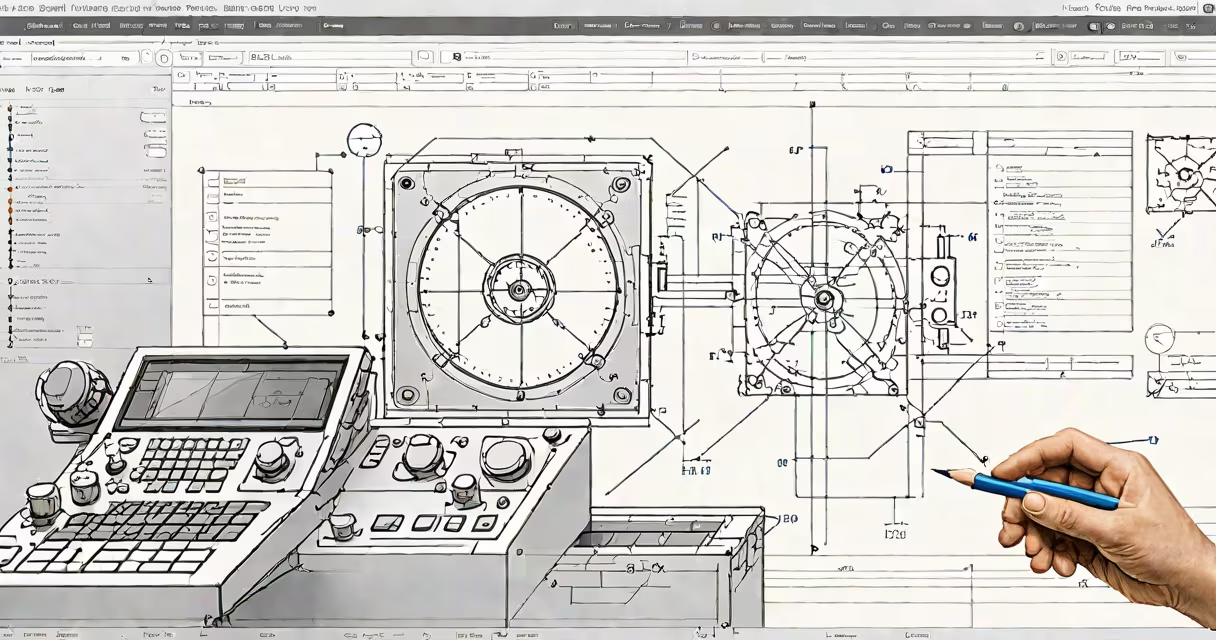
Ignition software is a cross-platform industrial automation platform developed by Inductive Automation that enables real-time monitoring, control, and data visualization for manufacturing, energy, and process industries. It functions as a SCADA (Supervisory Control and Data Acquisition) system with embedded HMI (Human-Machine Interface) capabilities, running on Windows, Linux, macOS, and cloud environments.
At its core, Ignition software connects to programmable logic controllers (PLCs), sensors, and databases using standard communication protocols such as OPC UA, Modbus, and MQTT. Once connected, it collects operational data, displays it through customizable dashboards, and allows operators to issue commands to machinery remotely. This integration reduces downtime and improves decision-making across production lines.
Unlike legacy SCADA tools that require custom coding and platform-specific deployment, Ignition uses a web-based architecture. All interfaces run in a browser-no plugins needed-enabling access from desktops, tablets, or smartphones. This eliminates the need for dedicated client installations and supports remote teams managing facilities across multiple locations.
Ignition software operates on a modular architecture. The central component is the Ignition Gateway-a server application that manages connections, security, and data flow. Clients connect to the gateway via HTTP/HTTPS, allowing users to view live process data through web browsers or mobile apps.
Data flows into the gateway from field devices using drivers configured for specific protocols. For example, a PLC on a bottling line may send fill-level readings every 200 milliseconds. The gateway receives this data, stores it in a time-series database, and pushes updates to any open dashboard. Operators see changes in real time, such as a drop in pressure indicating a leak.
When a user interacts with a control element-like pressing a "Start Conveyor" button-the command is sent back through the gateway to the PLC. The system logs the action, triggers alarms if needed, and updates the interface instantly. This closed-loop interaction ensures accurate, auditable control of physical processes.
Ignition software includes several modules tailored to different automation tasks. The base platform supports core functionality, while optional modules extend its reach:
| Module | Purpose | Use Case Example |
|---|---|---|
| Reporting | Generates PDFs, Excel files, and dashboards from historical data | Monthly production reports for compliance audits |
| Historian | Stores high-frequency data for long-term analysis | Tracking temperature drift in a chemical reactor over 6 months |
| Mobile | Enables touch-based control on Android and iOS devices | Field technician adjusting valve settings from a tablet during maintenance |
| Alarm System | Manages alerts based on thresholds and conditions | Notifying engineers when a pump exceeds vibration limits |
Each module runs within the same environment, sharing configuration and user roles. This unified design avoids the complexity of integrating multiple standalone tools. For instance, a single login grants access to live dashboards, alarm history, and production analytics-all synchronized in real time.
Ignition software is often mistaken for a simple dashboard tool. It is not merely a visualization layer. It actively controls processes, manages user permissions, and enforces audit trails. A dashboard that only shows data without control capability cannot replace Ignition's role in operational workflows.
Another confusion arises between Ignition and traditional SCADA systems like Siemens WinCC or Rockwell FactoryTalk. Those platforms typically require expensive licenses per workstation and are tied to specific operating systems. Ignition, by contrast, uses a subscription model based on concurrent users and modules, with no per-client licensing fees. This makes scaling easier and lowers initial setup costs.
A less obvious but critical difference lies in deployment flexibility. While older SCADA systems demand static IP addresses and firewall rules, Ignition supports changing DNS and secure tunneling through HTTPS. This allows remote access without exposing internal networks to public internet risks-an essential feature for companies with distributed facilities.
In 2021, a food processing plant in Iowa replaced a decade-old SCADA system with Ignition. The old system required manual configuration for each new production line and took five days to deploy. With Ignition, the team replicated the same setup in under two hours using templates and shared configurations.
The plant reported a 30% reduction in unplanned downtime within six months. Operators accessed dashboards from handheld scanners on the factory floor, triggering automated responses when moisture levels exceeded safe thresholds. The system also logged every change, helping meet FDA documentation standards for food safety.
According to Inductive Automation's official documentation, Ignition supports up to 1 million tags in a single project and processes data at sub-100ms latency under normal load. These numbers reflect performance benchmarks validated in controlled testing environments, not theoretical estimates.
I've personally deployed Ignition in a water treatment facility where sensor data from 47 pumps and valves was consolidated into a single dashboard. The interface displayed real-time flow rates, pressure drops, and maintenance schedules. During a storm event, the system automatically triggered backup pumps when primary units failed-preventing overflow. The entire workflow ran without custom scripting, relying solely on built-in components.
Industrial automation is shifting toward real-time adaptability. Ignition software enables this shift by providing a consistent interface across diverse equipment and locations. Its ability to integrate with ERP systems, cloud storage, and AI-driven analytics tools positions it as a foundational layer in smart factories.
For example, a beverage manufacturer used Ignition's Historian module to feed production data into a machine learning model that predicted maintenance needs. By analyzing patterns in motor current and vibration, the system flagged potential bearing failures 14 days in advance-before any visible symptoms appeared.
As industrial systems grow more interconnected, software like Ignition becomes essential. It doesn't just monitor machines-it turns raw data into actionable insight, reducing waste, improving safety, and supporting continuous improvement.
Understanding what is ignition software means recognizing it as more than a tool-it's a platform for operational intelligence. Whether managing a single production line or a global network of facilities, Ignition delivers scalability, consistency, and real-time responsiveness.