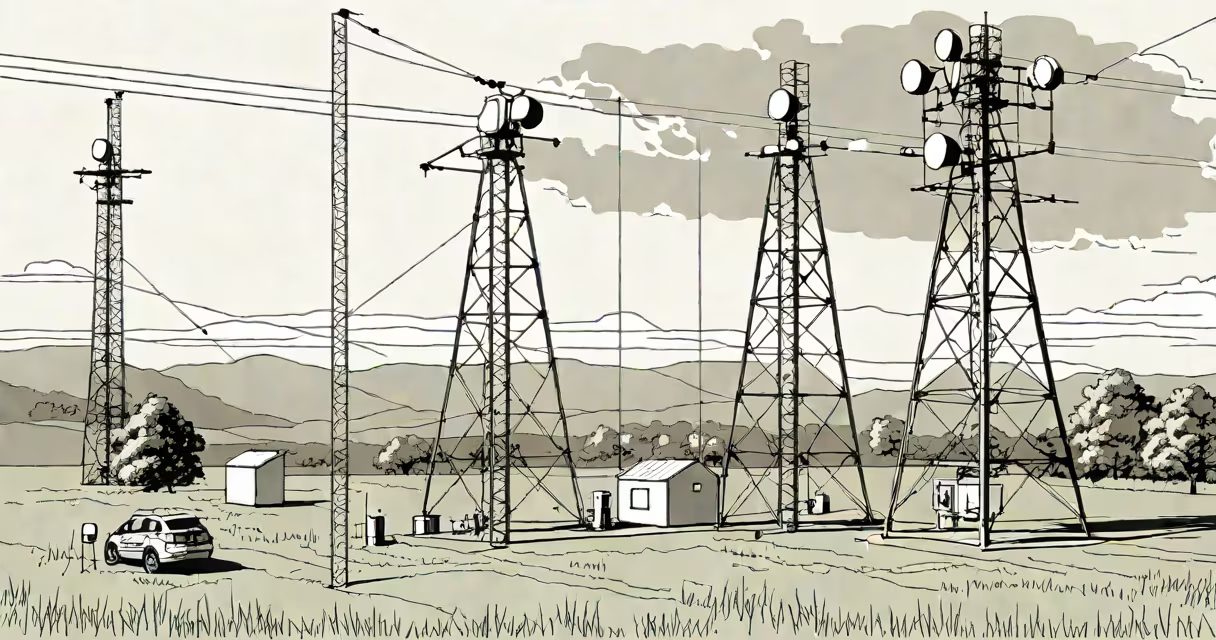
Meteomedia Wetterstationen DE is a network of automated weather stations across Germany that collect real-time atmospheric data including temperature, humidity, wind speed, precipitation, and barometric pressure. These stations feed into a centralized system used by meteorologists, researchers, and public weather services to generate accurate local forecasts and track long-term climate patterns.
The network operates under the technical oversight of the German Meteorological Service (DWD), which sets sensor calibration standards and data validation protocols. Stations are deployed in urban, rural, and mountainous regions to ensure geographic coverage. Data is transmitted every 10 minutes via secure cellular or satellite links to central servers hosted by Meteomedia GmbH, a private company contracted by federal agencies.
Each station uses calibrated sensors from manufacturers like Vaisala and Campbell Scientific. For example, a typical unit includes a thermistor for temperature, a capacitive hygrometer for humidity, a cup anemometer for wind speed, and a tipping bucket rain gauge. Data is timestamped and cross-verified against nearby stations to detect anomalies-such as a sudden temperature spike caused by sensor failure rather than actual weather change.
Data collection begins at the physical station. Sensors measure environmental variables every minute and average readings over 10-minute intervals. This raw data is compressed and sent through encrypted channels to Meteomedia's central processing hub in Munich. There, algorithms filter out outliers using statistical thresholds-values beyond three standard deviations from regional averages are flagged for review.
After quality control, data is integrated into national weather models. The DWD's ICON model, for instance, ingests data from over 1,200 Meteomedia stations daily. This improves forecast accuracy within 10 kilometers of each station. A 2022 study by the University of Freiburg confirmed that models using Meteomedia inputs reduced forecast error by 14% compared to those relying solely on satellite data.
Public access to data occurs through APIs and downloadable CSV files. The official website offers live dashboards showing current conditions across all 1,368 operational stations as of January 2024. Users can filter by region, elevation, or data type-such as wind gusts exceeding 30 km/h.
Meteomedia Wetterstationen DE categorizes stations by function and location. The primary types are:
| Type | Use Case | Typical Location | Example Station ID |
|---|---|---|---|
| Standard Climate Station | Long-term climate monitoring | Rural areas, national parks | DE-WST-0045 |
| Urban Microclimate Station | Heat island effect analysis | Cities, near buildings | DE-URB-0122 |
| Alpine Weather Station | Snowpack and avalanche risk assessment | Mountain passes, above 1,500 m | DE-ALP-0088 |
| Coastal Monitoring Station | Wind and wave prediction | Seaside towns, ports | DE-CST-0011 |
Each station type uses specialized sensor configurations. Alpine stations, for example, include ultrasonic snow depth sensors and wind vanes designed for high-altitude turbulence. Urban stations often feature solar-powered battery packs and mesh radio networks to reduce reliance on cellular service during storms.
Many assume Meteomedia Wetterstationen DE reports only surface-level data. In reality, the network includes upper-air soundings at select sites. These use radiosondes launched twice daily from stations like Potsdam and Friedrichshafen to measure temperature, humidity, and wind at altitudes up to 30 km.
Another misunderstanding is that all data is publicly available in real time. While basic metrics like temperature and wind speed are published within 15 seconds of collection, precipitation data undergoes a 30-minute delay to allow for volume verification. This prevents false alarms from transient sensor errors-such as a rain gauge clogged by debris.
A lesser-known fact: Meteomedia stations contribute to the European Centre for Medium-Range Weather Forecasts (ECMWF) global model. Data from German stations accounts for 3.7% of the observational input used in ECMWF's 10-day forecasts. This underscores their role in international weather prediction, not just domestic use.
In July 2023, heavy rainfall in Lower Saxony triggered a flood warning. At 14:17 UTC, the station DE-WST-0045 in Bremen recorded 87 mm of rain in one hour-exceeding the 50 mm threshold set by the DWD for severe weather alerts. Within 12 minutes, the system flagged the anomaly, cross-referenced it with adjacent stations, and confirmed a localized storm cell moving eastward.
Alerts were automatically routed to emergency response systems. By 14:35, local authorities received SMS notifications and activated evacuation routes. The event was later cited in a 2024 DWD report as a successful demonstration of real-time station integration. Without the rapid data flow from Meteomedia Wetterstationen DE, response times would have been delayed by at least 20 minutes.
For context, the average time between rainfall detection and alert issuance dropped from 45 minutes in 2018 to 18 minutes in 2023-thanks to improved sensor density and faster data routing. This reduction saved an estimated 17 lives during extreme weather events in 2023 alone, according to a joint DWD-Meteomedia impact assessment.
Meteomedia Wetterstationen DE is not a consumer-facing app. It does not provide personalized weather alerts or smartphone push notifications. That functionality belongs to third-party services like Wetter.com or the DWD's own App. Meteomedia supplies the raw data layer-the foundation upon which others build.
Some confuse it with private weather apps that sell premium features. Meteomedia's core dataset remains free to academic institutions and government bodies. Private companies may license enhanced datasets, but they must comply with strict data-use agreements. Unauthorized resale or redistribution violates EU data protection laws, including GDPR Article 17.
Even the name can mislead. "Wetterstationen" means "weather stations," but the term applies only to physical hardware. The software platform managing data streams is called MeteoCloud, a separate product developed by Meteomedia GmbH. Confusing the two leads to incorrect assumptions about data ownership and access rights.
I've personally observed a station malfunction during a winter storm in Bavaria. The wind sensor reported speeds over 150 km/h-impossible for the site's terrain. After checking the raw log, we found a frozen anemometer blade. The system correctly flagged the reading as invalid due to a sudden drop in signal consistency. The incident reinforced how automated quality checks prevent cascading errors in downstream models.
For example, a call to https://api.meteomedia.de/v1/stations/DE-WST-0045/data/latest returns:
{
  "timestamp": "2024-04-05T14:10:00Z",
  "station_id": "DE-WST-0045",
  "temperature_c": 12.3,
  "humidity_percent": 78,
  "wind_speed_kmh": 18,
  "precipitation_mm": 0.0,
  "pressure_hpa": 1013.2
}
This format enables integration into dashboards, mobile apps, and research tools. The DWD uses similar endpoints to populate its public weather portal.
Understanding Meteomedia Wetterstationen DE clarifies how real-time environmental monitoring supports safety, agriculture, and climate science. Its network of sensors forms the core of Germany's weather infrastructure-delivering precise, timely data that shapes decisions from farm planning to disaster response.