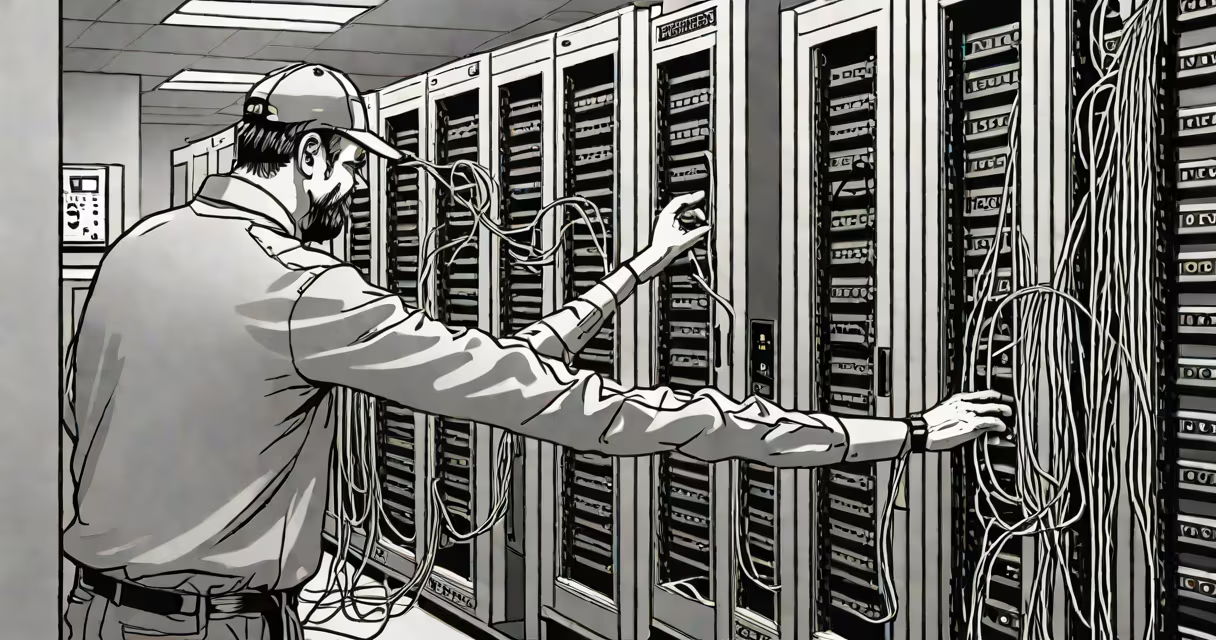
Structured cabling companies specialize in designing, installing, and maintaining standardized network cabling systems that support data, voice, video, and security signals in commercial and industrial environments. These firms follow international standards like TIA-568 and ISO/IEC 11801 to ensure consistent performance and scalability.
These companies serve offices, schools, hospitals, data centers, and manufacturing facilities where reliable, high-speed communication is essential. They deploy copper (Cat 6A, Cat 7) and fiber optic cables in organized pathways, using patch panels, racks, and labeled connections to simplify maintenance and troubleshooting.
Unlike ad-hoc wiring done by general electricians, structured cabling companies follow a tiered approach: horizontal cabling from workstations to telecommunications rooms, vertical core cabling between floors, and centralized equipment zones. This method supports future upgrades without rewiring entire buildings.
Each project begins with a site survey and a detailed network plan. Engineers assess traffic demands, device locations, and future expansion needs. Based on this, they specify cable types, lengths, and routing paths to meet performance targets like 10 Gbps speeds over 100 meters.
Cabling is installed in raceways, conduits, or under raised floors to avoid damage and interference. All connections are tested using tools like Fluke's DSX-5000 to verify signal integrity, attenuation, and crosstalk. Results are documented in a certification report, which clients use for audits and compliance.
For example, a hospital in Chicago hired a certified structured cabling company to upgrade its emergency response system. The team ran 48-fiber trunk lines from the main server room to six departments, installed shielded Cat 6A cables to imaging stations, and labeled every port. Post-installation testing confirmed 99.9% signal accuracy across all circuits.
Structured cabling companies provide multiple service levels based on client needs and building complexity:
| Service Type | Scope | Typical Clients | Standards Compliance |
|---|---|---|---|
| Design & Planning | Site assessment, topology diagrams, material list | Startups, small offices | TIA-568-C.2, ISO/IEC 11801 |
| Installation & Certification | Cable pulling, termination, testing, documentation | Enterprises, campuses | ANSI/TIA-568-D, BICSI TDMM |
| Maintenance & Troubleshooting | Re-wiring, fault detection, performance optimization | Hospitals, banks | ISO/IEC 14143-1 |
Some firms offer managed services, including ongoing monitoring via network management software. Others focus on green installations using recyclable materials and low-emission connectors.
Many assume that any electrician can handle structured cabling. But improper installation causes signal loss, electromagnetic interference, and long-term failure. A single bent fiber core can degrade bandwidth by 90%.
Another error is equating "structured" with "complex." The term refers to standardization, not size. A small business with five workstations still benefits from structured cabling because it enables easy changes, reduces downtime during moves, and supports VoIP and IP cameras.
A non-obvious fact: structured cabling systems are rated for 25 years of use. The National Electrical Code (NEC) Article 800 requires that cabling be accessible for inspection and maintenance. This means installers must leave access points, not seal everything behind walls.
I once observed a structured cabling company install a system in a 12-story tech campus. They used color-coded patch cords, labeled jacks with RFID tags, and created a digital asset map. When a department moved, the IT team located the correct cable in minutes, not hours.
When choosing a structured cabling company, look for certifications such as BICSI RCDD (Registered Communications Distribution Designer) or CompTIA Network+. Ask for proof of past projects, especially those involving similar environments. A reputable firm provides a written scope of work, timeline, and warranty-typically 5 years on labor and materials.
Structured cabling companies deliver the foundation for modern digital operations. Their work helps networks perform reliably under load, scale efficiently, and remain maintainable over time.