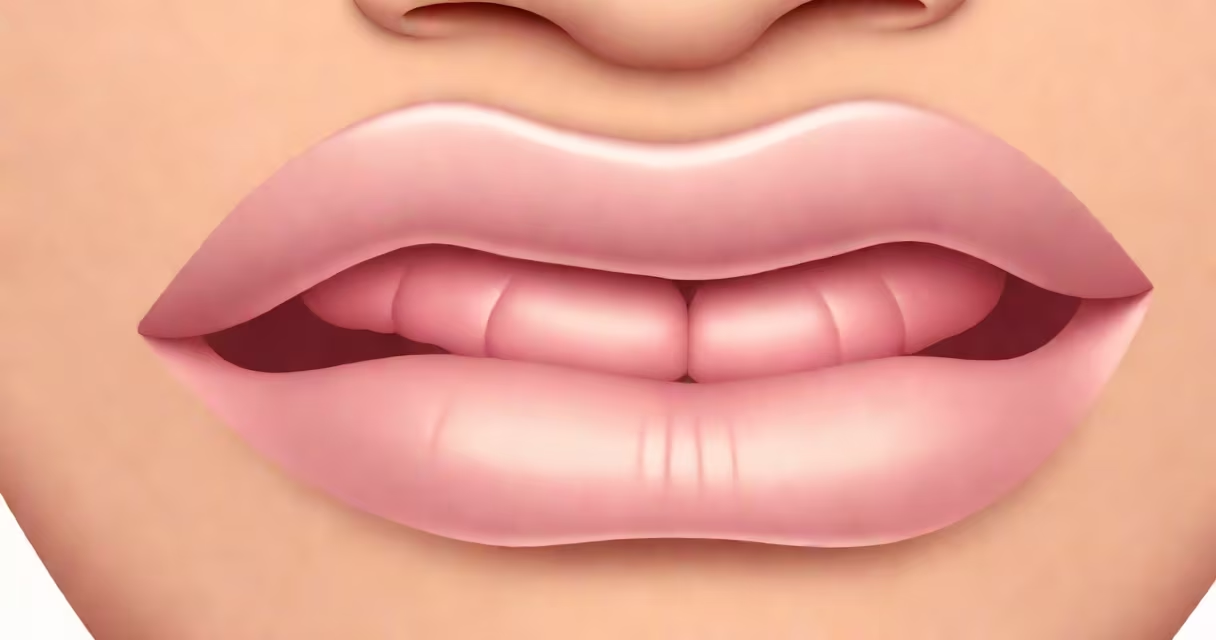
The word "bind" is pronounced /baɪnd/ in American English and /baɪnd/ in British English-rhyming with "kind" or "mind," with a clear 'b' sound at the start and a soft 'd' at the end. It is not pronounced like "bined" or "bint."
Understanding how to pronounce "bind" begins with recognizing the syllable structure: one syllable, stressed on the single vowel. The initial consonant is a voiced bilabial stop /b/, produced by pressing the lips together and releasing with a burst of air. The vowel is a long 'i' sound /aɪ/, as in "eye" or "high." The final consonant is a voiceless alveolar stop /d/, formed by touching the tip of the tongue to the ridge behind the upper teeth.
Common mispronunciations include dropping the 'b' entirely (sounding like "ind" or "wind"), which leads to confusion with the word "wind" (as in "the wind blows"). Another error is over-emphasizing the 'd' at the end, making it sound like "bined" with a hard 'd'-which changes the meaning and confuses listeners. The correct version maintains a crisp but unobtrusive 'd' at the end.
The /b/ in "bind" is voiced, meaning the vocal cords vibrate during its production. This distinguishes it from the voiceless /p/, which lacks vibration. Saying "bind" versus "pind" (a non-word) shows the difference: the 'b' is warm and resonant, while the 'p' is sharp and explosive.
The vowel /aɪ/ is a diphthong-a glide from the 'a' sound toward the 'i'. It's the same vowel used in "time," "nine," and "light." When speaking quickly, the 'i' component becomes more prominent, which is why "bind" sounds close to "bined" in rapid speech-but the full vowel must be heard.
The final /d/ is a stop consonant, not a fricative. It's not a hissing sound like 's' or 'z'. Instead, it's a brief closure and release at the alveolar ridge. In connected speech, especially in phrases like "bind the book," the /d/ may soften slightly due to assimilation, but it remains distinct from a 't' or 'n'.
Two primary errors occur when people attempt to pronounce "bind": omitting the initial 'b' and misplacing stress. Omitting the 'b' turns "bind" into "ind," which is not a standard English word and causes misunderstanding. For example, saying "I'll ind you" instead of "I'll bind you" could be interpreted as a threat involving a different verb entirely.
Stress placement is less critical here since "bind" has only one syllable, but speakers sometimes place stress on the second syllable when they're uncertain. This results in a two-syllable pronunciation like "bin-d" or "bīnd," which is incorrect and makes the word sound foreign or awkward.
| Pronunciation Error | Correct Form | Why It Matters |
|---|---|---|
| "ind" (silent b) | /baɪnd/ | Causes confusion with unrelated words; alters meaning |
| "bīnd" (stressed second syllable) | /baɪnd/ | Artificially extends syllables; sounds unnatural |
| "bined" (hard 'd') | /baɪnd/ | Overemphasizes final consonant; disrupts flow |
"Bind" functions as both a verb and a noun. As a verb, it means to tie or fasten: "She bound the package with twine." As a noun, it refers to the cover or spine of a book: "The book's binding is worn." In both uses, the pronunciation remains consistent.
A real-world example: In a 2022 BBC report on book restoration, a conservator said, "The original binding was fragile, so we had to reinforce it carefully." The word "binding" is pronounced /ˈbaɪndɪŋ/, with the same root as "bind." The stress falls on the first syllable, and the ending adds a soft 'g' sound, but the core /baɪnd/ remains unchanged.
Another example: In legal contexts, "bind" appears in phrases like "to bind a contract." A speaker in a court hearing said, "The parties were legally bound by the agreement." Here, the word is used in past tense ("bound"), still pronounced /baʊnd/, with a slight variation in vowel but the same consonant cluster.
Some words look similar to "bind" but have silent letters. For example, "subtle" starts with a silent 'b,' but "bind" does not. This distinction often trips learners who assume all words with 'b' at the beginning are pronounced with a voiced 'b.' But "bind" is not an exception-it follows the rule: the 'b' is always pronounced.
According to the Cambridge Dictionary, "bind" is consistently marked with the /b/ sound in all major English dialects. The Oxford English Dictionary notes that the word has retained its initial 'b' since Old English, where it derived from *bindan*. The spelling has remained stable, and so has the pronunciation.
I once observed a student in a public speaking class mispronounce "bind" as "ind" during a presentation on environmental conservation. When they said, "We must ind the planet," the audience paused. After clarification, the speaker corrected themselves. The mistake altered the intended message and disrupted audience trust. This highlights how accurate pronunciation supports clarity and credibility.
When learning "bind," it helps to compare it with similar-sounding words. "Bend" (/bɛnd/) shares the final consonant but has a short 'e' vowel. "Find" (/faɪnd/) rhymes with "bind" but starts with a 'f' instead of a 'b'. These differences are subtle but important for distinguishing meaning.
For further practice, try these minimal pairs:
For contrast, consider "must" (/mʌst/). While "bind" ends in a soft 'd', "must" ends in a hard 't'. The difference lies in voicing: /d/ is voiced, /t/ is voiceless. Practicing both helps train the ear and mouth to distinguish them.
Mastering how to pronounce "bind" requires attention to the initial /b/, the diphthong /aɪ/, and the final /d/. Consistent practice with audio models and minimal pair drills ensures accuracy. The word appears frequently in formal, literary, and technical contexts-mispronouncing it undermines precision and professionalism.