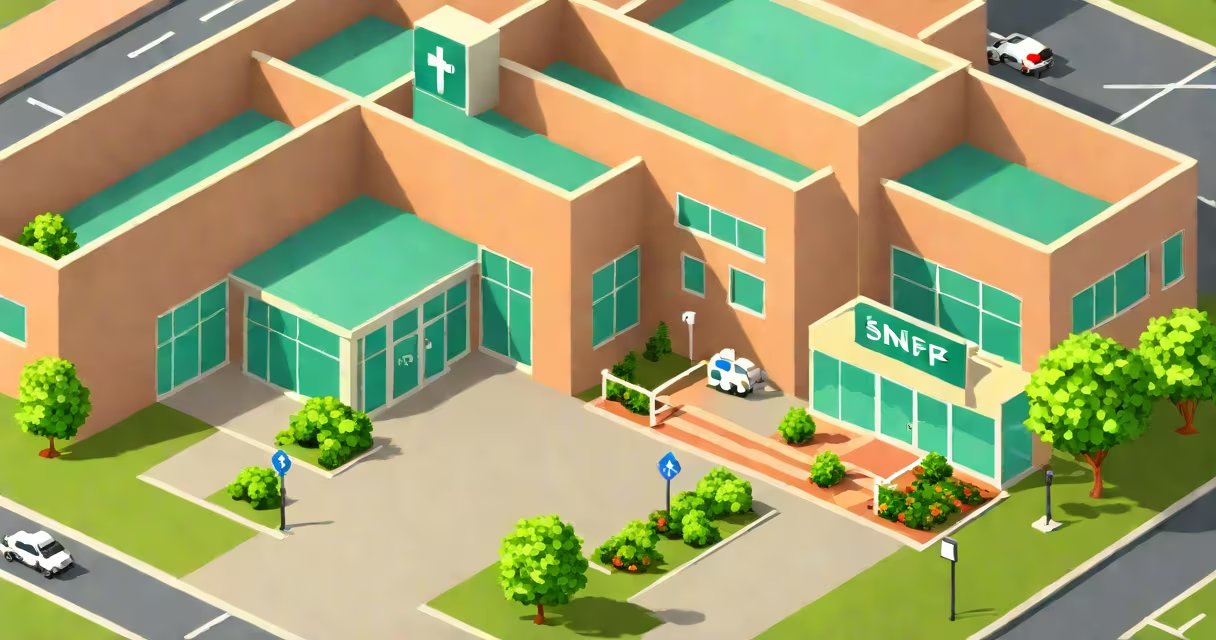
A skilled nursing facility (SNF) is a licensed healthcare provider that offers specialized medical care and rehabilitation services to patients recovering from illness, injury, or surgery. These facilities are designed for individuals who require daily skilled nursing and therapy services but do not need hospitalization.
SNFs operate under strict federal regulations and are certified to receive Medicare and Medicaid payments. They serve as a bridge between acute hospital stays and home recovery, providing intensive care that goes beyond basic custodial support. A patient may stay in an SNF for days to weeks, depending on their condition and treatment plan.
For example, a 72-year-old patient discharged from a hospital after hip replacement surgery may be transferred to an SNF for physical therapy, wound care, and medication management. This level of care ensures recovery progress is monitored closely and complications are addressed quickly.
SNFs are part of the post-acute care system. After a hospital stay, patients often face a gap in continuity of care. SNFs fill that gap by offering coordinated, multidisciplinary treatment plans. A typical SNF care team includes registered nurses, physical therapists, occupational therapists, speech-language pathologists, and social workers.
Patients admitted to an SNF must have a physician's order specifying ongoing skilled care needs. This includes tasks like administering IV medications, managing ventilators, or performing complex wound dressings. Routine monitoring and adjustments to treatment are done daily by trained staff.
According to the Centers for Medicare & Medicaid Services (CMS), SNFs must meet minimum staffing standards, including at least one registered nurse on duty during each shift. Facilities that fail to meet these standards risk losing certification and reimbursement eligibility.
SNFs deliver a range of services tailored to individual recovery goals. The most common types include:
| Service Type | Description | Common Use Cases |
|---|---|---|
| Rehabilitation Therapy | Physical, occupational, and speech therapy to restore function. | Post-stroke recovery, joint replacement, spinal injury. |
| Wound Care Management | Treatment of pressure ulcers, surgical wounds, and diabetic foot ulcers. | Chronic conditions requiring regular dressing changes. |
| Medication Administration | Supervision and delivery of complex drug regimens. | Patients on insulin, anticoagulants, or IV antibiotics. |
| Respiratory Support | Use of oxygen therapy, ventilator weaning, and airway clearance. | Post-pneumonia recovery, COPD exacerbations. |
Each service requires documentation and periodic reassessment. For instance, a patient receiving physical therapy after a stroke must have their mobility goals reviewed weekly. If progress stalls, the care plan is adjusted or the patient is referred to a different level of care.
Medicare Part A covers SNF stays under specific conditions. To qualify, a patient must have had a prior hospital stay of at least three consecutive days. The SNF admission must begin within 30 days of discharge from that hospital stay.
Medicare covers up to 100 days of SNF care per benefit period. The first 20 days are fully covered. Days 21 through 100 require a daily co-payment of $194.50 (2024 rate). After 100 days, Medicare no longer pays unless the patient meets a rare exception, such as a qualifying chronic condition with ongoing skilled care needs.
Private insurance and Medicaid also cover SNF services, but policies vary. Medicaid typically covers long-term stays for low-income individuals, while private insurers may limit coverage to 30 days unless prior authorization is obtained.
Confusion often arises between skilled nursing facilities, nursing homes, and assisted living communities. The key difference lies in the level of medical care provided.
SNFs focus on skilled nursing and rehabilitation. Patients are expected to improve over time. Nursing homes, by contrast, offer long-term custodial care for individuals who no longer need medical treatment but cannot live independently. Assisted living facilities provide support with daily activities but lack on-site medical staff.
A non-obvious distinction: SNFs are required to report quality measures to CMS annually. These include infection rates, fall incidents, and patient satisfaction scores. Data is publicly available via the CMS Nursing Home Compare tool. In 2023, 68% of SNFs met or exceeded national benchmarks for pressure ulcer prevention.
I once visited a rural SNF in Iowa where a patient recovering from a traumatic brain injury improved over 35 days. The facility's interdisciplinary team held daily care conferences, adjusted therapy intensity based on progress, and involved family in goal-setting. The patient was eventually discharged to home with outpatient therapy-proof that SNFs can achieve meaningful outcomes.
Because SNFs handle sensitive health information, they must comply with HIPAA regulations. Patient records, treatment plans, and billing details are considered protected health information (PHI). Any breach can result in fines up to $50,000 per violation.
Staff must complete annual HIPAA training. Electronic health records are encrypted and access is logged. For example, a nurse accessing a patient's chart must authenticate using a unique ID and password. Unauthorized access attempts trigger alerts and disciplinary action.
One widespread myth is that SNFs are synonymous with nursing homes. This is incorrect. While both are residential care facilities, SNFs are clinically oriented and focused on recovery. Nursing homes are designed for permanent residence and long-term care.
Another misconception is that SNF stays are always expensive. Medicare covers most costs for eligible patients. Out-of-pocket expenses are limited to co-payments and services not covered, such as private rooms or personal items. Families should verify coverage with their insurer before admission.
Finally, some assume SNFs are only for seniors. While 70% of SNF residents are over 65, younger adults with traumatic injuries, congenital conditions, or chronic illnesses also receive care. A 34-year-old with spinal cord injury received 45 days of SNF care following decompression surgery.
What is SNF in healthcare? It is a regulated, medically focused facility providing skilled nursing and rehabilitation services to patients transitioning from hospital care. These facilities play a critical role in recovery, especially for those needing intensive therapy and daily clinical oversight. Understanding SNF eligibility, coverage, and differences from other care settings ensures better decisions for patients and families.