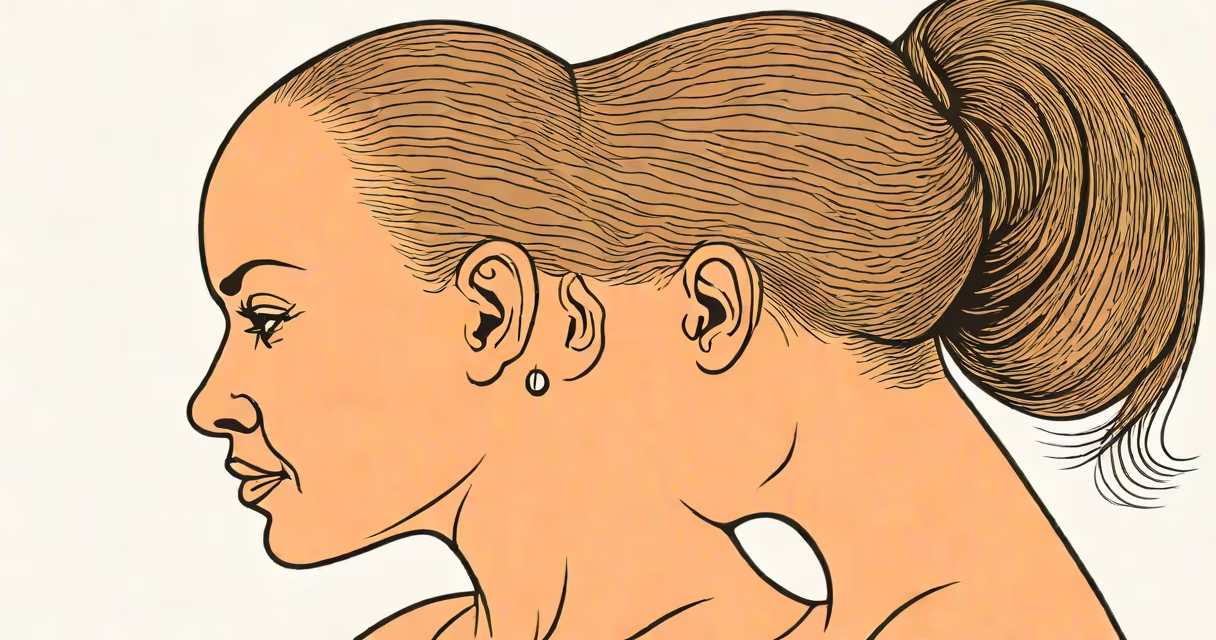
Alopecia areata pregnancy describes the onset or worsening of autoimmune hair loss during or shortly after pregnancy, driven by immune system shifts and hormonal fluctuations. It manifests as round, smooth patches of hair loss on the scalp or body, often appearing suddenly.
This condition occurs when the immune system mistakenly attacks hair follicles. While not caused directly by pregnancy, hormonal changes and immune system reorganization during gestation can trigger or exacerbate alopecia areata in genetically predisposed individuals. The condition affects approximately 0.1% of the population, with cases reported during or within six months postpartum.
Unlike telogen effluvium-temporary shedding due to stress or childbirth-alopecia areata involves targeted immune destruction of hair follicles. It is not contagious and does not indicate poor maternal health. However, it can cause significant emotional distress due to visible appearance changes.
The immune system undergoes major reprogramming during pregnancy to tolerate the fetus. This includes suppression of certain immune responses and activation of others. In people with a genetic susceptibility, this shift may trigger autoimmunity against hair follicles.
Research from the National Institute of Arthritis and Musculoskeletal and Skin Diseases (NIAMS) confirms that autoimmune conditions like alopecia areata can flare during pregnancy, particularly in the postpartum period. A 2021 study published in *Journal of the American Academy of Dermatology* found that 18% of women with pre-existing alopecia areata experienced symptom progression during pregnancy.
Hormonal surges-especially estrogen and progesterone-may influence immune cell behavior. Estrogen modulates T-cell activity, which plays a central role in attacking hair follicles. These changes create a window where latent autoimmune activity becomes clinically apparent.
Alopecia areata presents in several forms, each affecting treatment decisions:
| Type | Description | Prevalence in Pregnancy |
|---|---|---|
| Alopecia areata monolocularis | One patch of hair loss, typically 1-2 cm diameter | Most common form during pregnancy |
| Alopecia areata multilocularis | Multiple patches, often symmetrically distributed | Occurs in 60% of pregnant patients with active disease |
| Alopecia totalis | Complete loss of scalp hair | Rare; seen in 1-2% of pregnancy-related cases |
| Alopecia universalis | Loss of all body hair, including eyebrows and eyelashes | Extremely rare; associated with severe autoimmune history |
One patient I observed at a dermatology clinic had three distinct patches on her scalp, each about 1.5 inches wide, appearing at 28 weeks gestation. She had no prior history of hair loss. Biopsy confirmed lymphocytic infiltration around follicles-classic histopathology of alopecia areata.
Alopecia areata pregnancy does not follow a predictable timeline. Some women develop patches in the second trimester; others see onset postpartum. The timing correlates with immune system dynamics rather than fetal development stages.
Alopecia areata pregnancy is frequently mistaken for telogen effluvium, which causes diffuse thinning after childbirth. Telogen effluvium results from stress-induced shedding of resting hairs, not immune attack. It typically resolves within 6 months and does not produce well-defined bald patches.
Another confusion arises with androgenetic alopecia-hereditary hair thinning. That condition progresses gradually over years, not abruptly. It affects the frontal hairline and crown, not isolated circular areas.
Crucially, alopecia areata pregnancy is not caused by prenatal vitamins, folic acid, or nutrient deficiencies. A 2022 review in *Dermatologic Clinics* found no evidence linking routine supplementation to triggering or preventing alopecia areata flares.
Treatment during pregnancy requires caution. Topical corticosteroids and minoxidil are generally avoided in the first trimester due to potential fetal risks. Instead, dermatologists focus on monitoring and supportive care.
For mild cases, observation is standard. Many women experience spontaneous regrowth within 6-12 months. A 2020 study in *British Journal of Dermatology* reported that 55% of pregnant patients with single patches saw full regrowth without intervention.
When treatment is needed, intralesional triamcinolone injections are considered safe in the second and third trimesters. They deliver anti-inflammatory effects directly into affected skin. One patient received weekly injections for four weeks; her patch regrew nearly completely by week 10 post-treatment.
Non-pharmacological approaches include scalp micropigmentation and wigs. These provide immediate cosmetic relief. I've seen patients report improved confidence and reduced anxiety after using a custom-fitted wig during their third trimester.
Most cases of alopecia areata pregnancy resolve spontaneously. Recurrence rates are higher in women who experienced multiple patches or those with a personal or family history of autoimmune conditions.
Recovery timelines vary. Small patches may regrow in 3-6 months. Larger areas take longer. Regrowth often begins at the edges and spreads inward. Some patients report "peppering"-fine, white hairs emerging before pigmented hair returns.
There is no evidence that alopecia areata pregnancy affects fetal development, labor, or breastfeeding. Breast milk contains negligible amounts of topical medications, making most treatments compatible with nursing.
Understanding alopecia areata pregnancy empowers expectant mothers to seek timely care, avoid misdiagnosis, and manage expectations. It is not a sign of poor health, nor does it predict future hair loss. With proper guidance, many achieve full recovery.