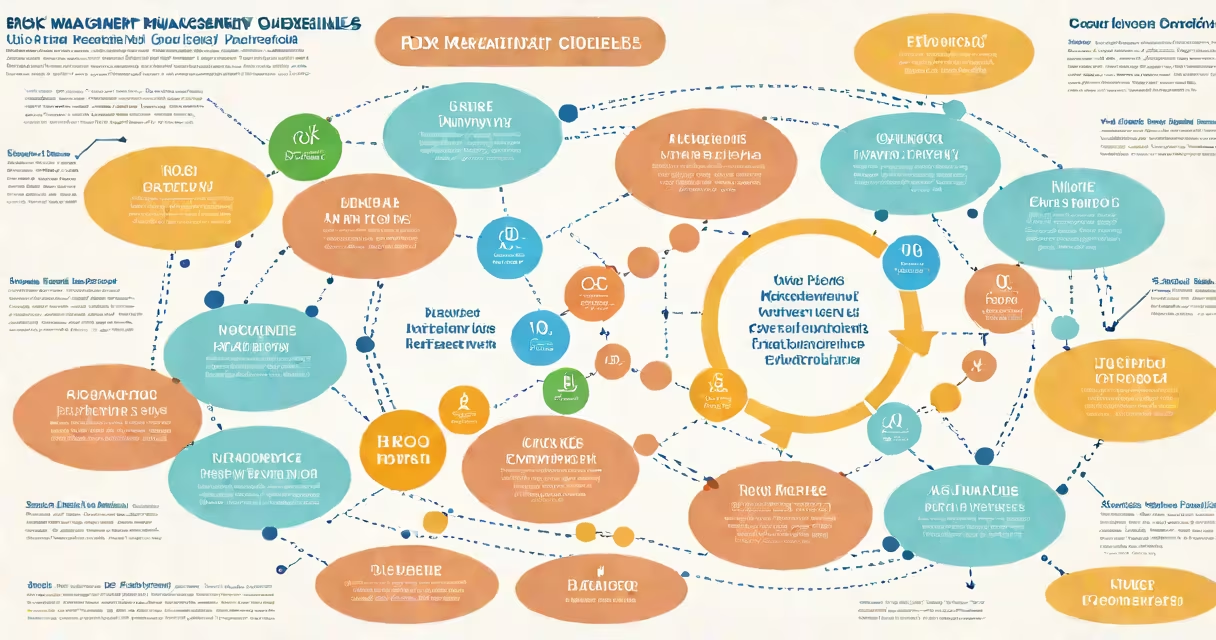
ISO 31000 2018 is an international standard that outlines principles, guidelines, and a structure for managing risk across all types of organizations. It provides a consistent methodology for identifying, analyzing, evaluating, treating, monitoring, and communicating risk to support decision-making and improve outcomes.
The standard was published by the International Organization for Standardization (ISO) in February 2018, replacing the 2009 version. It aims to be applicable to any organization regardless of size, sector, or location. It does not prescribe specific risk treatments but offers a flexible structure that integrates with existing management systems.
Organizations use ISO 31000 2018 to strengthen governance, improve operational resilience, and align risk practices with strategic objectives. It supports proactive risk identification and reduces the likelihood of unexpected disruptions that impact performance, reputation, or compliance.
At its core, ISO 31000 2018 operates through a continuous cycle of risk management activities. These include identifying potential risks, assessing their likelihood and impact, determining appropriate responses, implementing controls, and reviewing effectiveness over time.
Each step is informed by context-internal and external factors such as organizational goals, regulatory environment, stakeholder expectations, and resource availability. This ensures risk decisions are grounded in reality rather than assumptions.
For example, a hospital using ISO 31000 2018 might identify patient data breaches as a high-priority risk due to increasing cyber threats. They assess the probability of a breach based on past incidents and system vulnerabilities, then evaluate the potential impact on patient trust and legal liability. Based on this analysis, they implement multi-factor authentication and staff training, monitor access logs monthly, and report findings to leadership quarterly.
ISO 31000 2018 is built on eight principles that guide effective risk management:
These principles ensure risk management is not a one-time audit but an ongoing process embedded in daily operations. The standard emphasizes that risk management should be integrated into strategy, planning, and execution-not treated as a standalone function.
A key structural element is the risk management structure, which includes governance, policy, roles, responsibilities, processes, and resources. This structure enables consistency and accountability across departments and levels of management.
ISO 31000 2018 covers all categories of risk: strategic, operational, financial, compliance, health and safety, environmental, and reputational. It does not define risk as purely negative-it acknowledges that risk can also create opportunities.
For instance, a manufacturing company considering expansion into Southeast Asia uses ISO 31000 2018 to evaluate political instability, supply chain delays, labor regulations, and currency fluctuations. By mapping these risks against business objectives, they decide to partner with local suppliers and secure forward contracts on raw materials.
Below is a comparison of common risk types and typical mitigation approaches under the standard:
| Risk Type | Common Triggers | Typical Mitigation Strategy |
|---|---|---|
| Strategic | Market shifts, competitive pressure | Scenario planning, diversification |
| Operational | Process failure, equipment breakdown | Root cause analysis, preventive maintenance |
| Compliance | New legislation, changing audits | Regulatory tracking, internal audits |
| Reputational | Public relations crises, social media backlash | Crisis communication plan, brand monitoring |
One non-obvious point often missed: ISO 31000 2018 does not require formal risk assessments for every activity. Instead, it encourages proportionality-adjusting the rigor of risk processes based on significance and complexity. A small nonprofit running a single annual fundraiser may conduct a brief risk review focused on volunteer safety and data privacy, while a multinational bank conducts detailed stress testing and scenario modeling.
Many organizations mistake ISO 31000 2018 for a compliance checklist or a certification program. It is neither. The standard is voluntary and not auditable on its own. Certification requires additional requirements, such as those in ISO 37001 (anti-bribery) or ISO 27001 (information security).
Another misconception is that risk management equals risk avoidance. ISO 31000 2018 explicitly recognizes that some risks are necessary for growth. The standard encourages organizations to make informed trade-offs between risk and reward. For example, launching a new product line involves market uncertainty-but declining to act may result in losing competitive advantage.
I once observed a healthcare provider adopt ISO 31000 2018 during a merger. Leadership initially viewed it as a bureaucratic hurdle. After applying the principles to assess patient transfer logistics, medication reconciliation gaps, and staffing shortages, they identified 14 high-risk areas. Addressing them reduced post-merger errors by 40% within six months-a measurable improvement tied directly to the structure.
ISO 31000 2018 aligns with other international frameworks, including COSO ERM (Committee of Sponsoring Organizations of the Treadway Commission), the UK's COBIT, and the Project Management Institute's PMBOK. This compatibility allows organizations to integrate risk management across functions without duplication.
For example, a construction firm combining ISO 31000 2018 with PMBOK's project risk management processes can apply standardized terminology and tools across bidding, execution, and closeout phases. This reduces miscommunication and improves cross-team coordination.
When applied consistently, ISO 31000 2018 enhances transparency in reporting. Internal audit teams and boards receive clearer insights into risk exposure, enabling faster response times and better resource allocation.
ISO 31000 2018 risk management guidelines offer a globally recognized, adaptable model for managing uncertainty. They focus on integrating risk into decision-making at all levels, ensuring actions are aligned with organizational values and long-term goals.
Organizations that adopt the standard do not simply reduce threats-they build resilience, improve agility, and build a culture of accountability. The structure supports both reactive and proactive strategies, making it valuable in stable environments and volatile ones alike.
While not mandatory, adherence to ISO 31000 2018 strengthens credibility with regulators, investors, and partners. It provides a common language for discussing risk across departments and geographies.