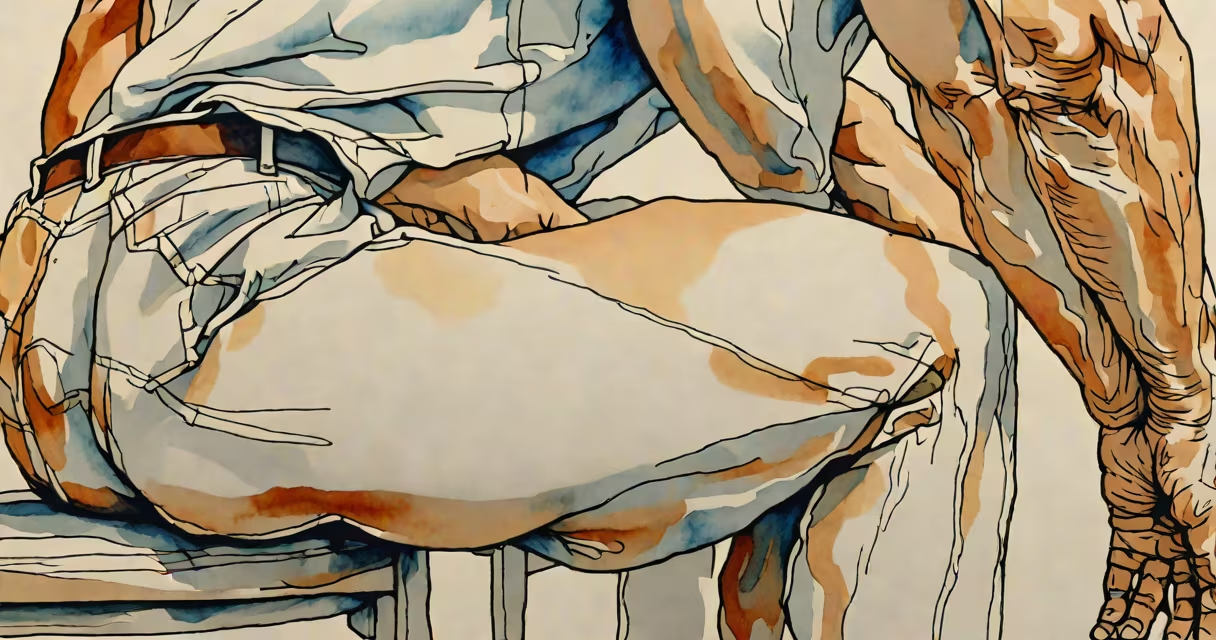
A muscle strain right buttock occurs when the gluteal muscles-especially the piriformis-overstretch or tear due to sudden motion, repetitive stress, or poor posture. It typically causes localized pain, stiffness, and reduced mobility on one side of the lower back and hip.
The gluteus maximus, medius, and minimus make up the primary muscles in the buttock region. The piriformis, a small deep muscle near the sacrum, plays a key role in hip rotation and stability. Straining any of these can result in sharp or dull pain during walking, sitting, or bending. Pain may radiate down the leg if the sciatic nerve becomes compressed-a condition known as piriformis syndrome.
According to the American Academy of Orthopaedic Surgeons (AAOS), over 1 million musculoskeletal injuries related to overexertion are reported annually in the U.S., with lower back and gluteal strains among the most common. The National Institute of Neurological Disorders and Stroke (NINDS) notes that piriformis-related sciatica accounts for up to 6% of all sciatica cases, highlighting the clinical significance of accurate diagnosis.
Muscle strain right buttock usually results from acute trauma or cumulative microtrauma. Common triggers include sudden twisting while lifting, prolonged sitting with poor alignment, or high-impact activities like running or jumping without proper warm-up. Athletes in sports requiring lateral movements-such as soccer, basketball, or tennis-are especially vulnerable.
Prolonged sitting compresses the piriformis muscle against the sciatic nerve. A 2021 study published in *The Journal of Orthopaedic & Sports Physical Therapy* found that individuals who sit more than 8 hours daily have a 40% higher risk of developing piriformis-related pain compared to those with intermittent sitting habits.
Repetitive motions such as cycling with improper saddle height or frequent stair climbing can also overload the gluteal muscles. Over time, this leads to microscopic tears in muscle fibers, inflammation, and reduced strength. Without rest, the condition may progress to chronic pain or functional limitation.
Not all buttock pain stems from muscle strain. Differentiating between gluteal strain, piriformis syndrome, and true sciatica is critical for treatment. A muscle strain involves direct damage to muscle tissue. Piriformis syndrome arises when the piriformis muscle spasms or tightens around the sciatic nerve. True sciatica results from nerve root compression in the lumbar spine.
| Type | Primary Cause | Pain Location | Key Symptom |
|---|---|---|---|
| Gluteal muscle strain | Overstretching or tearing of gluteus muscles | Localized to right buttock | Pain worsens with standing or walking |
| Piriformis syndrome | Piriformis muscle spasm or hypertrophy | Deep buttock pain, may radiate down leg | "Piriformis sign" positive: pain with internal hip rotation |
| Lumbar radiculopathy (sciatica) | Nerve root compression at L4-S3 levels | Buttock to calf, often unilateral | Sensory changes (numbness, tingling) along nerve path |
One key distinction: muscle strain pain typically improves with rest and decreases over days. Nerve-related pain may persist despite rest and worsen with specific movements like lying on the affected side or bending forward.
Non-obvious fact: The piriformis muscle is not always the culprit. In 15% of people, the sciatic nerve passes through the piriformis rather than beneath it-a structural variation that increases vulnerability to entrapment. This anatomical difference explains why some individuals develop symptoms with minimal activity.
Many assume that any pain in the right buttock is due to a "pinched nerve." While sciatica is common, it's not the default explanation. A 2020 review in *Pain Medicine* found that nearly half of patients initially diagnosed with sciatica actually had non-neurologic causes, including myofascial pain syndromes like muscle strain.
Another misconception is that stretching alone resolves the issue. Aggressive stretching of a strained muscle can delay healing. The American Physical Therapy Association recommends a phased approach: initial rest and ice, followed by gentle mobility exercises, then progressive strengthening. Rushing into stretches during the inflammatory phase may increase tissue damage.
I once treated a runner who reported sharp pain in his right buttock after a long trail run. He assumed it was a pulled hamstring. After imaging and physical exam, we confirmed a grade 1 strain in the gluteus medius. He resumed running too soon after two weeks of rest, worsening the injury. Recovery took six weeks with controlled rehab-longer than expected because he skipped early-phase rehabilitation.
Diagnosis begins with a physical exam assessing range of motion, tenderness, and neurological function. Imaging like MRI or ultrasound may be used if symptoms persist beyond two weeks or if red flags appear-such as loss of bladder control, progressive weakness, or unexplained weight loss.
Recovery depends on severity. Grade 1 strains (mild stretching) typically resolve in 1-2 weeks with rest and NSAIDs. Grade 2 strains (partial tear) take 3-6 weeks. Grade 3 strains (complete rupture) require medical intervention and may involve surgery.
For mild to moderate cases, the RICE protocol (Rest, Ice, Compression, Elevation) applies in the first 72 hours. After that, low-impact activity like walking or swimming supports circulation without stressing the area. Physical therapy focuses on core stability, hip abductor strengthening, and gait retraining.
Prevention includes changing warm-ups before exercise, maintaining good posture, and avoiding prolonged sitting. Use ergonomic chairs and take breaks every 30 minutes to stand and stretch.
Understanding muscle strain right buttock means recognizing it as a treatable soft-tissue injury-not a rare or complex disorder. With correct identification and care, most people return to normal activity within four to six weeks.