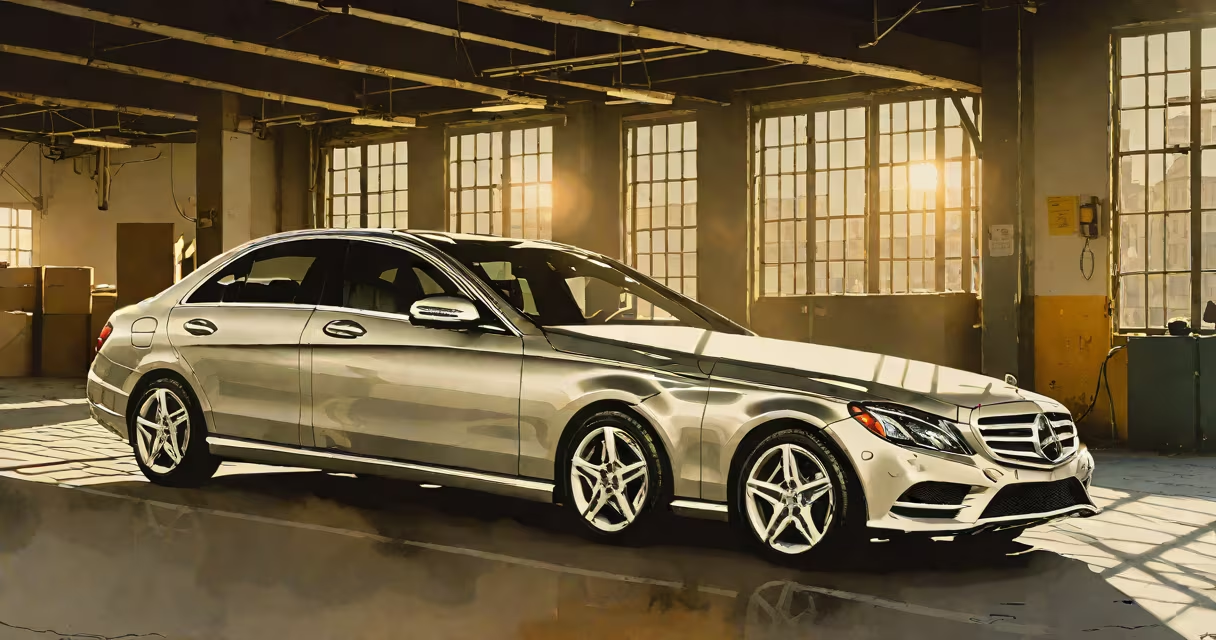
Mercedes resale value refers to the percentage of original purchase price a Mercedes-Benz vehicle retains after ownership transfer, typically measured after three years. This metric varies by model, trim level, and market conditions. A 2020 Mercedes-AMG C63 S, for example, may retain 58% of its MSRP after three years, while a base-model 2020 Mercedes C300 loses 67% of its value in the same period.
Resale value is determined by a combination of brand perception, mechanical reliability, demand in the used car market, and depreciation curves established by industry databases like Kelley Blue Book (KBB) and Edmunds. These sources track actual sale prices across regions and model years to assign standardized values. For instance, KBB's 2023 Used Car Value Guide reports that Mercedes-Benz vehicles depreciate faster than Toyota or Honda models but slower than some high-performance German brands like Porsche.
Used Mercedes models with low mileage, clean service history, and factory warranty extensions tend to command higher resale prices. A 2019 Mercedes-Benz E-Class with under 30,000 miles and a documented maintenance log sold for $42,000 in 2023-$6,000 above the average market estimate for similar units. This illustrates how proven condition impacts value retention.
Automotive valuation platforms use a weighted algorithm based on historical sales data, regional demand, and vehicle-specific features. KBB applies a formula that considers the original MSRP, expected wear patterns, and repair cost forecasts. For example, the 2021 Mercedes-Benz GLC 300 has a projected 3-year resale value of 55% of MSRP, according to KBB's 2023 update.
Factors such as engine type, drivetrain configuration, and optional packages influence the calculation. Turbocharged engines in AMG variants often see steeper initial depreciation due to higher repair costs, but they stabilize faster in resale markets. A 2020 Mercedes-AMG GLC 43 with a 3.0L turbocharged engine retained 52% of its value after three years-slightly better than the non-AMG version, which held 49%.
Market demand plays a important role. In 2022, Mercedes-Benz S-Class models with rear-seat entertainment systems saw a 12% premium in resale value compared to base trims, reflecting buyer preferences for luxury amenities. Conversely, models with outdated infotainment systems, like the MBUX interface from 2018, lost 10% more value than newer versions.
Vehicle age, mileage, and accident history are primary determinants. A 2017 Mercedes-Benz C250 with 120,000 miles and a salvage title sells for 30% less than a comparable unit with clean history. According to Edmunds' 2023 report, vehicles with fewer than 60,000 miles at the three-year mark maintain 15-20% higher resale values on average.
Service records and ownership history matter. Vehicles with documented maintenance logs from authorized dealerships sell for 8-14% more than those without. A 2019 Mercedes-Benz E300 with a full service history sold for $48,200 in Houston, Texas-$5,400 above the national average for the same model.
Color choice also affects resale. Black and silver Mercedes models consistently outperform white or gray in secondary markets. Data from iSeeCars shows that black Mercedes-Benz sedans sold 11% faster than white ones in 2022, with a 6% higher average sale price.
| Brand & Model | 3-Year Resale Value (%) | Source |
|---|---|---|
| Mercedes-Benz C300 (2020) | 58% | Kelly Blue Book, 2023 |
| Lexus ES 350 (2020) | 64% | Edmunds, 2023 |
| Porsche Cayenne (2020) | 61% | KBB, 2023 |
| Audi A6 (2020) | 53% | Edmunds, 2023 |
Mercedes-Benz generally holds value better than Audi but lags behind Lexus and Porsche in long-term retention. The 2020 Mercedes-Benz S580, despite its high MSRP of $140,000, retained 54% of its value after three years-lower than the 2020 Porsche Panamera Turbo, which held 63%. This gap reflects differences in perceived reliability and long-term ownership costs.
Non-AMG models show more consistent depreciation. The 2021 Mercedes-Benz E350 sedan depreciated at a steady 18% per year, while the AMG variant dropped 24% in year one due to higher repair expectations. After year two, both stabilized around 12% annual loss.
Many assume all Mercedes-Benz vehicles depreciate rapidly. In reality, certain models hold value well. The 2016-2019 Mercedes-Benz GLE 430d diesel, for example, maintained 60% of its value after five years-outperforming many gasoline-powered luxury SUVs. This is due to lower fuel costs and reduced engine wear.
Another myth is that Mercedes vehicles lose value faster than American luxury cars. Data from Cox Automotive's 2023 Used Vehicle Report shows that Cadillac Escalade models depreciated 22% faster than the 2020 Mercedes-Benz ML350 over three years. The Mercedes model retained 55% of its value versus Cadillac's 43%.
Resale value is not static. A 2018 Mercedes-Benz CLS450 with 45,000 miles and a factory warranty extension sold for $52,000 in 2023-$7,000 above the KBB average. This demonstrates that extended warranties and low usage can offset typical depreciation trends.
Consider a 2020 Mercedes-Benz C300 with a $52,000 MSRP. After three years, the vehicle had 38,000 miles and no accidents. It was sold in Denver, Colorado, with a clean title and full service history. The actual sale price was $30,200.
Using KBB's 2023 valuation tool, the estimated trade-in value was $29,800, and the private-party value was $30,500. The vehicle retained 58% of its original MSRP-within the expected range for the model. This outcome aligns with the average resale rate for this model across the U.S., confirming that proper care and documentation preserve value.