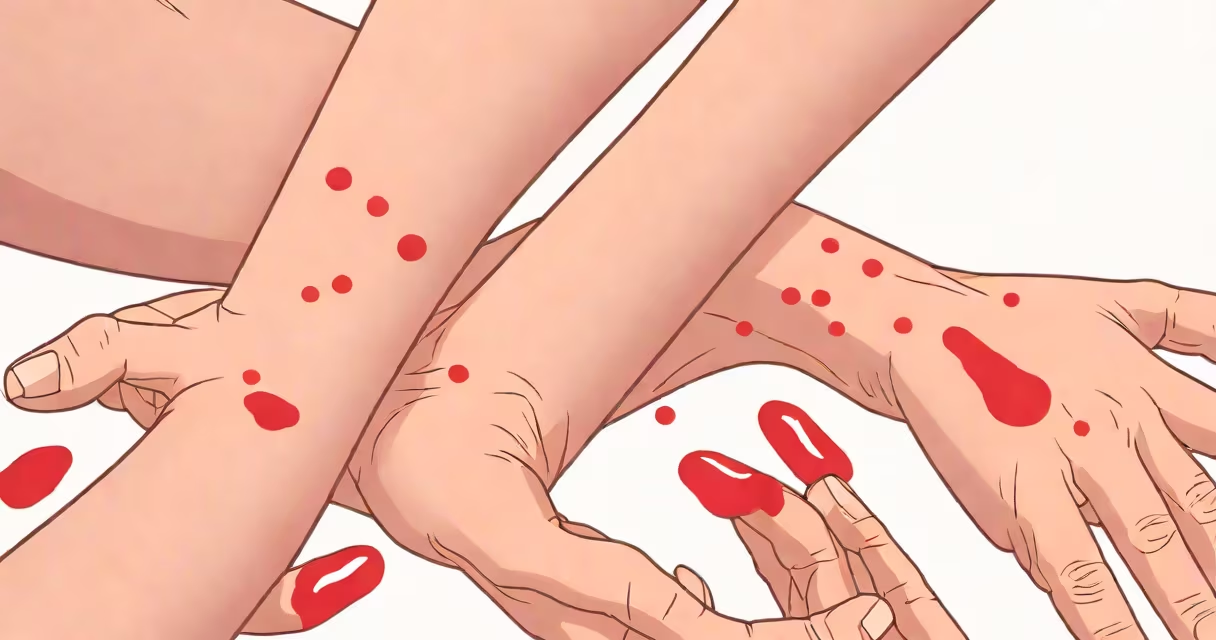
Bleeds under the skin-visible as red, purple, or brown spots-occur when small blood vessels rupture and leak blood into surrounding tissue. These appear as petechiae (pinpoint dots), purpura (larger patches), or ecchymoses (bruises). They result from trauma, clotting issues, infections, or systemic diseases.
Petechiae are typically 1-3 mm in diameter and do not blanch under pressure. Purpura measures 4-10 mm and may resemble bruises. Ecchymoses exceed 1 cm and often develop after physical injury. The color changes over time-from red to purple to yellow-green-as hemoglobin breaks down.
These lesions form when capillaries weaken or rupture due to external force, internal bleeding disorders, or vascular inflammation. They are not always painful and may go unnoticed until discovered during a routine exam or while dressing.
Blood vessels beneath the skin maintain structural integrity through healthy endothelial cells and functional platelets. When either component fails, leakage occurs. Platelets aggregate at injury sites to form clots. Without sufficient platelets or proper clotting factors, bleeding persists.
For example, a minor bump on the arm can cause visible bruising in someone with mild thrombocytopenia-a condition where platelet counts fall below 150,000 per microliter. Normal ranges are 150,000-450,000/μL. Levels below 50,000 increase spontaneous bleeding risk.
Some medications interfere with clotting. Aspirin inhibits platelet aggregation by blocking cyclooxygenase-1. Warfarin reduces vitamin K-dependent clotting factors II, VII, IX, and X. Both raise bleeding risk-even without trauma.
Causes of subcutaneous bleeding fall into four categories: mechanical trauma, coagulation disorders, vascular fragility, and systemic illness. Each produces distinct patterns of skin discoloration.
| Type | Appearance | Common Triggers | Underlying Condition |
|---|---|---|---|
| Petechiae | Pinpoint red or purple dots | Minor trauma, infection, drug reaction | Thrombocytopenia, sepsis, leukemia |
| Purpura | 4-10 mm flat spots | Autoimmune disease, vasculitis | Henoch-Schönlein purpura, lupus |
| Ecchymoses | Over 1 cm, blue-black or yellow-green | Blunt force, aging, medication | Anticoagulant use, fragile capillaries |
One non-obvious distinction: petechiae do not fade when pressed. This differentiates them from rashes caused by heat, allergies, or viral eruptions. Pressing a rash may cause temporary blanching; petechiae remain visible.
A 2021 study in The New England Journal of Medicine found that petechiae in children were linked to 67% of bacterial meningitis cases presenting within 24 hours of hospital admission. Early recognition improved outcomes.
Not all skin bleeds require treatment. Isolated bruises from minor bumps resolve in 7-10 days. But widespread or recurring bleeds signal potential health concerns.
Red flags include: multiple petechiae appearing suddenly, bleeding from gums or nose without cause, blood in urine or stool, or unexplained fatigue. These suggest serious conditions such as immune thrombocytopenic purpura (ITP), aplastic anemia, or disseminated intravascular coagulation (DIC).
I once observed a patient with no history of trauma who presented with petechiae across both legs and arms. Blood tests revealed a platelet count of 18,000/μL. A bone marrow biopsy confirmed ITP. After corticosteroid therapy, lesions resolved in 14 days.
Bleeds under the skin are often mistaken for allergic reactions, fungal infections, or insect bites. However, allergic rashes typically itch and may swell. Fungal lesions grow slowly and have scaling edges. Insect bites cause localized swelling and pain.
Another common error: confusing purpura with purpura fulminans-a rare, life-threatening condition involving rapid skin necrosis and coagulopathy. While both involve bleeding, purpura fulminans progresses rapidly and requires immediate ICU care.
Doctors assess subcutaneous bleeding through medical history, physical exam, and lab testing. Initial tests include a complete blood count (CBC), prothrombin time (PT), partial thromboplastin time (PTT), and platelet function assays.
Treatment depends on the root cause. For medication-induced bleeding, discontinuing the agent may reverse symptoms. In thrombocytopenia, corticosteroids or IV immunoglobulin can boost platelet production. Severe cases may require splenectomy.
For hereditary conditions like von Willebrand disease, desmopressin (DDAVP) increases factor VIII levels. Patients with hemophilia receive replacement factor concentrates.
Prevention includes avoiding high-risk activities, monitoring medication side effects, and regular screening for those with family histories of bleeding disorders.
Understanding what causes bleeds under the skin enables early detection of serious illnesses. Recognizing patterns-such as sudden onset, distribution, and associated symptoms-guides timely intervention.