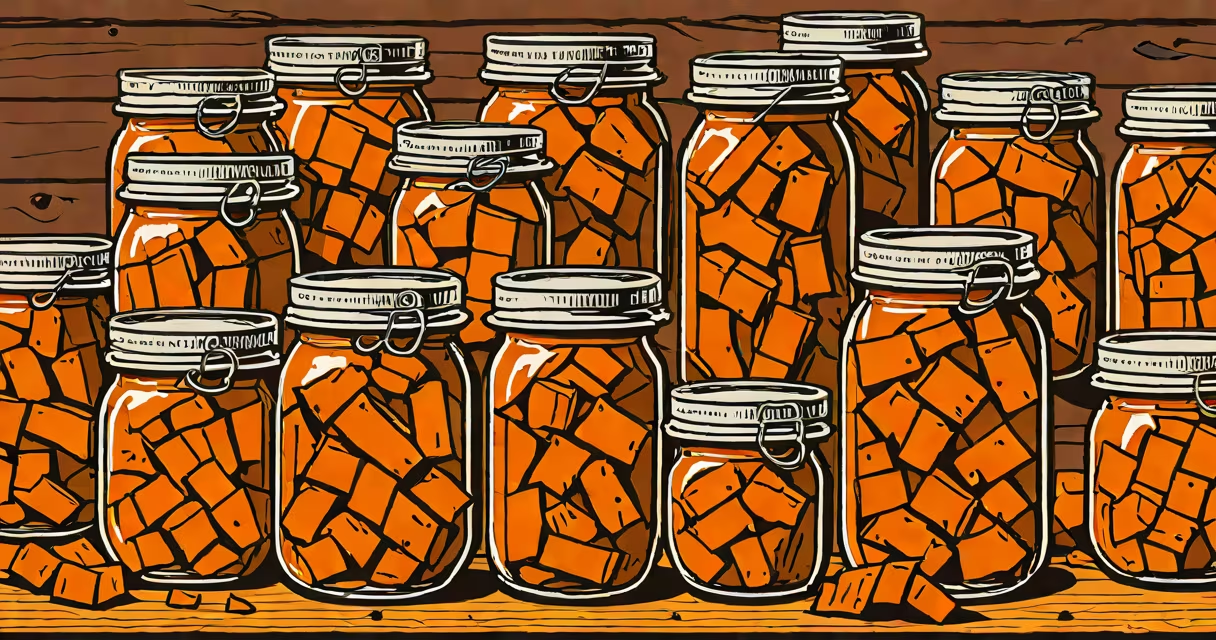
Canning sweet potatoes is a method of preserving cooked sweet potatoes in sealed jars using heat to eliminate spoilage-causing microorganisms. This process allows safe storage at room temperature for up to two years, making it ideal for long-term food supply planning.
Home canning relies on pressure canning for low-acid foods like sweet potatoes. Water bath canning is unsafe because it doesn't reach temperatures high enough to destroy Clostridium botulinum spores, which cause botulism. The USDA recommends pressure canning at 10 pounds of pressure for 90 minutes at altitudes below 1,000 feet.
Proper preparation includes peeling, boiling, and packing hot sweet potatoes into sterilized jars with 1 inch of headspace. After sealing with two-piece lids, processing time and pressure must match altitude. Failure to follow these steps increases risk of contamination. The National Center for Home Food Preservation confirms that improper canning leads to higher botulism incidence in home-prepared foods.
The core principle is thermal destruction of pathogens. Canning sweet potatoes requires heating the sealed jar to 240°F (116°C) for sufficient duration. This temperature is only achievable under pressure, not through boiling water alone.
Low-acid foods like sweet potatoes have pH levels above 4.6, creating conditions where harmful bacteria thrive. Without proper heat treatment, these organisms survive and multiply during storage. Pressure canning raises internal jar temperature beyond boiling point, killing spores that water baths cannot.
After processing, jars cool slowly. A successful seal forms when the lid concaves and doesn't pop when pressed. Jars that fail to seal must be refrigerated and consumed within 3-5 days. Re-canning unsealed jars is unsafe due to potential bacterial growth during cooling.
Essential tools include a pressure canner rated for at least 20 quarts, clean mason jars with two-piece lids (not screw-top jars), a jar lifter, a funnel, and a bubble remover. Jars must be free of chips or cracks. Lids are single-use and must be replaced annually.
| Item | Function | Notes |
|---|---|---|
| Pressure canner | Creates high-pressure environment | Use only models approved by the USDA |
| Mason jars | Contain food | Use only wide-mouth jars for easier packing |
| Two-piece lids | Seal the jar | Never reuse lids; rings can be reused |
| Jar lifter | Removes hot jars safely | Prevents burns and breakage |
Ingredients: fresh sweet potatoes, water, optional salt (½ tsp per quart). Do not add sugar unless recipe specifies. Sugar alters pH and affects processing time.
1. Wash and peel sweet potatoes. Cut into ¾-inch cubes. Boil in water until tender (10-15 minutes).
2. Fill jars with hot boiled sweet potatoes, leaving 1 inch of space at the top. Pour in enough boiling water to cover the potatoes.
3. Wipe the rim with a clean cloth. Place the flat lid on the jar, then screw the ring until fingertip tight.
4. Load jars into the pressure canner. Add 2 inches of water. Close the lid and vent steam for 10 minutes before applying pressure.
5. Bring to 10 psi (pounds per square inch) and maintain for 90 minutes at sea level. Adjust time for altitude: increase by 5 minutes for every 1,000 feet above sea level.
6. Turn off heat. Let pressure drop naturally. Wait at least 10 minutes before removing the lid.
7. Remove jars and place on a towel. Cool undisturbed for 12-24 hours. Check seals. Discard any jars with failed seals.
I processed 12 jars of sweet potatoes last fall. After cooling, I heard the familiar "pop" as each lid sealed. I stored them in a dark pantry. When I opened one six months later, the texture was still firm, and the flavor hadn't degraded. No signs of spoilage, and no need for refrigeration.
Some assume that boiling jars in water achieves the same result as pressure canning. This is false. Water bath canning reaches only 212°F (100°C), insufficient to kill C. botulinum spores. The FDA warns that improperly canned low-acid foods are the leading cause of botulism outbreaks in home-prepared meals.
Another error is reusing lids. The sealing compound on lids deforms after one use. Reusing them creates weak seals and increases contamination risk. Always buy new lids for each batch.
People also think that adding vinegar or lemon juice makes sweet potatoes safe for water bath canning. This is incorrect. Acidification changes pH but does not guarantee pathogen destruction. The USDA states that acidified foods must still be processed correctly based on acidity level and density.
Store sealed jars in a cool, dry, dark place between 50-70°F (10-21°C). Avoid temperature fluctuations. Shelf life is typically 12-24 months. After opening, refrigerate unused portions and consume within 4 days.
Use canned sweet potatoes in soups, stews, casseroles, or mashed dishes. Drain liquid before use. The liquid can be saved for cooking or discarded if too salty.
When in doubt, discard any jar with bulging lids, leaking seams, cloudy liquid, or foul odor. These signs indicate microbial growth. The CDC reports that 1 in 3 botulism cases linked to home canning results in hospitalization.
Canning sweet potatoes is a proven method for extending shelf life and maintaining nutritional value. When done correctly, it ensures food safety and reduces waste. Follow USDA guidelines precisely to avoid health risks.