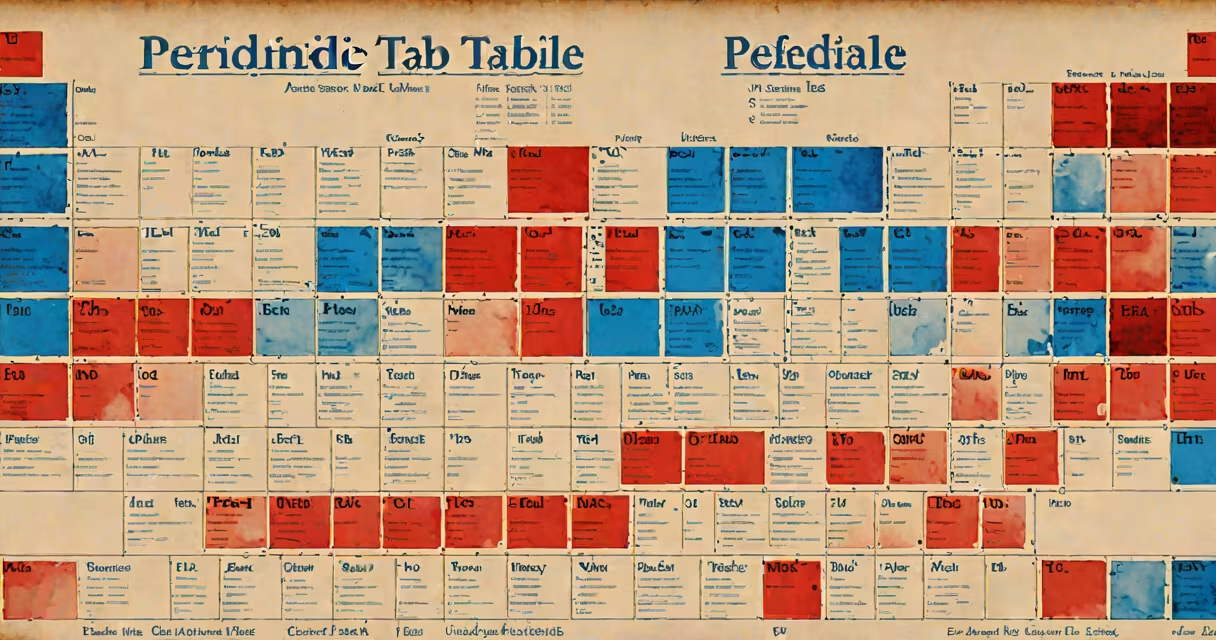
The basic metals periodic table categorizes elements based on their metallic character, electron configuration, and position in the periodic table. These elements exhibit high electrical conductivity, malleability, and tendency to lose electrons in chemical reactions. They occupy the left and center regions of the table, including groups 1-2 and the d-block transition metals.
Metals dominate the periodic table's left side and central region. Basic metals include alkali metals (Group 1), alkaline earth metals (Group 2), and transition metals (Groups 3-12). Their defining trait is low ionization energy, meaning they readily form positive ions. This behavior underpins their role in batteries, alloys, and industrial catalysts.
According to the Royal Society of Chemistry, metallic character increases down a group and decreases across a period. Elements like sodium (Na) and calcium (Ca) show strong reactivity with water, while iron (Fe) and copper (Cu) demonstrate moderate reactivity and high thermal stability. These differences stem from electron shell structure and atomic radius.
Elements are grouped by valence electron configuration. S-block metals (Groups 1 and 2) have one or two electrons in their outermost s-orbital. D-block metals (transition metals) fill inner d-orbitals. This distinction determines their oxidation states and bonding behavior.
For example, sodium (Na) has electron configuration [Ne] 3s¹. It loses one electron to form Na⁺, achieving a stable noble gas configuration. Iron (Fe), with [Ar] 4s² 3d⁶, can lose two or three electrons, forming Fe²⁺ or Fe³⁺. This versatility enables iron to act as a catalyst in ammonia synthesis via the Haber process.
Periodic table with types of metals provides a visual breakdown of metal categories. Alkali metals react violently with water, producing hydrogen gas and heat. Sodium burns with a yellow flame. Calcium reacts less vigorously but still forms hydroxides. Transition metals often display multiple oxidation states due to variable d-electron availability.
Basic metals fall into distinct types based on reactivity and physical traits. The table below outlines major categories, their positions, and common uses.
| Type | Group | Examples | Key Properties | Real-World Use |
|---|---|---|---|---|
| S-block metals | 1-2 | Lithium, Sodium, Calcium | Low density, high reactivity, soft texture | Lithium in rechargeable batteries; sodium in street lighting |
| Transition metals | 3-12 | Iron, Copper, Zinc | Variable oxidation states, catalytic activity | Copper in wiring; zinc in galvanizing steel |
| Post-transition metals | 13-14 | Aluminum, Lead, Tin | Amphoteric oxides, lower melting points | Aluminum in aircraft frames; lead in car batteries |
Aluminum (Al), though in Group 13, behaves as a basic metal due to its ability to form Al³⁺ ions and amphoteric oxides. It resists corrosion through a protective oxide layer, making it ideal for beverage cans and construction materials. In 2023, global aluminum production reached 68 million metric tons, according to the International Aluminium Institute.
A non-obvious distinction: not all metals in the d-block are equally reactive. Nickel (Ni) and palladium (Pd) are less reactive than iron despite being in the same block. This difference arises from electron shielding and effective nuclear charge. Palladium's ability to absorb hydrogen makes it useful in fuel cells and catalytic converters.
Some confuse "basic metals" with "base metals," which refer to economically valuable, non-precious metals like iron, nickel, and lead. Base metals corrode easily and are used in bulk manufacturing. Basic metals emphasize chemical behavior-specifically, their tendency to donate electrons and form basic oxides.
Another error is assuming all s-block metals are highly reactive. While lithium (Li) and sodium (Na) react rapidly with water, cesium (Cs) and francium (Fr) are even more reactive-but francium is rare and radioactive. Its half-life is less than 30 seconds, limiting practical study.
I once tested sodium's reaction with water during a lab demonstration. Dropping a pea-sized piece into a tray produced a rapid fizz, a flame, and a hissing sound. The resulting solution turned pink with phenolphthalein, confirming the formation of sodium hydroxide-a strong base. This experiment illustrates how basic metals generate alkaline solutions upon reaction with water.
Understanding the basic metals periodic table aids in predicting material behavior. For instance, knowing that magnesium (Mg) lies in Group 2 explains its +2 oxidation state and use in lightweight alloys. Magnesium's low density (1.74 g/cm³) and high strength-to-weight ratio make it essential in aerospace components.
When selecting materials for electronics, engineers prioritize metals with high conductivity and low resistance. Copper (Cu) has a resistivity of 1.68 × 10⁻⁸ Ω·m, making it superior to most alternatives. Its widespread use in power transmission lines stems from this property.
Basic metals periodic table remains a core tool in chemistry education and industry. Its organization reflects atomic structure and elemental behavior, enabling accurate prediction of compound formation and reaction outcomes.