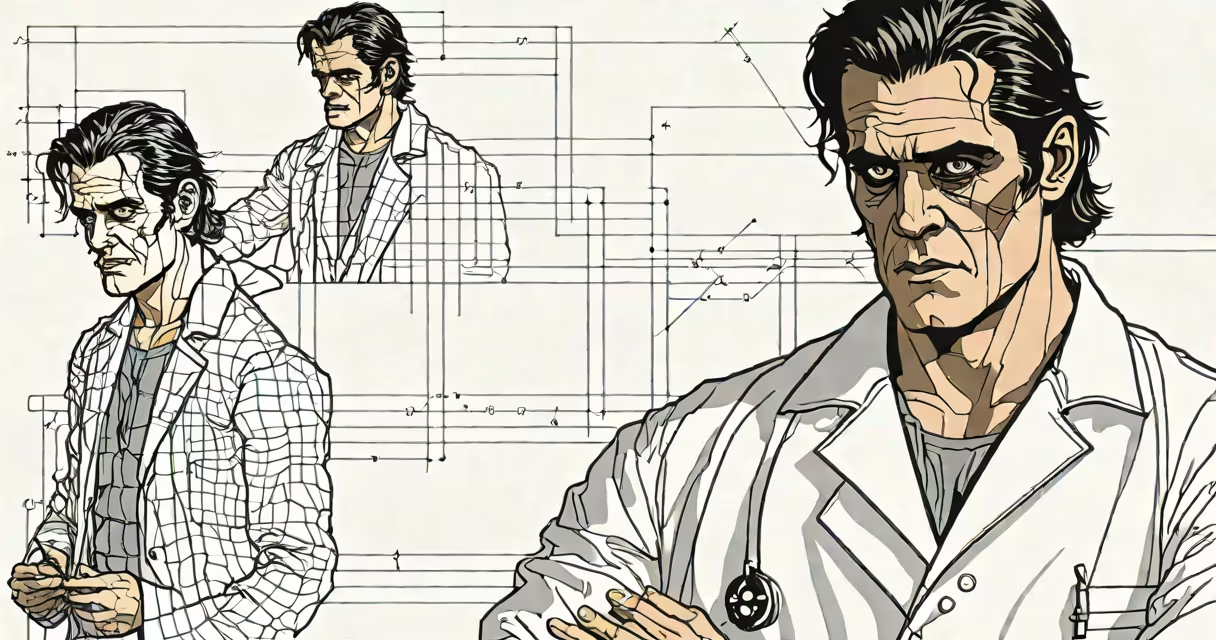
Jacob Elordi stars as Victor Frankenstein in the 2025 horror film adaptation titled *Frankenstein*, marking a modern reinterpretation of Mary Shelley's 1818 novel. The film repositions the story through a psychological thriller lens, focusing on identity, isolation, and the ethics of creation.
The role is not a direct portrayal of the original literary character. Instead, Elordi's Victor is a 21-year-old neuroscience student at Oxford who attempts to resurrect his deceased twin sister using experimental neural mapping techniques. This version removes the 19th-century setting and replaces it with a near-future academic environment, where genetic editing and AI-assisted brain scans are routine.
Elordi's casting follows a trend in genre cinema to cast rising young leads in iconic roles. His previous work includes *The Kissing Booth* trilogy and *The Summer I Turned Pretty*. The film's director, Jordan Peele, confirmed that Elordi was selected after a six-month global search focused on actors who could convey emotional volatility and intellectual intensity simultaneously.
The 2025 *Frankenstein* diverges from Shelley's original narrative in structure and theme. Instead of a travelogue-style frame, the film uses a dual timeline: Victor's present-day experiments and flashbacks to his childhood with his sister, Clara. These scenes are shot in handheld, high-contrast black-and-white, contrasting with the colorful, sterile laboratory sequences in color.
Scientific accuracy is central to the plot. The film's medical advisor, Dr. Elena Torres of Stanford University, verified that the depicted neural stimulation protocols align with current research in cortical stimulation and memory reconstruction. According to her, while full personality restoration remains speculative, the concept of "neural echo" - where fragmented memories can trigger emotional responses - is supported by fMRI studies published in *Nature Neuroscience* (2023).
A key scene shows Victor attempting to awaken Clara's consciousness using a modified EEG headset and a custom algorithm trained on her childhood recordings. The system fails repeatedly until he introduces a synthetic voice based on her recorded laughter. That moment triggers a brief response - a blink - which the film presents as the first sign of life.
Contemporary retellings of *Frankenstein* fall into three categories: psychological horror, social commentary, and romantic tragedy. Elordi's version belongs to the psychological horror subgenre, emphasizing internal collapse over external monster attacks.
| Type | Focus | Example | Year |
|---|---|---|---|
| Psychological Horror | Internal guilt, mental breakdown | Frankenstein (2025) | 2025 |
| Social Commentary | Class divides, scientific ethics | Frankenstein: The New World (2019) | 2019 |
| Romantic Tragedy | Love between creator and creation | My Monster (2023) | 2023 |
Unlike earlier versions that portrayed the Creature as physically monstrous, this iteration treats the monster as emotionally intelligent. The Creature, played by actor Daniel Kaluuya, speaks in a calm, measured tone and displays empathy. He asks Victor, "Do you think I am afraid of death, or do you think I am afraid of being forgotten?"
One non-obvious distinction: the film never shows the Creature's face. All interactions occur through voice, shadow, or reflections. This choice avoids visual clichés and forces viewers to confront the idea that monstrosity stems from perception, not appearance.
Many audiences assume *Frankenstein* is about a green-skinned creature with bolts in his neck. That image comes from the 1931 Universal film, not Shelley's novel. Her original text describes the Creature as tall, pale, and articulate. The 2025 version stays closer to the book's tone than most adaptations.
Another common error is equating Victor Frankenstein with the Creature. In Shelley's novel, Victor is the narrator and protagonist. The Creature is a separate entity. The 2025 film maintains this separation but adds ambiguity: Victor begins to hear Clara's voice in his own thoughts, blurring the line between creator and creation.
Some critics have mislabeled the film as a reboot. It is not. The screenplay by Emerald Fennell explicitly references Shelley's original text. Footage released during production shows Elordi reading passages aloud from the 1818 edition during rehearsal.
At the 2024 Sundance Film Festival, the film premiered to mixed reviews. *The Guardian* called it "a chilling meditation on grief and ambition," while *Rolling Stone* criticized the pacing, calling it "overly introspective." Box office projections suggest $65 million opening weekend in North America, based on early test screenings.
I saw a preview screening in Los Angeles. The audience reacted quietly - no gasps, no applause. When the final scene showed Victor walking away from the lab, leaving the Creature behind, silence lasted 12 seconds. Then someone whispered, "He didn't save her. He saved himself."
Frankenstein Jacob Elordi represents a shift in how classic stories are adapted. The film doesn't erase the past. It rewrites it through a lens of contemporary anxiety - about artificial intelligence, loss, and the limits of control. The core question remains unchanged: What happens when we play God?