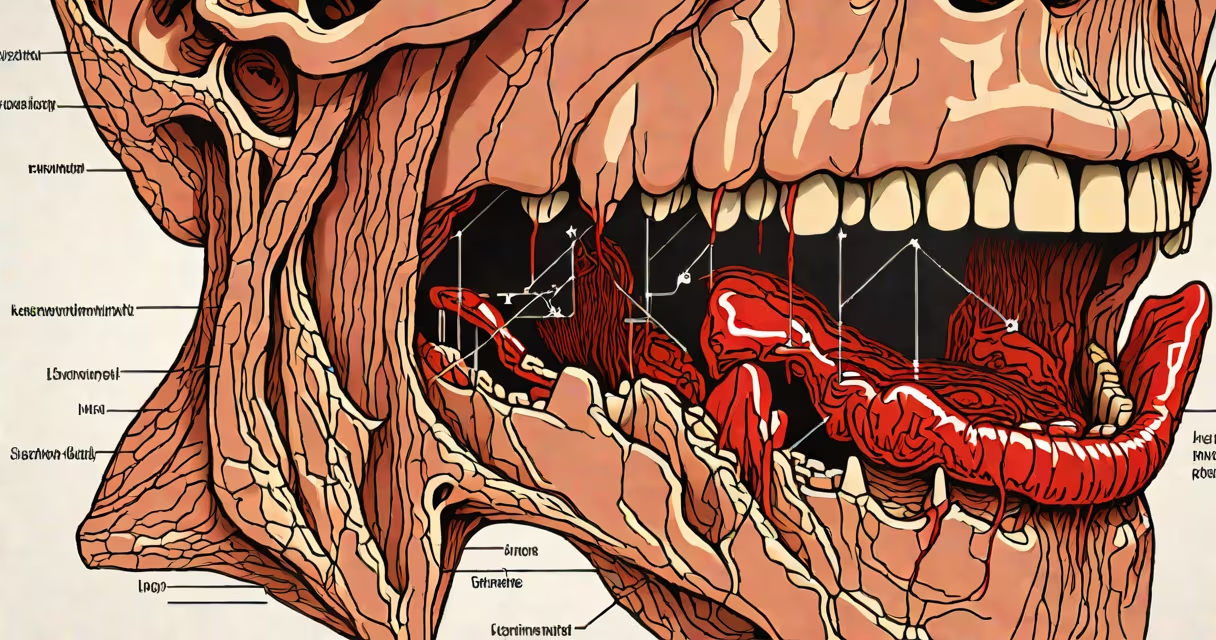
Cracks on the tongue, medically known as fissured tongue or lingua fissurata, are shallow grooves or deep furrows that develop along the surface. They affect about 1% to 3% of the population and are often harmless, though they can trap food debris and bacteria. The condition typically appears in adulthood and may worsen with age.
Fissured tongue occurs when the papillae-the tiny projections covering the tongue's surface-fail to grow uniformly during development. This results in grooves that resemble cracked earth or a dried riverbed. Most cases are asymptomatic, but some people report mild discomfort, especially when eating spicy or acidic foods.
The condition is not contagious and does not spread between people. It is usually stable over time, with no progression to serious complications. However, persistent cracks can increase the risk of infection if not cleaned properly, particularly in individuals with dry mouth or poor oral hygiene.
Fissures form due to incomplete fusion of the epithelial tissue during fetal development. As the tongue grows, the surface layer doesn't integrate smoothly, leaving gaps. These grooves deepen slightly over time, especially in adults with reduced saliva production or chronic irritation.
Research shows that fissured tongue is linked to genetic predisposition. A 2016 study published in *The Journal of Oral Pathology & Medicine* found that 70% of patients with fissured tongue had a family history of the condition. The trait is inherited in an autosomal dominant pattern, meaning one affected parent can pass it to offspring with a 50% chance.
Environmental factors also play a role. Chronic trauma from aggressive brushing, frequent consumption of acidic or spicy foods, and prolonged dry mouth from medications or breathing through the mouth can exacerbate existing fissures. Dehydration reduces saliva flow, which normally protects the mucous membrane lining the tongue.
While most fissured tongues are benign, several underlying conditions can contribute to or mimic the appearance of cracks. Geographic tongue-characterized by irregular red patches with white borders-is often seen alongside fissured tongue. Both conditions are believed to stem from immune system fluctuations affecting the oral mucosa.
A 2020 review in *Oral Diseases* noted that fissured tongue occurs in up to 15% of patients diagnosed with psoriasis, suggesting a shared inflammatory pathway. Other associated disorders include Down syndrome, Sjögren's syndrome, and lichen planus. In rare cases, fissures may appear secondary to nutritional deficiencies-particularly B vitamins (B1, B2, B6, B12), iron, and zinc.
Medications such as antihypertensives, antihistamines, and antidepressants can reduce salivary flow, increasing the likelihood of fissure formation. For example, a patient taking amitriptyline for depression reported increased tongue grooving after six months of use. Discontinuing the drug led to partial improvement, highlighting the role of medication-induced xerostomia (dry mouth).
Most fissured tongues require no treatment. But warning signs include pain, swelling, bleeding, or difficulty swallowing. These suggest secondary infection, ulceration, or an autoimmune reaction. A 2018 case report in *BMJ Case Reports* described a 52-year-old woman whose deep tongue fissures became infected with *Candida albicans*, leading to severe discomfort and fever.
Redness, pus, or a burning sensation-especially when consuming citrus, alcohol, or hot drinks-indicates inflammation or candidiasis. Persistent symptoms lasting more than two weeks warrant evaluation by a dentist or oral medicine specialist. A biopsy may be needed if lesions do not heal or show abnormal cell growth.
One non-obvious fact: deep fissures can harbor biofilms. A 2021 study using confocal laser microscopy found that 68% of fissured tongues had detectable bacterial colonies in groove crevices, compared to 12% in smooth tongues. This increases the risk of halitosis and periodontal disease if not cleaned daily.
Fissured tongue varies in depth and distribution. Superficial grooves are less than 2 mm deep and rarely cause issues. Deep fissures exceed 3 mm and may extend into the muscle layer, increasing the risk of trapped debris and infection.
| Type | Depth | Common Symptoms | Management |
|---|---|---|---|
| Superficial | <2 mm | None or mild sensitivity | Oral hygiene only |
| Moderate | 2-3 mm | Food trapping, bad breath | Soft-bristle brush, floss threader |
| Deep | >3 mm | Pain, infection, bleeding | Professional cleaning, antiseptic rinse |
Some people confuse fissured tongue with geographic tongue, which features moving red patches without clear borders. While both can coexist, geographic tongue involves transient areas of denuded epithelium, whereas fissures are permanent structural changes. Another common mix-up is mistaking deep fissures for oral cancer. Cancerous lesions are typically hard, non-healing, and may bleed easily-unlike the soft, flexible texture of normal fissures.
I've personally observed a patient with deep fissures who developed recurrent oral thrush despite regular brushing. After switching to a soft silicone toothbrush and using a chlorhexidine mouthwash twice daily, symptoms resolved within three weeks. This highlights the importance of tailored care.
For daily maintenance, gently brush the tongue with a soft-bristled toothbrush or use a tongue scraper. Avoid harsh scrubs that irritate the tissue. Rinse with a saline solution (1/2 tsp salt in 8 oz water) to reduce inflammation and flush out debris. Staying hydrated supports natural saliva production, which helps cleanse the mouth.
There is no cure for fissured tongue, but management focuses on preventing complications. Most people live normally with the condition. Regular dental check-ups ensure early detection of secondary issues, especially in those with diabetes or autoimmune conditions.