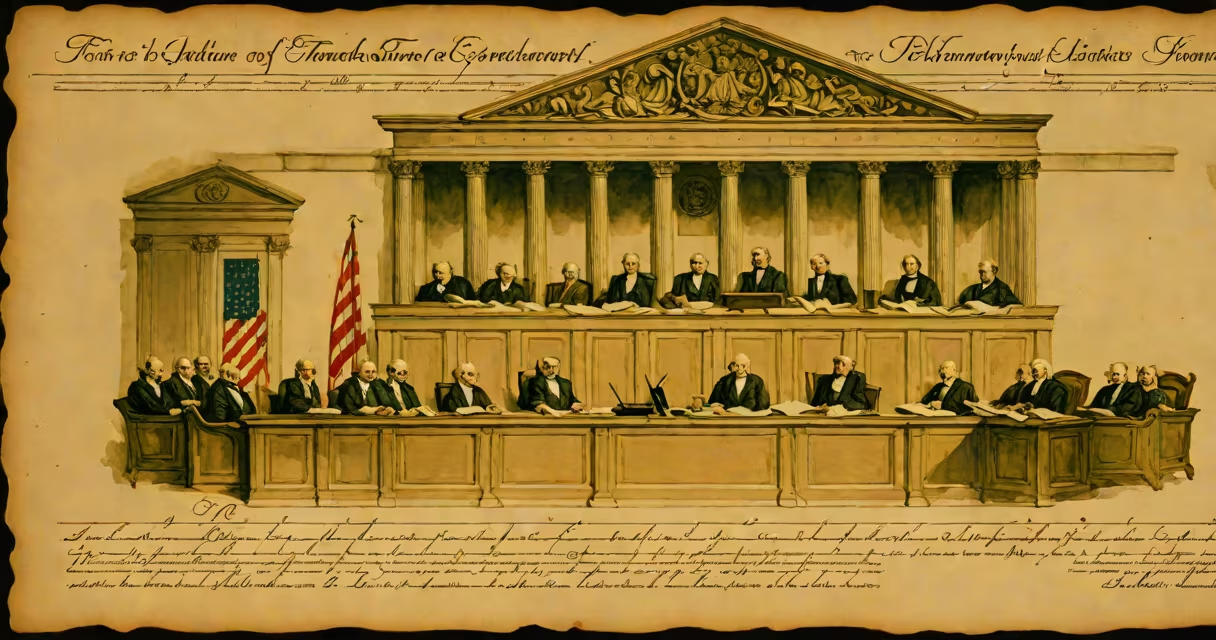
The first amendment document is the original text of the First Amendment to the United States Constitution, ratified in 1791. It guarantees five core freedoms: speech, religion, press, assembly, and petition. These rights form the foundation of American civil liberties and limit government power over individual expression.
Adopted as part of the Bill of Rights, the first amendment document was drafted by James Madison and passed by Congress in 1789. It emerged from concerns during the Constitutional Convention that the original document lacked explicit protections for individual rights. The final version was approved by the states and became law on December 15, 1791.
Unlike later amendments, the first amendment document was not written in a single draft. The version sent to the states included a clause about religious establishment that was later removed. The final wording was shaped through debate in Congress, where Madison revised proposals multiple times to balance state and federal authority.
The first amendment document operates as a legal barrier against government censorship and coercion. It applies to federal, state, and local governments, preventing them from creating laws that restrict protected expression. Courts interpret the document's language based on precedent, historical context, and evolving societal norms.
For example, the Supreme Court ruled in *Tinker v. Des Moines Independent Community School District* (1969) that students wearing black armbands to protest the Vietnam War were protected under the first amendment document. The Court held that symbolic speech counts as expression under the amendment, even in public schools.
Government actions that indirectly suppress speech-like funding decisions that favor certain viewpoints-are also subject to scrutiny. In *Rosenberger v. University of Virginia* (1995), the Court struck down a policy denying student group funding based on religious content, affirming that the first amendment document protects religious expression equally.
The first amendment document contains five distinct freedoms, each enforceable in court:
These rights are not absolute. The Supreme Court has established limits: speech that incites violence, constitutes true threats, or involves obscenity is not protected. For example, shouting "fire" in a crowded theater when there is no fire violates the standard set in *Schenck v. United States* (1919).
A lesser-known fact is that the first amendment document originally applied only to Congress. Over time, the Fourteenth Amendment's due process clause extended these protections to state governments via incorporation doctrine. This expansion meant that state laws restricting speech could also be challenged under the first amendment document.
Many people believe the first amendment document grants unlimited freedom of speech. That is incorrect. The document protects expression from government interference-but not from private actors. A company can ban employee posts on social media, even if those posts criticize the employer, because the first amendment document does not bind private entities.
Another myth is that the first amendment document protects hate speech. While offensive or inflammatory speech is generally protected, courts have upheld restrictions on speech that constitutes true threats or incitement. In *Virginia v. Black* (2003), the Court upheld a law banning cross burnings when they are intended to intimidate, recognizing that such acts go beyond mere expression.
Some assume the first amendment document applies only to political speech. But the Supreme Court has ruled that artistic expression, commercial speech (within limits), and even nude dancing in public can fall under protection. In *United States v. Stevens* (2010), the Court struck down a law banning depictions of animal cruelty, saying it violated the first amendment document unless narrowly tailored.
In 2018, the Supreme Court ruled in *Janus v. American Federation of State, County, and Municipal Employees* that public employees cannot be forced to pay union fees. The decision relied heavily on the first amendment document, stating that compelling financial support for a union violates free speech rights. The majority opinion noted that the document prevents government from using coercion to fund ideological messages.
Another example is the 2020 case *Barr v. American Assn. of Political Consultants Inc.*, where the Court struck down a provision of the Telephone Consumer Protection Act that banned robocalls to cell phones. The Court held that the restriction violated the first amendment document because it targeted speech based on content and speaker. The ruling emphasized that the document protects commercial speech, even when it is unsolicited.
When I visited the National Archives in Washington, D.C., I stood before the original first amendment document displayed in the Rotunda. The ink was faded, but the phrasing remained clear: "Congress shall make no law respecting an establishment of religion, or prohibiting the free exercise thereof..." The weight of that text-written over 230 years ago-felt immediate. It wasn't just history. It was living law.
The first amendment document is often confused with the First Amendment itself. The document refers specifically to the original text as ratified. The term "First Amendment" is used broadly to describe the entire body of case law interpreting it. The document is static; the interpretation evolves.
It is also mistaken for the Bill of Rights as a whole. The first amendment document is one of ten amendments added in 1791. The others cover rights like due process, jury trials, and protection from unreasonable searches. The first amendment document focuses exclusively on expression and belief.
| Term | Meaning | Scope |
|---|---|---|
| First amendment document | Original text of the First Amendment | Exact wording from 1791 |
| First Amendment | Legal principle and body of case law | Interpreted by courts since 1791 |
| Bill of Rights | First ten amendments to the Constitution | Collective protection of fundamental rights |
Understanding the difference matters. A court challenge based on the first amendment document requires citing the actual text. A broader argument about free expression relies on judicial precedent.
The first amendment document remains central in debates over social media regulation, campaign finance, and national security. In 2023, the Supreme Court heard *Twitter v. Taamneh*, where plaintiffs argued that social media platforms aided terrorism by hosting extremist content. The Court ruled that the first amendment document protects platforms from liability for user-generated content, reinforcing the idea that intermediaries are not publishers of speech they host.
Government surveillance programs also face challenges under the first amendment document. In *ACLU v. Clapper* (2013), the ACLU sued over bulk phone metadata collection by the NSA. The court acknowledged that such surveillance could chill free speech, especially among journalists and activists. The case highlighted how the first amendment document applies to privacy and surveillance, even when no direct censorship occurs.
The first amendment document is not a relic. It is a living structure that continues to define the boundaries of free expression in America. Its clarity and enduring relevance stem from precise language and a commitment to individual liberty. As long as people speak, pray, publish, gather, and petition, the first amendment document will remain essential.