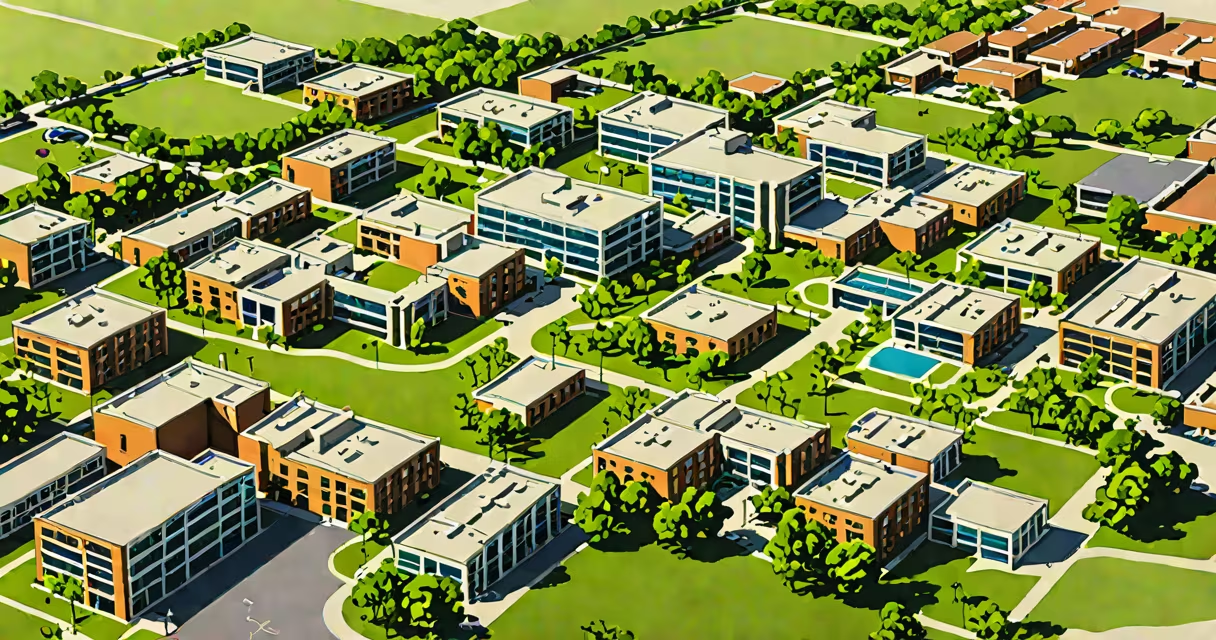
East Cape Midlands College is a public Technical and Vocational Education and Training (TVET) institution located in the Eastern Cape province of South Africa. It delivers nationally recognized qualifications in fields such as electrical engineering, hospitality, automotive technology, and business administration, preparing students for immediate employment.
As a TVET college, East Cape Midlands College focuses on practical, job-ready skills rather than academic theory. It operates under the oversight of the Department of Higher Education and Training (DHET), which sets national standards for technical education. The college serves learners from surrounding communities, including rural areas, and offers programs aligned with labor market demands in the region.
Students typically complete diplomas or certificates in two to three years. The curriculum includes classroom instruction, hands-on workshops, and workplace experience through internships. Graduates receive qualifications registered on the National Qualifications Structure (NQF), making their credentials valid across South Africa's workforce.
The college follows a structured model: learners apply, are assessed for eligibility, and are admitted based on available capacity and program requirements. Once enrolled, they attend classes five days a week, with a mix of theory and practical training. Assessment is ongoing, combining assignments, exams, and project work.
Each program has a designated learning center within the college complex. For example, the automotive technology program uses fully equipped garages with industry-standard tools. Students work on real vehicles under instructor supervision, gaining experience with diagnostics, repairs, and maintenance procedures.
Internships are mandatory for most programs. The college partners with local businesses and government departments to place students in roles lasting between six and twelve months. These placements provide exposure to professional environments and often lead to permanent jobs.
East Cape Midlands College offers a range of NQF-accredited qualifications. Programs are categorized into sectors such as Engineering, Business, Health, and Information Technology.
| Program | NQF Level | Duration | Key Skills Developed |
|---|---|---|---|
| Electrical Engineering (Installation) | 5 | 2 years | Wiring systems, circuit design, safety compliance |
| Hospitality Management | 4 | 1 year | Cooking, customer service, food safety |
| Automotive Mechanic (Light Vehicles) | 4 | 2 years | Engine repair, brake systems, diagnostics |
| Business Administration (Office Practice) | 4 | 1 year | Accounting basics, computer literacy, communication |
One non-obvious fact: East Cape Midlands College does not offer degrees. All qualifications are certificates or diplomas below bachelor's level. This aligns with the national TVET mandate to focus on skills-based training, not academic research.
Applicants must have completed Grade 12 with a minimum of a 30% pass in Mathematics and English. Some programs require a higher score in specific subjects. For example, the Electrical Engineering program requires a minimum of 40% in Mathematics and Physical Sciences.
The application process begins online via the DHET's National Student Financial Aid Scheme (NSFAS) portal. Learners submit personal details, academic records, and proof of residence. After initial screening, selected applicants are invited for an orientation session and aptitude test.
I visited the campus in Mthatha during a student orientation day. Over 150 prospective learners attended. They were grouped by program and guided through hands-on activities-wiring a basic circuit, assembling a small engine, or preparing a meal. The goal was to assess practical interest and basic understanding before formal enrollment.
Many confuse East Cape Midlands College with universities. Unlike universities, it does not award bachelor's or master's degrees. It also does not conduct research or publish academic papers. Its mission is workforce development, not theoretical study.
Another misconception is that TVET colleges only serve dropouts. In reality, many students enroll after completing Grade 12 with strong results. The college accepts learners who meet the minimum subject requirements, regardless of their school performance history.
A third error is assuming all TVET programs lead to high-paying jobs. While some careers like electricians or mechanics offer stable income, others depend on regional demand. For example, the tourism sector in the Eastern Cape has seen growth, increasing opportunities for hospitality graduates.
East Cape Midlands College serves learners from Mthatha, Qumbu, and nearby towns. Its location near major transport routes makes it accessible to rural students. The college also runs outreach programs in partner schools to promote technical education.
Why it matters: South Africa faces a skills gap in technical trades. According to Statistics South Africa (2023), 36% of unemployed youth lack formal qualifications. East Cape Midlands College addresses this by providing free or low-cost training to eligible students. NSFAS covers tuition for qualifying learners, reducing financial barriers.
For example, Sipho Dlamini, a 20-year-old from Qumbu, completed his Grade 12 with 55% in Mathematics. He applied to the Automotive Technology program and was accepted. After completing the course, he secured a job at a local garage earning R18,000 per month. His story reflects the college's impact on youth employment.
East Cape Midlands College differs from private colleges and universities in several ways:
Unlike traditional universities, it does not require a matric exemption for entry. However, it does not accept learners without a Grade 12 certificate or equivalent.
East Cape Midlands College provides accessible, job-focused education in the Eastern Cape. It equips learners with practical skills through accredited TVET programs. Graduates enter the workforce with nationally recognized qualifications, contributing to local economic development.