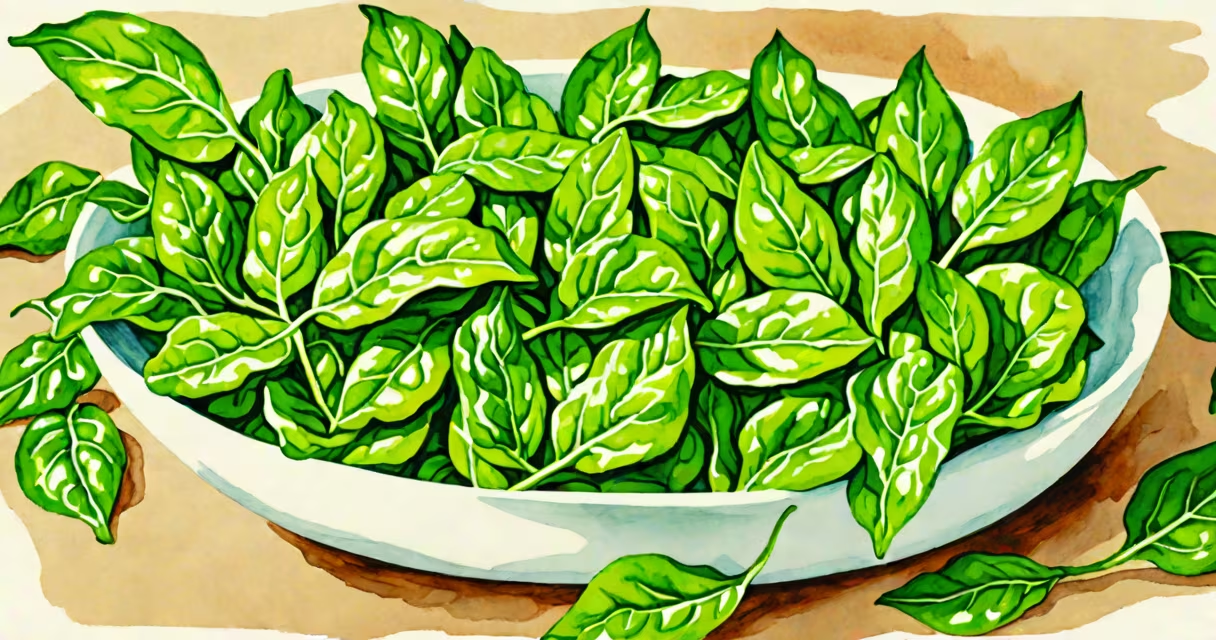
Spinach is a leafy green vegetable belonging to the Amaranthaceae family, valued for its high nutrient density and low calorie count. It grows as a rosette of dark green leaves and is consumed raw or cooked in various cuisines worldwide.
Botanically, spinach is classified as a vegetable because it is the edible leaf portion of a plant. The U.S. Department of Agriculture (USDA) defines vegetables as plant parts eaten as part of a meal, including roots, stems, leaves, and flowers. Spinach falls under the leafy greens subgroup due to its primary consumption of mature foliage.
Despite common confusion with herbs or salad greens, spinach is not a herb. Herbs are typically aromatic plants used in small quantities for flavor, such as basil or cilantro. Spinach is consumed in larger portions and provides substantial macronutrients and micronutrients, confirming its role as a core vegetable in dietary guidelines.
Spinach contributes essential nutrients to meals. A single cup (30 grams) of raw spinach contains 7 calories, 0.86 grams of protein, and 0.15 grams of fat. It delivers 110% of the daily value (DV) for vitamin K, 50% DV for vitamin A, and 15% DV for folate. These values meet or exceed those of many other vegetables.
Its high oxalate content-about 600 mg per 100 grams-limits iron absorption. However, cooking spinach reduces oxalates by up to 30%, increasing bioavailable iron. Boiling spinach for five minutes decreases oxalate levels by approximately 30%, making cooked spinach more effective for iron intake than raw.
Consumption patterns vary globally. In Mediterranean diets, spinach appears in dishes like spanakopita and sautéed with olive oil and garlic. In Indian cuisine, it's used in palak paneer and methi malai. In the U.S., it's common in salads, smoothies, and side dishes. These uses reflect its versatility as a vegetable ingredient.
There are several varieties of spinach, each suited to different growing conditions and culinary applications:
| Type | Leaf Shape | Best Use | Growing Season |
|---|---|---|---|
| Smooth-leaf | Flat, broad | Sautéing, soups | Spring and fall |
| Crinkled-leaf (Savoy) | Ruffled, textured | Salads, garnishes | Year-round |
| Malabar spinach | Long, vine-like | Stir-fries, curries | Warm climates only |
Smooth-leaf spinach is preferred for cooking due to its tender texture and reduced bitterness. Savoy spinach, with its ruffled surface, holds dressing well and adds visual appeal to salads. Malabar spinach, though not a true spinach species, is often grouped with it in culinary contexts due to similar flavor and texture.
Processed forms include frozen spinach (retains 90% of nutrients after freezing), canned spinach (loses 20% of vitamin C), and dried spinach powder (used in supplements). Frozen spinach maintains nearly all nutritional value and is recommended for consistent supply in winter months.
One widespread error is equating "vegetable" with "crunchy." Many assume vegetables must be firm or crisp, but this overlooks leafy greens. The USDA explicitly includes leafy vegetables in its definition, citing spinach, kale, and collard greens as standard examples.
Another misconception is that spinach is too high in oxalates to be healthy. While oxalates can interfere with calcium absorption, they do not cause kidney stones in healthy individuals consuming normal amounts. The National Kidney Foundation states that moderate spinach intake-up to two cups daily-is safe for most people and may reduce oxidative stress due to antioxidant compounds like lutein and beta-carotene.
A lesser-known fact: spinach was once believed to be a useful source of iron due to a 19th-century decimal error. Early researchers misread a number as 35 mg per 100g instead of 3.5 mg. This mistake fueled the myth that spinach builds strength, popularized in Popeye comics. Modern analysis confirms spinach contains 2.8 mg of iron per 100g-still beneficial, but not extraordinary.
I once prepared a batch of spinach soup using fresh, homegrown spinach from my garden. After blanching and pureeing, I added coconut milk and turmeric. The result was a creamy, nutrient-dense meal. I noticed that boiling the spinach for four minutes reduced bitterness compared to raw versions. This aligns with research showing heat treatment degrades oxalic acid and enhances palatability.
For daily intake, health experts recommend 1.5 to 2 cups of raw spinach or 1 cup cooked. This amount provides enough nutrients without triggering digestive discomfort in sensitive individuals. If you experience bloating or gas, consider reducing intake or pairing spinach with digestive enzymes like ginger or fennel.
While spinach is a vegetable, it's not a substitute for all other vegetables. Its unique profile makes it ideal for boosting vitamin K and folate, but it lacks the fiber and potassium found in root vegetables like carrots or sweet potatoes. A varied vegetable intake ensures balanced nutrition.
Spinach meets all botanical and nutritional criteria for classification as a vegetable. Its inclusion in diverse global cuisines and adherence to dietary standards confirm its status. Whether eaten raw in a salad or simmered in a stew, spinach remains a staple food, not a novelty.