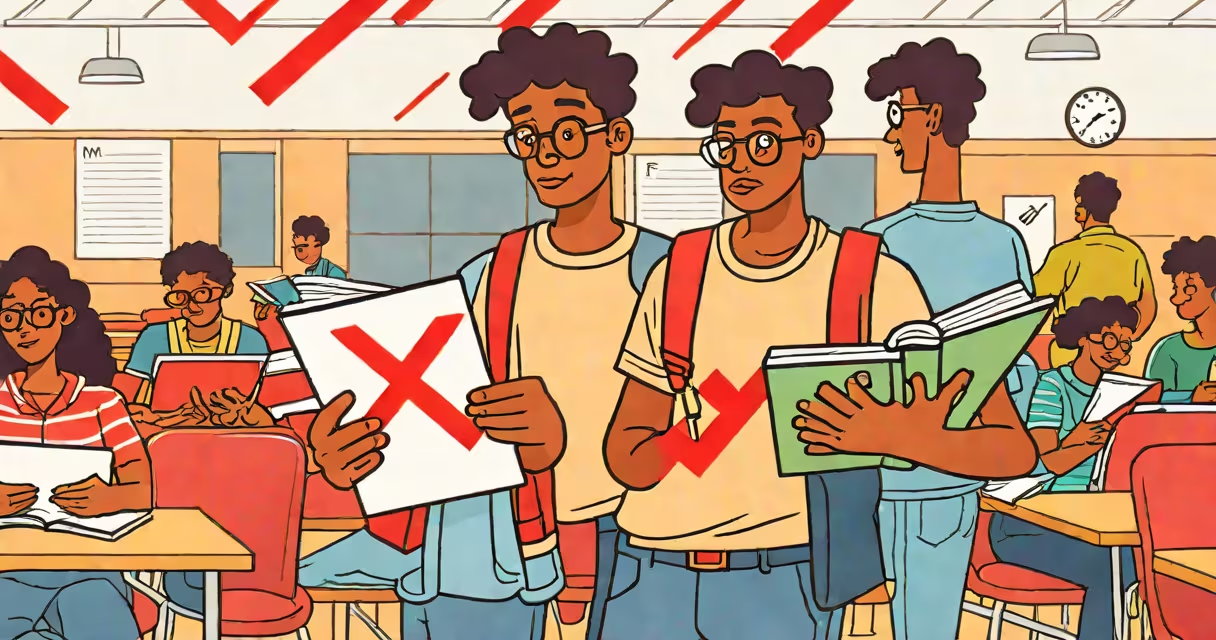
Cheating in academic settings leads to immediate penalties such as failing grades, disciplinary records, and potential expulsion. There is no legitimate way to "get past" cheating without facing consequences. The only path forward is accountability, remediation, and rebuilding trust through honesty.
Cheating violates institutional policies and undermines the purpose of education. When students submit work they did not create themselves-whether copying answers, using unauthorized materials, or paying someone to write an assignment-they breach academic integrity standards. These breaches are documented and enforced consistently across colleges, universities, and high schools.
According to the International Center for Academic Integrity (ICAI), 68% of college students admitted to cheating on exams, and 58% reported cheating on written assignments. Institutions use honor codes, plagiarism detection software like Turnitin, and proctored exams to identify misconduct. Once caught, students cannot erase the record. The focus shifts from avoiding punishment to addressing the behavior responsibly.
Institutions use automated tools and human oversight to detect cheating. Turnitin scans submitted papers against databases of published works, student submissions, and web content. A similarity score above 20% often triggers review. Instructors manually verify flagged sections, especially when phrasing or structure suggests unoriginal content.
Proctoring software like ProctorU or ExamSoft monitors exam sessions via webcam and screen recording. They flag suspicious behaviors such as looking away from the screen, multiple people in the room, or rapid scrolling through questions. These systems are not perfect-false positives occur-but they are widely trusted.
For example, a student at the University of California, Berkeley was suspended after Turnitin flagged a paper with 87% similarity to a published article. The student claimed accidental citation errors, but the university's academic integrity board ruled the work violated originality standards. The student appealed but lost. This case illustrates that detection is systematic and outcomes are binding.
Penalties depend on severity, institution policy, and prior history. First-time offenders may receive a failing grade on the assignment or course. Repeat violations lead to formal warnings, probation, or expulsion. Some schools require mandatory ethics training or community service as part of reinstatement.
The University of Michigan's Code of Academic Responsibility states that intentional cheating results in a failing grade and a notation on the transcript. For graduate programs, this can affect funding eligibility and job prospects. A 2021 study by the Journal of Higher Education found that 34% of employers screen applicants' academic records for integrity issues, and 12% reject candidates with known cheating incidents.
There is no hidden pathway to erase a cheating record. Students cannot "reset" their academic reputation by retaking a class under a different name or transferring without disclosure. All institutions share data through networks like the National Student Clearinghouse, which tracks enrollment and disciplinary actions.
Many students believe they can avoid detection through minor edits, paraphrasing, or using AI tools. This is false. Paraphrasing without proper attribution still counts as plagiarism. Using AI-generated content without disclosure violates most academic policies. Even if the AI writes the essay, the student is responsible for submitting it.
Some think that "everyone does it" so it's acceptable. That's a myth. While cheating rates are high, institutions still enforce rules uniformly. A 2022 survey by the Chronicle of Higher Education showed that 76% of faculty members reported catching cheating in their courses, yet only 31% believed students were punished fairly. Enforcement varies, but the expectation of accountability remains constant.
Another misconception is that getting caught is rare. In reality, detection rates are rising. Turnitin reports that 94% of submitted papers are scanned for plagiarism in U.S. higher education. Schools are investing in AI-powered monitoring tools that analyze writing patterns, time spent on tasks, and submission timing anomalies.
If you've cheated, the only way forward is to accept responsibility. Admitting fault allows access to support services such as academic counseling, tutoring, and integrity workshops. Many schools offer amnesty programs for first-time offenders who voluntarily report misconduct. These programs reduce penalties and provide education on ethical conduct.
At Stanford University, students who disclose cheating during a voluntary reporting window receive a warning and mandatory ethics training instead of a failing grade. The program aims to correct behavior early. Over 40% of participants in the pilot program showed improved academic performance in subsequent semesters.
One student at Arizona State University failed a midterm due to anxiety and considered cheating. Instead, he met with his professor, explained his situation, and requested extra credit. He completed a research project on the topic and earned a B. His honesty led to a stronger relationship with the instructor and better long-term performance.
| Aspect | Cheating | Academic Support |
|---|---|---|
| Source of work | Uncredited external sources | Original effort with guidance |
| Transparency | Hidden or misrepresented | Open and documented |
| Learning outcome | Minimal or none | Skills developed over time |
| Long-term impact | Risk of dismissal, job rejection | Improved grades, confidence, career readiness |
There is no shortcut to academic success. Getting past cheating means confronting the mistake, learning from it, and choosing integrity. The goal is not to escape consequences-it's to grow beyond them.
When you choose honesty, you build a foundation that lasts longer than any grade. You earn respect, develop real knowledge, and prepare for life beyond school. That is the only way to truly get past cheating.