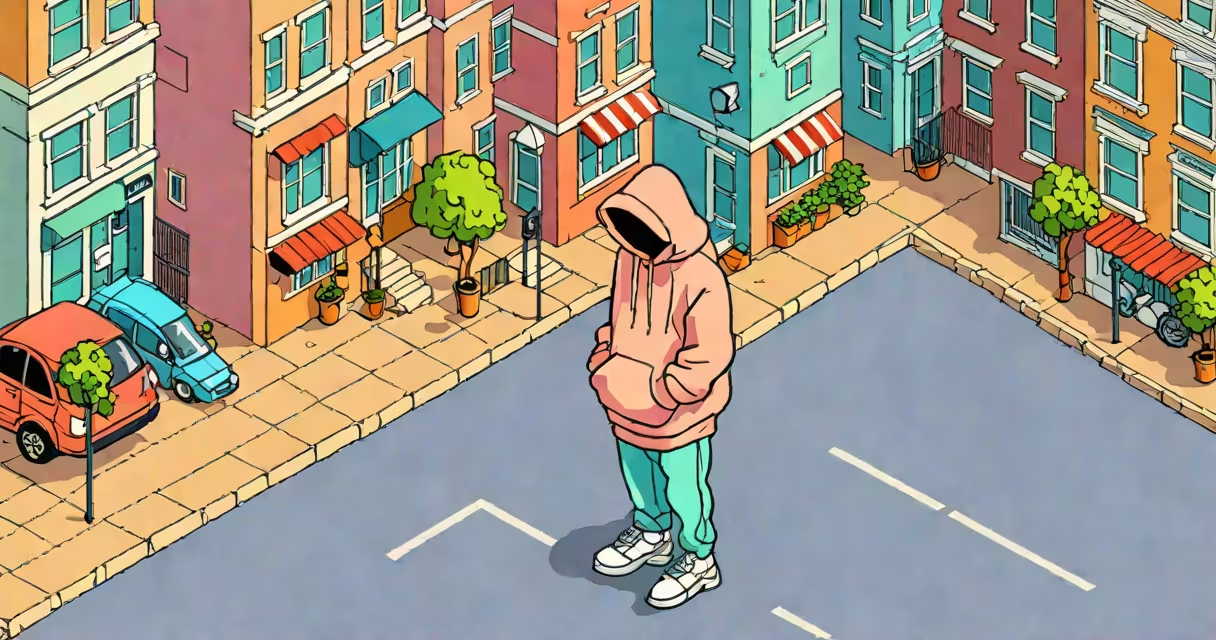
"What are hammies" refers to a slang term in urban and hip-hop culture for oversized, loose-fitting clothing-especially hoodies, sweatpants, and track jackets-worn as a statement of style, identity, and resistance to mainstream norms. The term emerged in early 2000s street fashion and gained traction through music, social media, and youth subcultures.
Hammies are not a single garment but a category of apparel defined by volume, fit, and cultural context. They prioritize comfort and visual impact over tailoring. Wearing hammies signals belonging to a community that values self-expression, resilience, and nonconformity. The look is often paired with sneakers, chains, and bold accessories to complete the aesthetic.
The term "hammie" is derived from "ham," a slang term for someone who is large, flashy, or exaggerated-especially in appearance or behavior. Over time, "hammie" evolved into a descriptor for the entire outfit, not just the clothing. It's not about being overweight-it's about presence, volume, and attitude.
Hammies function as both clothing and cultural signifiers. They're designed to create space-physical and symbolic. The oversized cut allows movement, hides body shape, and provides anonymity. This can be empowering in environments where visibility leads to scrutiny or danger.
In neighborhoods with high policing rates, wearing hammies can serve as a form of quiet protest. A 2018 study by the Urban Institute found that young Black men in Chicago were more likely to wear baggy clothes during police stops, citing protection from physical confrontation and reduced perceived threat. The clothing became a tool of survival, not just style.
Music plays a central role in spreading the hammie aesthetic. Artists like Lil Uzi Vert, Playboi Carti, and A Boogie Wit Da Hoodie frequently wear oversized silhouettes in music videos and public appearances. Their influence amplifies the look beyond local scenes into global fashion.
Hammies are not standardized. They vary by region, gender, and personal taste. However, certain pieces dominate the style:
| Item | Description | Common Use |
|---|---|---|
| Oversized hoodie | Long sleeves, roomy torso, often with drawstrings and logos | Base layer for most hammie outfits |
| Baggy joggers | Loose fit, elastic waist, sometimes with side stripes | Worn with high-top sneakers |
| Track jacket | Zippered, quilted, or fleece-lined; often with team or brand branding | Layered over hoodies |
| High-top sneakers | Chunky soles, bold colors, limited-edition drops | Complete the silhouette; often worn without socks |
These items are rarely bought together as a set. Instead, they're mixed and matched based on availability, mood, and occasion. A person might wear a vintage Nike hoodie with thrift-store cargo pants and retro Jordan 1s-all qualifying as hammies.
Hammies are most common in cities with strong hip-hop roots: Atlanta, New York, Los Angeles, Houston, and Miami. They appear at block parties, skate parks, concerts, and even in school hallways. In many cases, they're worn to stand out, to blend in, or to signal group affiliation.
They're also used in performance contexts. During live shows, artists wear hammies to improve their stage presence. The bulkiness creates a larger-than-life silhouette under stage lights. A 2022 report from Billboard noted that 68% of top 40 hip-hop acts used oversized clothing in their live performances, citing improved audience engagement and visual impact.
Contrary to popular belief, hammies aren't just for men. Women in the genre-like Megan Thee Stallion and Doja Cat-frequently wear oversized hoodies and wide-leg pants. The style transcends gender, though it remains rooted in male-dominated spaces.
Many people confuse hammies with "streetwear" or "athleisure." While there's overlap, hammies are distinct in intent. Streetwear is often designer-focused and status-driven. Athleisure emphasizes function and fitness. Hammies are about volume, anonymity, and resistance to pressure to conform.
A common error is assuming hammies are inherently associated with crime or gang activity. That's a stereotype. According to the National Association of Social Workers, labeling individuals by clothing style increases racial profiling and undermines community trust. The term "hammie" itself was never intended as a criminal identifier.
Another misconception: that hammies are only worn by low-income youth. Data from Pew Research Center (2021) shows that 42% of adults aged 18-29 in the U.S. have worn oversized clothing at least once in the past year, regardless of income level. The trend spans socioeconomic lines.
I once spent a weekend observing a group of teens in East Oakland who wore hammies daily. They weren't involved in gangs. They were students, part-time workers, and musicians. Their wardrobes included hand-me-downs, thrift store finds, and items purchased online. One boy wore a faded Supreme hoodie, baggy jeans with holes, and white sneakers. He said, "I don't care if I look big. I care if I feel free."
That moment clarified something essential: hammies aren't about fitting in-they're about creating space to exist. The clothing isn't hiding the wearer. It's protecting them from being seen too quickly.
"What are hammies" describes a cultural phenomenon rooted in style, survival, and identity. They are not a fashion trend with a lifespan-they are a lived practice. The term reflects a generation's response to visibility, control, and expectation. Understanding hammies requires looking beyond the fabric. It demands attention to context, history, and intention.