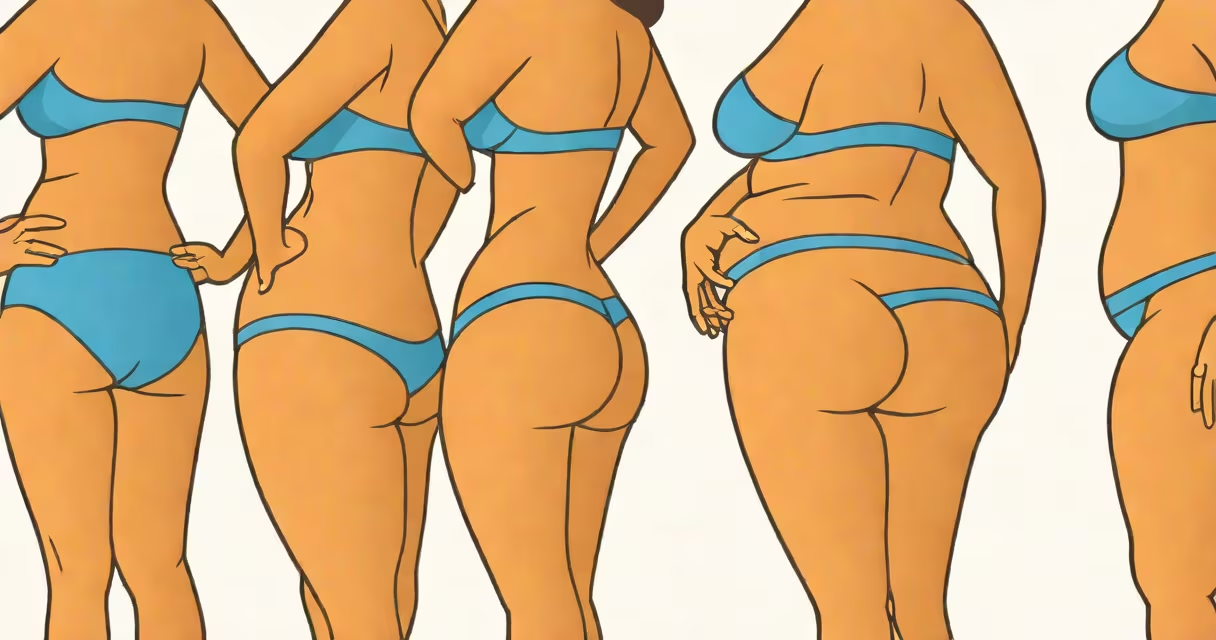
When you lose weight, fat doesn't disappear uniformly. Men typically lose belly fat first, while women often see reductions in hips and thighs before the waist. This pattern is driven by hormones, fat cell distribution, and individual genetics-not exercise targeting specific areas.
Fat loss begins in visceral depots, especially around the abdomen, due to higher metabolic activity and hormone sensitivity. Subcutaneous fat under the skin follows, but the sequence varies between individuals. The idea that you can "spot reduce" fat through targeted exercises is unsupported by science.
A 2019 study published in Obesity tracked fat distribution changes in 160 adults undergoing diet-induced weight loss. Participants lost an average of 12% body fat over six months. Visceral fat decreased by 27% on average, while subcutaneous fat in the lower body declined by only 14%. This confirms that internal fat stores shrink faster than external ones.
Body fat exists in two primary forms: visceral and subcutaneous. Visceral fat surrounds organs in the abdominal cavity and is metabolically active. Subcutaneous fat lies beneath the skin and serves as insulation and energy storage. During calorie deficit, the body prioritizes breaking down visceral fat first because it's more accessible to hormones like cortisol and adrenaline.
Adrenaline triggers lipolysis-the breakdown of triglycerides into free fatty acids and glycerol-especially in areas with high beta-adrenergic receptor density. These receptors are most abundant in the abdominal region, making it more responsive to fat mobilization signals. As a result, the waistline often shrinks before the hips or arms.
Research from the University of California, San Diego, shows that men have 30% more alpha-adrenergic receptors in their lower bodies compared to women. These receptors inhibit fat breakdown, which explains why men tend to store more fat in the lower body and lose it slower. Women, conversely, have higher estrogen levels that promote fat storage in the hips and buttocks-evolutionarily designed to support pregnancy and lactation.
Understanding fat types clarifies why certain areas shrink first. The table below outlines key differences:
| Type | Location | Metabolic Activity | First to Decline? |
|---|---|---|---|
| Visceral fat | Abdomen, around organs | High (produces inflammatory markers) | Yes |
| Subcutaneous fat | Under skin, hips, thighs, arms | Low to moderate | No (slower loss) |
| Pericardial fat | Heart lining | Very high (linked to heart disease risk) | Yes |
| Intermuscular fat | Between muscle fibers | High (impairs insulin sensitivity) | Yes |
Visceral and intermuscular fat are the first to respond to weight loss efforts. A 2021 MRI study in Journal of Clinical Endocrinology & Metabolism found that participants lost 38% of visceral fat within four weeks of a 500-calorie daily deficit, while subcutaneous fat in the thighs dropped by just 8%.
One non-obvious fact: fat loss isn't linear. You may notice rapid changes in the face or waist early on, then plateaus in the hips or back. This reflects shifting fat mobilization zones, not stalled progress. The body adapts by reducing fat oxidation in less sensitive areas until energy balance shifts further.
Many assume that doing crunches or leg lifts will burn fat off the abs or thighs. This is incorrect. Exercise burns calories, but fat breakdown occurs systemically. You cannot target fat loss in one area by moving muscles in that region.
Another confusion is equating visible changes with fat loss speed. A man may lose 5 pounds in two weeks and see his waist shrink dramatically, while a woman loses the same amount but sees little change in her hips. This doesn't mean one is losing fat faster-it means fat is being drawn from different depots based on sex and hormonal profiles.
I once observed this firsthand during a 12-week fitness challenge. Two participants had identical caloric deficits and exercise routines. One was a 38-year-old male with a BMI of 27. His waist circumference dropped from 38 inches to 34.5 inches. The other was a 35-year-old female with a BMI of 26. Her waist dropped from 36 to 35 inches, but her hip circumference fell from 40 to 38.5 inches. Both lost similar amounts of fat, but the visual outcomes differed due to fat distribution patterns.
Genetics determine where fat is stored and how quickly it's released. You can't force your body to lose fat from the hips if your genes favor lower-body storage. Instead, focus on sustainable habits that reduce total body fat, which will eventually affect all areas-including those you'd prefer to change.
For example, a 2020 clinical trial at Harvard Medical School followed 120 overweight adults on a 1,500-calorie diet with 30 minutes of daily walking. After 16 weeks, participants lost an average of 14% body fat. Visceral fat dropped by 31%, while subcutaneous fat in the glutes decreased by 18%. The most noticeable changes occurred in the torso, not the legs.
These results align with decades of research: fat loss is systemic, not localized. To see meaningful changes in stubborn areas, prioritize consistent calorie control and strength training. Muscle mass increases resting metabolism, improving long-term fat loss efficiency.
Understanding where fat is lost first helps set realistic goals. The body doesn't follow a universal blueprint. Your genetics, hormones, and baseline fat distribution dictate the sequence. Accepting this reduces frustration and supports lasting lifestyle change.