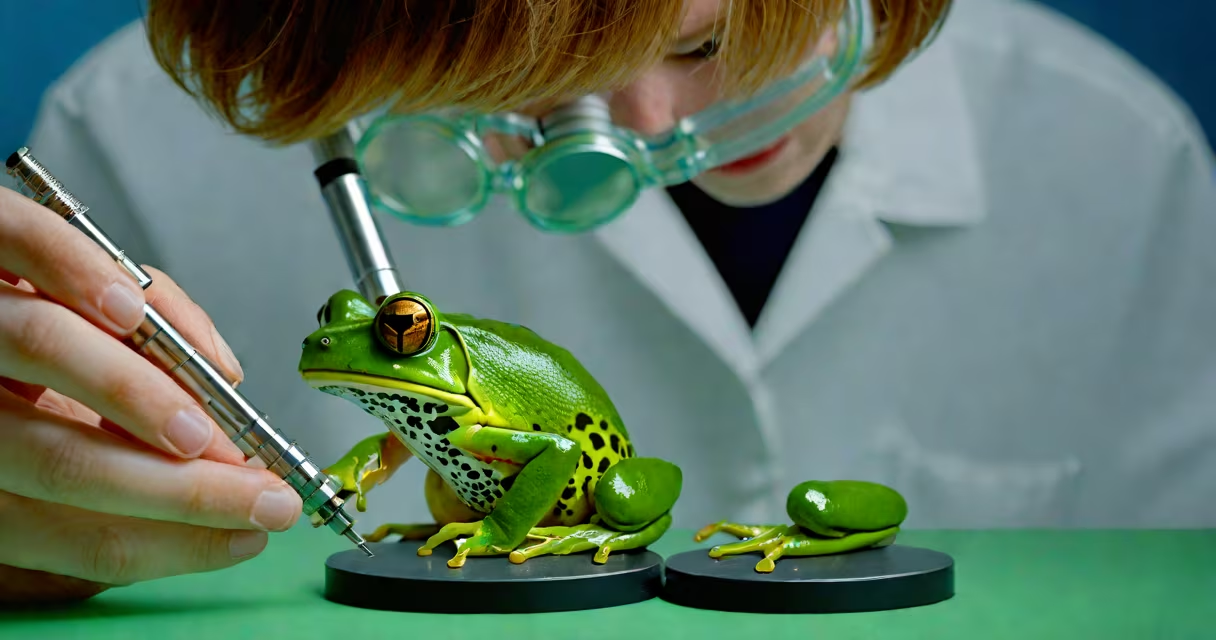
Zoology is the scientific study of animals, covering their structure, function, evolution, distribution, and behavior. It examines everything from microscopic organisms to large mammals, focusing on how they adapt, interact, and survive in diverse environments.
Modern zoology integrates genetics, ecology, and physiology to understand animal life across scales-from cellular processes to global ecosystems. It builds on principles from evolutionary biology and comparative anatomy, using empirical observation and experimentation to test hypotheses about animal systems.
For example, researchers studying the migratory patterns of monarch butterflies use GPS tagging and climate modeling to track how temperature shifts affect their annual journeys. This blend of fieldwork and data analysis defines much of contemporary zoological inquiry.
Zoologists apply the scientific method to investigate animal phenomena. They formulate testable questions-such as "Do urban birds sing at higher pitches to overcome traffic noise?"-then collect data through controlled experiments, observational field studies, or laboratory analysis.
Field techniques include radio telemetry to monitor animal movement, camera traps for elusive species, and fecal sampling to assess diet and health. In labs, students analyze tissue samples, run DNA sequencing, or simulate physiological responses using computational models.
A 2021 study published in *Nature Ecology & Evolution* showed that urban-dwelling great tits in the UK have developed shorter songs compared to rural populations-a direct response to increased ambient noise. This finding emerged from years of audio recording and statistical modeling, demonstrating how zoology connects environmental change to biological adaptation.
Zoology spans multiple specialized fields. These areas often overlap, especially in interdisciplinary research focused on biodiversity and conservation.
| Field | Focus Area | Example Application |
|---|---|---|
| Vertebrate Zoology | Structure and function of backboned animals | Studying how whale flippers evolved from land mammal limbs |
| Entomology | Insect biology and classification | Tracking invasive beetle species threatening forest ecosystems |
| Ethology | Animal behavior and communication | Analyzing wolf pack hierarchy through long-term field observations |
| Marine Zoology | Life in aquatic environments | Assessing coral reef recovery after bleaching events |
Each subfield uses distinct tools. Marine biologists may deploy remotely operated vehicles (ROVs) to observe deep-sea creatures, while ethologists rely on video coding software to quantify social interactions in primates.
One non-obvious distinction: zoology is not synonymous with veterinary medicine. While both involve animal health, zoology focuses on wild populations and ecological relationships, whereas veterinary science treats individual animals in clinical settings.
Zoology informs policy decisions on endangered species protection, habitat restoration, and disease control. For instance, the U.S. Fish and Wildlife Service uses population models derived from zoological data to designate critical habitats under the Endangered Species Act.
Conservation efforts depend heavily on zoological insights. The reintroduction of gray wolves into Yellowstone National Park in 1995 was based on decades of behavioral and ecological research. Within five years, the return of wolves led to measurable changes in elk migration, vegetation regrowth, and riverbank stabilization-an outcome known as a trophic cascade.
I witnessed this firsthand during a summer internship at a wildlife sanctuary in Montana. We monitored elk movements using GPS collars and compared data from before and after wolf reintroduction. The shift in grazing patterns reduced soil erosion and increased bird diversity in riparian zones-proof that understanding animal behavior leads to tangible system benefits.
Many assume zoology is limited to animal care or zoo work. In reality, most zoologists conduct research in universities, government agencies, or private conservation organizations. Fieldwork is common, but so is computational modeling, genetic analysis, and data visualization.
Another misconception: zoology is purely observational. Modern zoology relies heavily on quantitative methods. A single study on bat echolocation may involve signal processing algorithms, machine learning classifiers, and Bayesian statistics to interpret frequency modulation patterns.
Even the term "animal" in zoology includes sponges, jellyfish, and corals-organisms classified under the kingdom Animalia despite lacking nervous systems or complex organs. This reflects the field's broad taxonomic scope beyond vertebrates.
During the 2022-2023 H5N1 outbreak in North America, zoologists played a central role in monitoring bird migrations and identifying transmission hotspots. Researchers from the Cornell Lab of Ornithology combined satellite tracking data with viral genome sequencing to map how the virus moved across wild duck populations.
They found that mallards migrating along the Pacific Flyway carried the virus from Canada into California. By analyzing fecal samples collected at stopover sites, they confirmed infection rates exceeded 30% in certain flocks. This data helped state agencies issue early warnings to poultry farmers and set quarantine protocols.
This case illustrates how zoology bridges basic science and public health. It also shows the value of collaboration: ecologists, virologists, and data scientists worked together using shared datasets and open-access platforms.
Understanding what you learn in zoology reveals a discipline far richer than popular perception allows. It combines rigorous science with urgent real-world impact, shaping how we protect biodiversity and respond to emerging threats.
What do you learn in zoology? You gain tools to decode life's complexity-from the molecular basis of adaptation to the dynamics of entire ecosystems. The knowledge equips you to address challenges like extinction, zoonotic diseases, and climate-driven habitat loss.