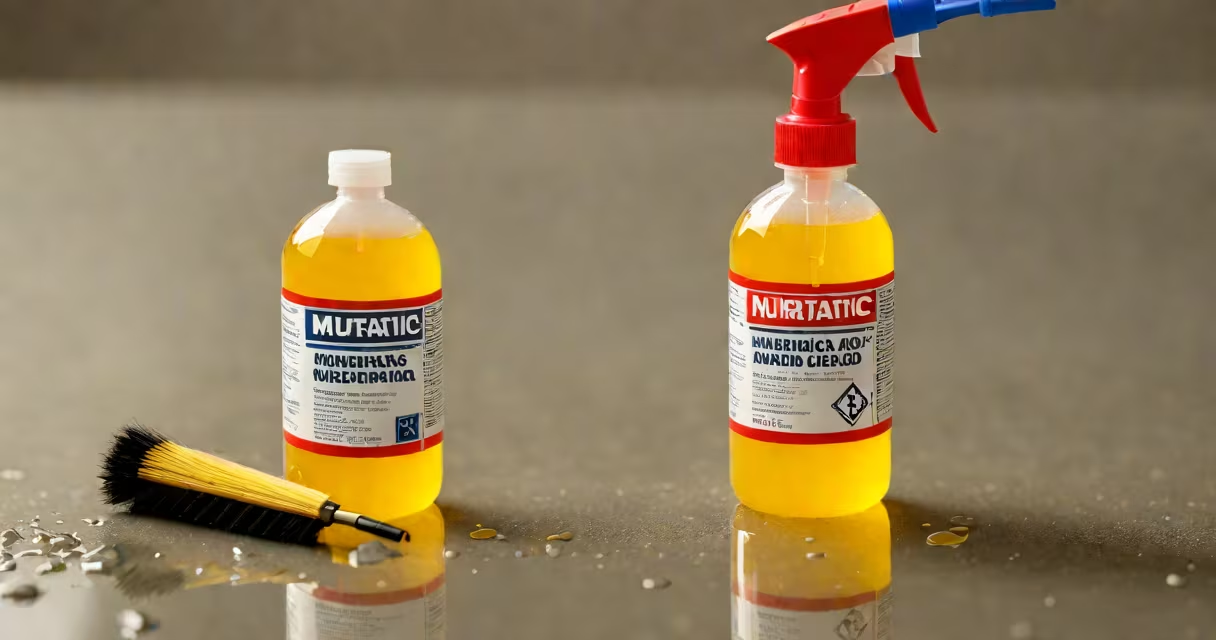
Muriatic acid is a highly concentrated form of hydrochloric acid used primarily for heavy-duty cleaning, etching, and dissolving mineral deposits. It's effective on concrete, brick, tile, and metal surfaces, especially when removing rust, scale, or old sealants. This strong acid is not for casual household use and requires careful handling.
Manufactured under strict industrial standards, muriatic acid typically contains 31.45% hydrochloric acid by weight. Its potency makes it ideal for tasks that weaker cleaners cannot handle. It's widely used in construction, pool maintenance, and industrial cleaning-but only when proper protective gear and ventilation are in place.
Muriatic acid dissolves calcium, lime, rust, and other alkaline deposits through chemical reaction. When applied, it breaks down hard water stains, mortar residue, and mineral buildup by converting insoluble compounds into soluble salts that wash away easily.
The process is rapid. A 10-minute application on a concrete floor covered in efflorescence-white salt deposits-can visibly reduce the crusty residue. After rinsing with water, the surface appears clean and porous, which prepares it for sealing or painting.
For example, a contractor in Florida used a 1:10 dilution of muriatic acid (one part acid to ten parts water) to remove salt stains from a pool deck. The acid broke down the crystallized calcium chloride left behind by evaporated seawater. After scrubbing and thorough rinsing, the deck was restored to its original appearance.
Muriatic acid excels in five core areas: concrete preparation, pool maintenance, rust removal, tile and grout cleaning, and industrial scale dissolution. Each application requires specific dilution ratios and safety protocols.
| Use Case | Dilution Ratio | Surface Type | Duration |
|---|---|---|---|
| Concrete etching | 1:10 (acid:water) | Concrete, stone | 5-10 min |
| Pools (scale removal) | 1:20 | Pool tiles, liners | 15-30 min |
| Rust removal | 1:5 | Steel, iron | 10-20 min |
| Tile grout cleaning | 1:15 | Ceramic, porcelain | 5-10 min |
| Scale in pipes | 1:20 | Plumbing systems | 30-60 min |
Concrete etching is one of the most common uses. Before applying epoxy or paint, contractors apply diluted muriatic acid to open pores and create a rougher texture for better adhesion. According to the American Concrete Institute, this step increases bond strength by up to 40% compared to untreated surfaces.
Pool owners use muriatic acid to lower pH levels and dissolve calcium deposits in filters and tile lines. A 2022 study by the National Swimming Pool Foundation confirmed that regular acid treatment prevents scale formation in chlorinated pools, reducing maintenance costs by 28% over five years.
Many assume muriatic acid is interchangeable with vinegar or lemon juice. That's incorrect. Vinegar is acetic acid, around 5% concentration. Muriatic acid is roughly 30% hydrochloric acid-over six times stronger. Using vinegar for concrete cleaning won't remove hardened lime deposits.
Another error is applying undiluted acid. A homeowner in Texas once poured full-strength muriatic acid onto a driveway to remove oil stains. The acid ate through the concrete, creating deep pits and releasing toxic fumes. The repair cost exceeded $1,200.
Some believe muriatic acid can be stored in plastic containers indefinitely. This is false. While HDPE plastic resists corrosion, prolonged exposure causes micro-cracks that allow acid to seep through. The U.S. Department of Transportation warns against storing muriatic acid in unapproved containers due to leakage risks during transport.
Always wear nitrile gloves, goggles, a respirator with acid filters, and acid-resistant clothing. Work in well-ventilated areas. Never mix muriatic acid with bleach-it produces deadly chlorine gas.
I once witnessed a DIY enthusiast mix muriatic acid with household bleach while cleaning a basement shower. Within seconds, a greenish cloud filled the room. Emergency responders had to evacuate the building. The incident was documented by the Centers for Disease Control and Prevention as a preventable chemical exposure.
After use, neutralize residual acid with baking soda or sodium bicarbonate. Apply a 1:1 solution of baking soda and water to the surface, then rinse thoroughly. This stops ongoing reactions and prevents long-term damage.
When disposing of leftover solution, follow local hazardous waste regulations. Do not pour it down drains or into storm sewers. The Environmental Protection Agency classifies spent muriatic acid as hazardous material under RCRA guidelines.
For those considering alternatives, citric acid or oxalic acid may work for light cleaning-but they lack the power needed for structural surfaces. Muriatic acid remains unmatched for heavy-duty tasks.
Understanding what muriatic acid is good for means recognizing both its power and danger. Used correctly, it cleans, prepares, and restores. Used incorrectly, it damages materials and harms people.