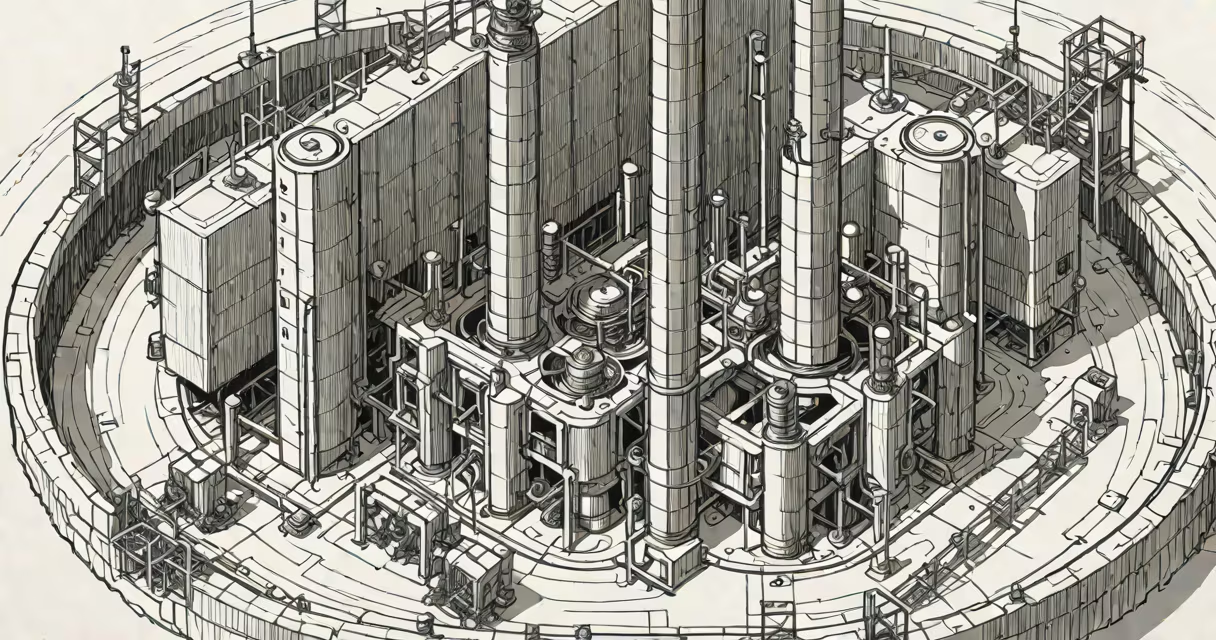
Nuclear energy def is the process of releasing energy from atomic nuclei, primarily through fission of heavy elements like uranium-235 or plutonium-239, or fusion of light elements like hydrogen isotopes. This energy is harnessed to produce steam that drives turbines and generates electricity.
Fission-based nuclear power plants operate worldwide, converting the kinetic energy of splitting atoms into heat, which is then transformed into electrical power. Fusion, while promising greater efficiency and less long-lived waste, remains under development for commercial use. Both processes rely on fundamental principles of atomic physics and require precise engineering to manage chain reactions safely.
The International Atomic Energy Agency (IAEA) reports that as of 2023, 440 operational nuclear reactors in 32 countries generated approximately 10% of global electricity. These reactors use controlled fission chains to maintain steady energy output, with safety systems designed to prevent uncontrolled reactions.
Nuclear energy begins with the nucleus of an atom. When a neutron strikes a fissile nucleus like uranium-235, the nucleus splits into smaller fragments, releasing additional neutrons and a large amount of energy. This energy appears as heat, which is transferred to a coolant fluid circulating through the reactor core.
In pressurized water reactors (PWRs), the most common design, water flows through the core under high pressure to prevent boiling. The heated water transfers thermal energy to a secondary loop via a heat exchanger, where it turns into steam. That steam powers a turbine connected to a generator, producing electricity.
A single kilogram of uranium-235 can release as much energy as burning 3 million kilograms of coal. This extreme energy density makes nuclear power highly efficient per unit of fuel, though it requires complex infrastructure and strict regulatory oversight.
Two distinct processes underlie nuclear energy: fission and fusion. Fission involves splitting heavy atomic nuclei, while fusion combines light nuclei. Only fission is currently used in commercial power plants.
| Reaction Type | Process | Current Use | Energy Output |
|---|---|---|---|
| Fission | Splitting uranium-235 or plutonium-239 atoms | Commercial power plants (440 reactors globally) | ~200 MeV per fission event |
| Fusion | Combining deuterium and tritium to form helium | Experimental (e.g., ITER, NIF) | ~17.6 MeV per reaction |
Fission reactors use enriched uranium (typically 3-5% U-235) as fuel. Control rods made of boron or cadmium absorb excess neutrons to regulate the reaction rate. When the reactor needs to shut down, rods are fully inserted to stop the chain reaction.
Fusion, by contrast, mimics the process powering the sun. It requires temperatures exceeding 100 million degrees Celsius to overcome electrostatic repulsion between nuclei. Magnetic confinement (like in tokamaks) or inertial confinement (using lasers) attempts to sustain these conditions. Despite decades of research, no fusion plant has yet achieved net energy gain at scale.
Nuclear energy is often conflated with nuclear weapons. While both involve atomic nuclei, weapon designs rely on uncontrolled, explosive chain reactions. Power reactors use lower-enriched fuel and are engineered to prevent runaway reactions. A meltdown is not a nuclear explosion - it's a failure of cooling leading to fuel damage, not detonation.
Another myth is that nuclear plants emit significant greenhouse gases during operation. According to the World Nuclear Association, nuclear power emits less than 12 grams of CO₂ equivalent per kWh over its lifecycle - comparable to wind and solar. The primary emissions come from construction and fuel processing, not electricity generation.
Even the term "nuclear waste" is misleading. Spent fuel contains usable materials like plutonium-239, which can be reprocessed and reused in mixed oxide (MOX) fuel. France recycles 96% of its spent fuel, reducing long-term storage needs. The U.S. does not currently reprocess due to policy and proliferation concerns.
Consider the Palo Verde Generating Station in Arizona, the largest nuclear power plant in the U.S. It operates three reactors using pressurized water design. Each reactor core contains around 193 fuel assemblies, each with 264 fuel rods. The plant produces about 3.3 gigawatts of electricity - enough to power over 3 million homes annually.
During normal operation, the reactor maintains a critical mass of fissile material. Neutron flux is monitored continuously. If temperature rises, control rods automatically insert to slow the reaction. Emergency cooling systems activate within seconds if pressure drops. These layers of redundancy prevent accidents like those at Chernobyl or Fukushima.
I once toured a decommissioned reactor site in Pennsylvania. The containment building was a 150-foot-tall steel-and-concrete dome. Inside, the spent fuel pool glowed faintly blue from Cherenkov radiation - a visible sign of intense ionizing particles moving faster than light in water. The sight underscored how energy released at the subatomic level translates into measurable phenomena.
Nuclear energy def offers a low-carbon alternative to fossil fuels. As nations aim for net-zero emissions by 2050, nuclear power is being reconsidered. The U.S. Department of Energy projects that advanced reactors could supply 20% of U.S. electricity by 2050, supporting grid stability and reducing reliance on intermittent renewables.
Small modular reactors (SMRs), designed for factory assembly and deployment in remote areas, represent a new frontier. NuScale's SMR design, approved by the NRC in 2020, uses passive cooling and can be scaled to meet local demand. These units are intended to reduce upfront costs and shorten construction timelines.
Despite challenges in public perception and financing, nuclear energy def remains a proven method for large-scale, continuous electricity generation. Its role in decarbonizing energy systems continues to grow, especially in countries like France, Sweden, and South Korea, where nuclear provides over 40% of domestic power.
Nuclear energy def is not a single technology but a category of energy production rooted in atomic physics. It delivers consistent, high-density power with minimal atmospheric emissions. While fusion remains aspirational, fission continues to evolve through improved safety, efficiency, and waste management.