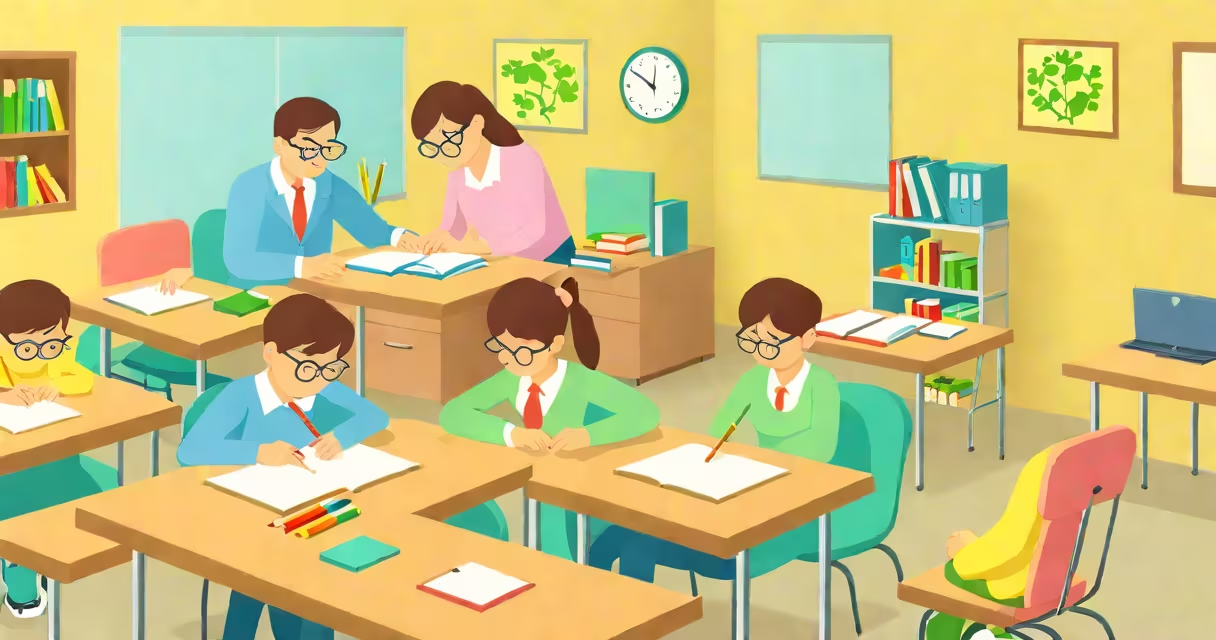
Special needs assistance refers to personalized support services designed for individuals with physical, cognitive, emotional, or developmental disabilities. These services ensure equitable access to education, transportation, healthcare, and public spaces through accommodations, trained personnel, and adaptive tools.
This support is not one-size-fits-all. A student with attention deficit hyperactivity disorder (ADHD) may require extended test time and a quiet room, while someone with cerebral palsy might need a wheelchair-accessible bus with a ramp and secure seating. The goal is functional independence, not just compliance with rules.
The Individuals with Disabilities Education Act (IDEA) mandates that public schools provide free appropriate public education (FAPE) to eligible students. This includes specialized instruction, related services like speech therapy, and assistive technology. According to the U.S. Department of Education, over 7 million children received special education services in 2022-2023.
Each student's plan begins with an evaluation by a multidisciplinary team. This includes educators, psychologists, therapists, and parents. The assessment determines eligibility under IDEA and identifies specific needs.
Once qualified, an Individualized Education Program (IEP) is created. It outlines academic goals, behavioral supports, service frequency (e.g., twice weekly occupational therapy), and placement settings. For example, a child with severe anxiety might have a 504 Plan that allows them to leave class early to use a calming room during panic episodes.
Assistance extends beyond school. Airports offer sensory-friendly rooms and staff trained in autism communication. Public transit systems like New York City's MTA provide real-time announcements and priority boarding zones. These measures reduce environmental stressors and increase autonomy.
Support varies based on the disability and setting. Common forms include:
| Type | Who it serves | Examples |
|---|---|---|
| Academic accommodations | Students with learning disabilities | Extended test time, audiobooks, simplified instructions |
| Physical mobility aids | Individuals with limited mobility | Wheelchair ramps, grab bars, electric scooters |
| Sensory regulation tools | Autistic or trauma-affected individuals | Noisy headphones, fidget toys, quiet spaces |
| Communication devices | Nonverbal or minimally verbal people | Speech-generating devices, picture exchange systems |
Some supports are temporary. A student recovering from a concussion may receive short-term tutoring and reduced homework load. Others are lifelong, such as a personal care assistant for someone with spinal muscular atrophy.
One overlooked detail: not all assistance requires a formal diagnosis. A high school student struggling with executive function may qualify for extra time on assignments under Section 504 of the Rehabilitation Act-even without a clinical label. Schools assess based on impact, not paperwork.
Special needs assistance appears in schools, workplaces, medical facilities, and public venues. In classrooms, aides monitor behavior, model social skills, and break tasks into manageable steps. A 2021 study by the National Center for Learning Disabilities found that students with IEPs were 30% more likely to graduate on time than peers without support.
In healthcare, hospitals use "quiet hours" and noise-reducing protocols for patients with sensory sensitivities. Emergency rooms sometimes assign a single nurse to manage the entire visit for autistic patients to avoid overwhelming transitions between staff.
Public events increasingly offer sensory-friendly options. Major league baseball teams like the Boston Red Sox host "Autism Friendly Games" with dimmed lights, reduced crowd noise, and designated quiet areas. Over 150 MLB stadiums now offer such programs.
Outside formal systems, families often create their own adaptations. One parent I observed used a visual schedule with photos of each step in morning routines-brushing teeth, packing lunch-to help her son with Down syndrome transition between activities. The system reduced meltdowns by 60% over six weeks.
Special needs assistance is not the same as special education. Special education refers to the curriculum and teaching methods. Assistance is the support structure that enables participation in that education.
Another confusion: assistance doesn't mean replacing effort. A student with dyslexia may still read aloud-but with a text-to-speech app. The goal is inclusion, not avoidance of challenge.
Some assume all assistance is costly. But many low-tech solutions are free or low-cost. A laminated visual checklist for a child with ADHD costs less than $5. A weighted lap pad can be sewn at home for under $10.
One critical distinction: not all disabilities are visible. A student with chronic fatigue syndrome may appear healthy but need rest breaks between classes. Their invisible condition still qualifies for accommodation under federal law.
When planning for long-term care, families often overlook transition services. Students with intellectual disabilities typically lose access to IEPs after age 21. But vocational training and supported employment programs continue to offer assistance through state agencies.
Consider Maya, a 10-year-old with autism spectrum disorder. Her school identified challenges in group work, processing spoken directions, and managing transitions. An IEP team recommended:
Over one semester, Maya's participation in group discussions increased from 10% to 75%. Her teacher reported fewer off-task behaviors and improved focus during reading time. The school did not hire additional staff-instead, they trained existing aides in de-escalation techniques and visual cue usage.
This outcome reflects a core principle: effective assistance is context-specific, measurable, and integrated into daily routines-not an add-on.
Special needs assistance is not charity. It is a legal and ethical obligation to ensure equal opportunity. When properly implemented, it fosters dignity, reduces isolation, and unlocks potential across all ages and abilities.