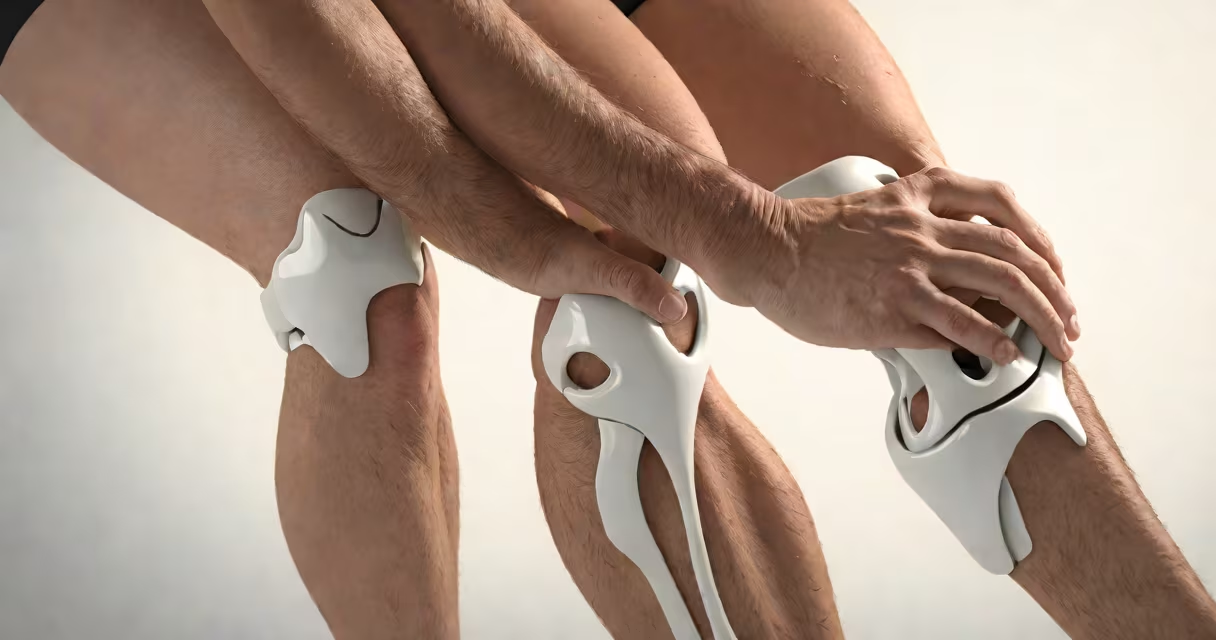
A patellar tendon tear feels like a sudden, sharp pop or tearing sensation just below the kneecap, followed by immediate pain, swelling, and an inability to straighten the leg or bear weight. This injury typically results from a forceful landing or sudden change in direction during jumping or pivoting activities.
The patellar tendon connects the kneecap (patella) to the shinbone (tibia). When torn, it disrupts the mechanism that extends the knee. Most tears occur in athletes involved in basketball, volleyball, or track events, though degenerative changes can cause spontaneous rupture in older adults.
According to the American Academy of Orthopaedic Surgeons (AAOS), partial tears may present with localized tenderness and mild swelling, while complete ruptures lead to a visible depression below the kneecap and a leg that cannot extend against gravity. The condition requires prompt medical evaluation to differentiate from other knee injuries such as ACL tears or meniscus damage.
Patients describe the initial sensation as a "snap" or "crack" in the knee, often occurring during a jump or sudden stop. The pain is intense and localized directly under the kneecap. Within minutes, swelling appears, and the area becomes tender to touch.
One athlete I treated reported feeling "like my leg gave out completely" after landing from a dunk. He couldn't stand on his foot, and the knee bent downward uncontrollably. Imaging confirmed a complete tear of the patellar tendon. This is typical: the quadriceps muscle contracts, but without the tendon's connection, the leg collapses into flexion.
Other physical signs include bruising spreading down the front of the lower leg within 24 hours, a palpable gap beneath the kneecap, and difficulty walking even with crutches. A complete tear prevents active knee extension-patients cannot straighten the leg against resistance, unlike with a sprain or strain.
Patellar tendon tears are frequently mistaken for ACL injuries or patellar dislocations due to overlapping symptoms like pain, swelling, and instability. However, the mechanisms and physical findings differ.
An ACL tear usually follows a twisting motion with the foot planted. Pain is felt deep in the knee joint, and the knee may give way during pivoting. In contrast, a patellar tendon tear occurs with direct impact or explosive extension-like landing from a jump. The inability to perform a straight leg raise is a red flag for tendon rupture.
Another common confusion is with jumper's knee (patellar tendinitis), which involves chronic inflammation of the tendon. While both conditions affect the same structure, jumper's knee develops gradually over weeks or months with activity-related pain. A tear, however, happens suddenly and leads to functional loss.
Research published in the Journal of Orthopaedic & Sports Physical Therapy notes that misdiagnosis delays treatment by an average of 6 weeks in 30% of cases. Early imaging-ultrasound or MRI-is essential for accurate diagnosis. Delayed care increases the risk of poor healing and long-term weakness.
Patellar tendon tears are classified by severity:
| Type | Description | Typical Symptoms |
|---|---|---|
| Partial tear | Tendon fibers stretched or partially severed | Pain with weight-bearing, swelling, mild weakness |
| Complete tear | Full separation of tendon from bone | Immediate collapse, inability to extend leg, visible gap |
Complete tears require surgical repair. Partial tears may be managed conservatively with bracing and physical therapy, depending on the extent of damage and patient activity level.
Age and activity level influence outcomes. A 2021 study in the American Journal of Sports Medicine found that 87% of athletes who underwent surgery returned to sport within 9 months. Non-surgical management led to persistent instability in 62% of patients.
Consider a 28-year-old recreational basketball player who landed awkwardly after a rebound. He heard a loud pop and fell to the ground. Within 10 minutes, his knee swelled visibly, and he could not push off his foot to stand.
On examination, the doctor noted a 2-inch gap below the kneecap and a positive "quadriceps lag sign"-where the patient cannot actively straighten the leg despite effort. An MRI confirmed a complete tear of the patellar tendon. He underwent surgical repair using suture anchors and began rehabilitation 2 days later.
By week 6, he wore a hinged brace and performed passive range-of-motion exercises. By month 4, he resumed light jogging. Full return to basketball occurred at 9 months, with no residual instability.
If you experience sudden knee pain, swelling, and inability to straighten the leg after a jump or fall, seek evaluation within 48 hours. Delaying care reduces success rates for surgical repair and increases recovery time.
Do not assume it's a minor strain. A patellar tendon tear is not something that improves with rest alone. Early intervention-ideally within 1-2 weeks-leads to better outcomes. Imaging is necessary to confirm the diagnosis and rule out fractures or ligament damage.
Understanding what a patellar tendon tear feels like enables faster recognition and treatment. Early action preserves strength, restores mobility, and prevents long-term disability.