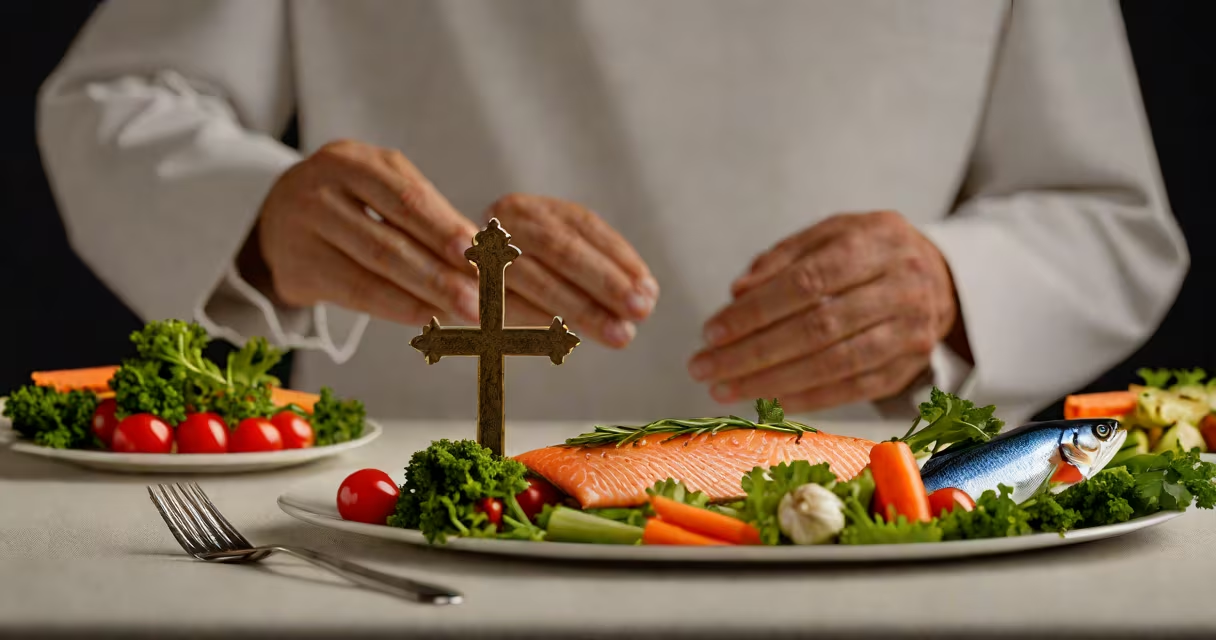
Catholics abstain from eating meat on Fridays during Lent and throughout the year as a form of penance and spiritual discipline rooted in Church tradition and Scripture. This practice reflects a commitment to sacrifice and remembrance of Christ's crucifixion.
The rule originated in early Christianity, where fasting and abstinence were central to spiritual life. By the 4th century, the Church had formalized the practice of refraining from meat on Fridays, particularly during Lent, to honor Jesus' death on the cross. This observance was reinforced by Pope Paul VI in 1966 through the apostolic constitution *Paenitemini*, which clarified that abstinence from meat remains obligatory on Ash Wednesday and all Fridays of Lent.
While the obligation to abstain from meat on all Fridays of the year was relaxed in many countries after Vatican II, the practice continues in various forms. The United States Conference of Catholic Bishops (USCCB) maintains that Catholics aged 14 and older must abstain from meat on Fridays during Lent, and many dioceses encourage voluntary abstinence throughout the year.
Abstaining from meat on Fridays means avoiding flesh from mammals and birds. Fish, amphibians, reptiles, and shellfish are permitted. This distinction is based on longstanding ecclesiastical tradition, not biology. The Church considers meat-especially red meat-as a luxury and a symbol of abundance, making its omission a meaningful act of self-denial.
For example, a Catholic observing the rule on a Friday during Lent might eat grilled salmon with vegetables instead of beef stew. The meal is not about dietary restriction but about aligning personal behavior with spiritual intention. The focus is on reflection, prayer, and acts of charity rather than food choice.
Some dioceses allow substitutions, such as replacing meat with fish or plant-based meals on Fridays. Others encourage members to engage in charitable acts or volunteer work on Fridays as a form of penance. The goal is not punishment but transformation through intentional action.
Not all animal products are treated equally under the rule. The Church defines "meat" as flesh from land animals and birds. Therefore, pork, beef, chicken, turkey, and lamb are excluded. However, fish-such as cod, trout, and salmon-is allowed. So is shellfish like shrimp and crab, though some traditions avoid shellfish due to cultural associations with indulgence.
A common misconception is that dairy and eggs count as meat. They do not. A dish like eggplant Parmesan with cheese and breadcrumbs is acceptable on a Friday, even if it contains dairy. The restriction applies only to flesh.
| Permitted | Prohibited |
|---|---|
| Fish (salmon, cod, tuna) | Beef, pork, lamb |
| Shellfish (shrimp, crab, lobster) | Chicken, turkey, duck |
| Dairy (cheese, milk) | Animal fat (lard, tallow) |
| Plant-based proteins (beans, lentils) | Meat-based broths and stocks |
One non-obvious fact: the Church does not require abstinence on Fridays during the Easter season (from Holy Thursday to Pentecost). During this period, the joy of resurrection supersedes penitential practices. Abstinence resumes after Pentecost.
Many assume that abstaining from meat on Fridays is a universal requirement for all Catholics worldwide. That is incorrect. The U.S. bishops have delegated authority to decide whether to observe the practice annually. As a result, American Catholics are not required to abstain from meat on all Fridays, only during Lent. Other countries, such as Italy and Poland, maintain stricter observance.
Another confusion arises around the term "fasting." Fasting refers to limiting food intake to one full meal and two smaller meals. Abstinence is different-it involves giving up specific foods, not reducing quantity. A person may eat a full meal of fish and vegetables on a Friday and still fulfill the obligation of abstinence.
I once attended a parish dinner in rural Wisconsin where a family served a large platter of fried catfish on a Friday during Lent. The host, a lifelong Catholic, explained that he'd grown up with the rule but didn't see it as binding outside of Lent. His children, raised in a multicultural household, asked why fish was allowed. I clarified that the distinction dates back to medieval theology, where fish were seen as symbolic of purity and humility-qualities associated with Christ's sacrifice.
The practice of abstaining from meat on Fridays is not about diet or health. It is a ritual act of solidarity with Christ's suffering. By denying oneself something pleasurable, the faithful participate in a shared spiritual discipline that fosters humility and mindfulness.
According to the USCCB, the purpose of abstinence is "to build a spirit of penance and to remind us of our dependence on God." The practice also serves as a witness to others, especially in secular societies where religious observance is declining. A visible act of restraint can spark conversation about faith, values, and identity.
Modern Catholics often adapt the rule to their context. Some choose to give up meat on Fridays as a way to reduce environmental impact, citing the Church's teaching on stewardship of creation. Others use the day to reflect on social justice issues, such as food insecurity or labor rights in the fishing industry.
Why no meat on Fridays Catholic? Because it is a centuries-old practice designed to deepen faith through deliberate sacrifice. It is not a legalistic burden but a living tradition that invites participation in a larger story of redemption.