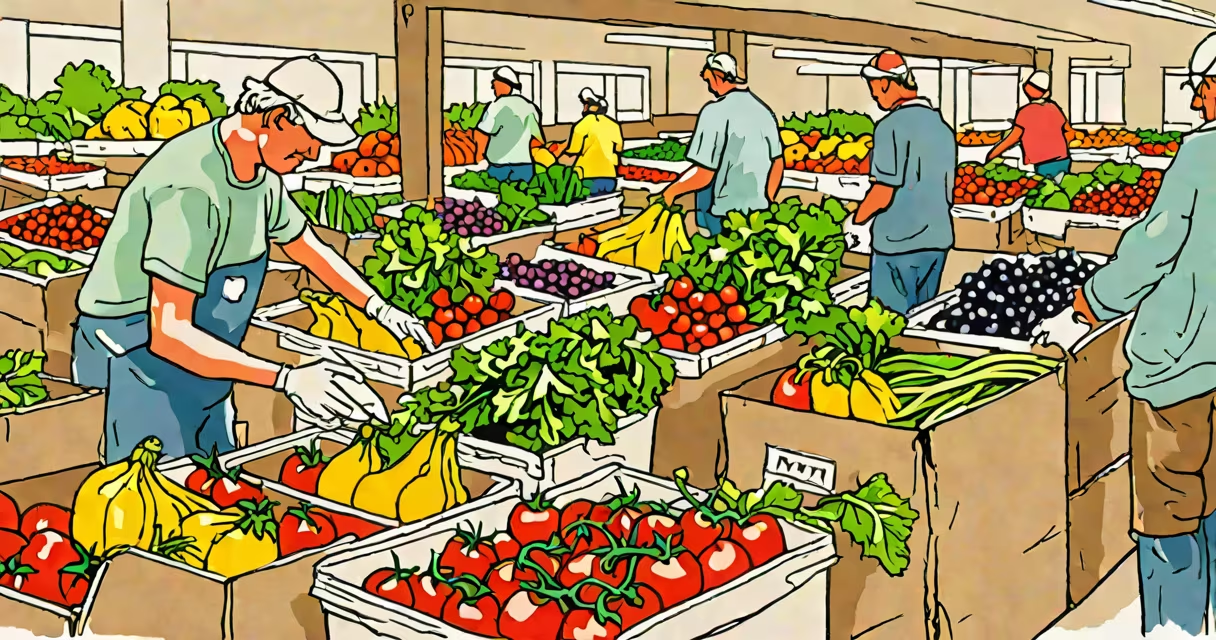
Food donation organizations are nonprofits that collect surplus food from restaurants, grocery stores, farms, and manufacturers, then redistribute it to individuals and families experiencing food insecurity. These groups prevent edible food from being wasted while addressing hunger in communities.
They function as intermediaries between food donors and recipients. A restaurant with leftover meals, a bakery with unsold pastries, or a wholesaler with expired-by-dates but still safe-to-eat goods can donate through these organizations. The donations are then sorted, stored, and delivered to shelters, food pantries, soup kitchens, and community centers.
The U.S. Department of Agriculture estimates that 30-40% of the food supply goes uneaten each year, amounting to roughly 130 billion pounds annually. Food donation organizations help redirect a portion of this waste toward those in need. According to Feeding America, their network of food banks and partner agencies served over 40 million people in 2023 through food distribution.
Most food donation organizations follow a standardized process: identify donor sources, arrange pickup logistics, inspect food for safety and quality, store under proper conditions, and deliver to partner sites. Many use cold-chain transport for perishable items like dairy, meat, and fresh produce.
Donations are typically free and legally protected under the Bill Emerson Good Samaritan Food Donation Act (1996). This law shields donors from liability when giving food in good faith, reducing hesitation among businesses to participate. The act applies to both commercial and individual donors.
Organizations often rely on volunteers and partnerships with local governments and transportation providers. For example, the Food Bank for New York City uses a fleet of refrigerated trucks to collect food from over 1,200 donor locations weekly. Their system includes real-time tracking via GPS-enabled delivery routes to ensure timely distribution.
Food donation organizations vary by scale, focus, and operational model. Some serve specific geographic areas; others operate regionally or nationally.
| Type | Scope | Example | Key Feature |
|---|---|---|---|
| Local Food Rescue Network | City or county-wide | Food Not Bombs (Portland) | Volunteer-driven, direct-to-community delivery |
| Regional Food Bank | Multi-county | Feeding America's network partners | Centralized warehouse, bulk distribution |
| Corporate Food Recovery Program | Chain-wide | Walmart's "Zero Hunger" initiative | Integrated into supply chain; automated donation scheduling |
| Mobile Market Program | Urban neighborhoods | LA Food Policy Council's mobile pantry | Pop-up markets in food deserts using refrigerated vans |
Some models prioritize speed and freshness. The Food Rescue US network connects donors with nearby volunteers who pick up food within hours of availability. A single van can make 15-20 pickups per day, reducing spoilage by up to 70% compared to traditional drop-off systems.
Many assume donated food is unsafe or low-quality. In reality, most food donated through formal channels passes safety checks. The FDA's Food Code requires that donated food be handled at safe temperatures and not contaminated. Organizations conduct regular audits and staff training to maintain compliance.
Another misconception is that food donation replaces government aid. It doesn't. Federal programs like SNAP and WIC provide income-based nutrition support. Food donation organizations fill gaps in access, especially for people who don't qualify for benefits or live in areas with limited grocery options.
A lesser-known fact: over 60% of food donations come from retail and food service sectors. Supermarkets discard millions of pounds of perfectly edible food daily due to cosmetic standards or expiration labeling. Organizations like the National Resources Defense Council (NRDC) estimate that changing labeling practices could reduce food waste by 20% nationwide.
The Greater Chicago Food Depository collects 70 million pounds of food annually from 2,500 donors. In 2023, they distributed 58 million pounds to 1,200 partner agencies across Cook County.
One partner, the Westside Community Center in Austin, receives 1,200 pounds of fresh produce weekly. Before the partnership, 41% of residents reported going hungry during the month. After six months of consistent deliveries, that rate dropped to 23%, according to a 2023 internal survey.
Donated food is not just surplus-it's often high-nutrient. Over 40% of items collected are fruits, vegetables, dairy, and proteins. This contrasts with the common belief that food donations consist mostly of canned goods or processed items.
These organizations reduce environmental impact. The EPA states that food waste in landfills produces methane, a greenhouse gas 25 times more potent than CO₂ over 100 years. Redirecting food prevents emissions equivalent to removing 3 million cars from the road annually.
They also strengthen community resilience. During the 2020 pandemic, food donation networks expanded capacity by 40% in major cities. In Detroit, the Food Bank of Southeastern Michigan increased deliveries from 100,000 to 280,000 meals per month in response to rising demand.
Food donation organizations are not charities that give handouts-they are infrastructure. They turn waste into nourishment, connect supply with need, and sustain communities through systemic efficiency. Their success depends on collaboration between businesses, governments, and citizens.